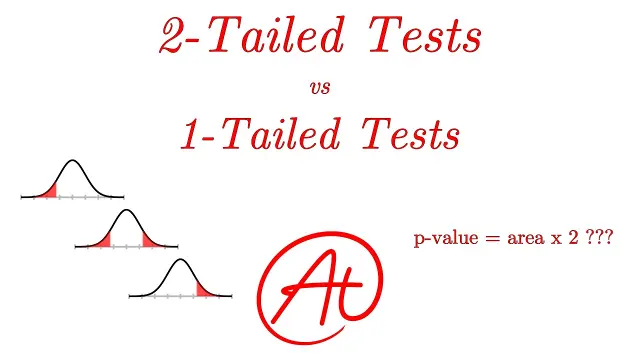
How to Conduct Two-Tailed Hypothesis Tests
This tutorial explains the differences between one-tailed and two-tailed tests along with rejection regions.
YouTube · Ace Tutors · 5 July 2026 Watch on YouTube
Tried this idea? Show how yours turned out.
I made thisHow to do it
What you need
- Null and alternative hypotheses
- Significance level alpha
- Test statistic value
- Sampling distribution curve
- Shaded rejection region
- Software or table for tail area
- P-value
Step by step
- Decide whether the alternative hypothesis points left, right, or in both directions.
- Choose the matching test type: left-tailed, right-tailed, or two-tailed.
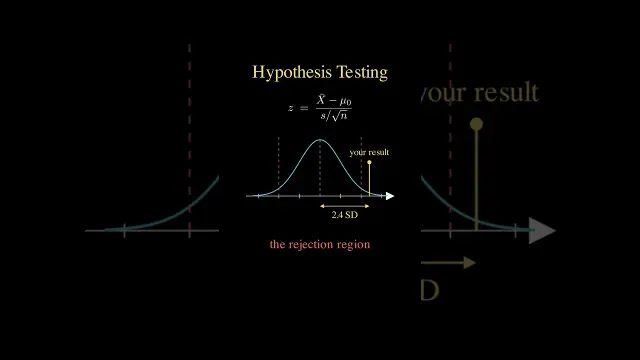
- Sketch the distribution and mark the rejection region for your alpha.
- For a two-tailed test, put one rejection region in each tail.
- Find the area in the tail beyond your test statistic.
- Double that tail area to get the two-tailed p-value.
- Compare the p-value with alpha and state the conclusion.
Tips
- Read the alternative hypothesis first: an 'is not equal to' claim means two tails, while 'less than' or 'greater than' means one.
- In a two-tailed test the p-value is the tail area multiplied by two, since the shaded area sits on both sides.
- Match the rejection region shape to your test type before calculating anything.
Written by Tagrazzi from the original's description and photo.
The title and summary are written by Tagrazzi; the video belongs to its creator and plays from YouTube.





Comments (0)
No comments yet. Be the first to comment.
Sign in to write a comment.