18 beginner lessons on automata theory and formal languages
Automata theory can feel abstract until someone walks you through it slowly, and that is exactly what this collection does. It starts with the basic vocabulary of formal languages and abstract machines, then moves step by step into deterministic and non-deterministic automata, finite state machines, and context-free grammars.
It suits students taking a theory of computation or compiler design course for the first time, and anyone teaching themselves who wants short revision clips alongside fuller explanations. The items are ordered so the definitions come before the worked examples, and the design tutorials come once the models already make sense.
-
 1
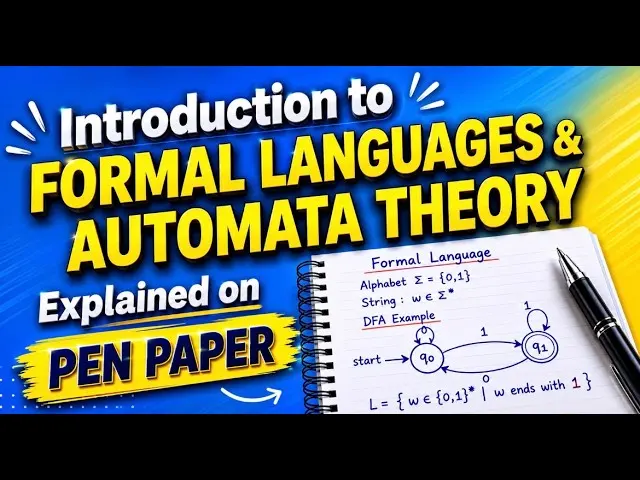
Introduction to Formal Languages and Automata Theory
Opens with the core vocabulary of automata theory, formal languages, alphabets and strings, so it belongs first.
-
 2
Automata Theory Basics and Abstract Machines
A short orientation to automata theory as the study of abstract machines and algorithms.
-
 3
Automata Theory and the Foundations of Computational Systems
Frames automata theory as the mathematical foundation of how computational systems process information.
-
 4
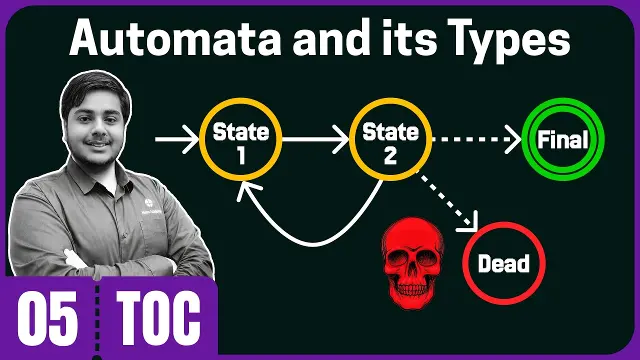
Understanding Automata and Its Various Types
Breaks automata down into its different types, which helps before meeting each model in detail.
-
 5
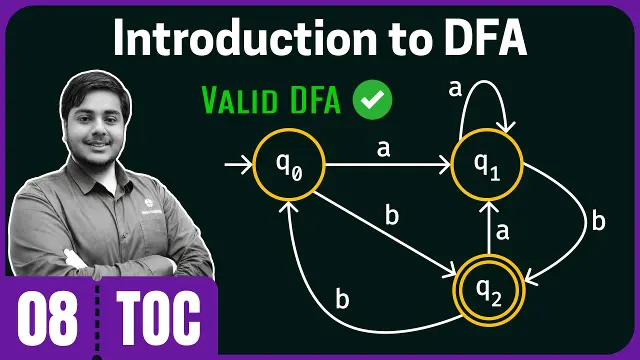
Introduction to Deterministic Finite Automata
Introduces Deterministic Finite Automata through their 5-tuple representation.
-
 6
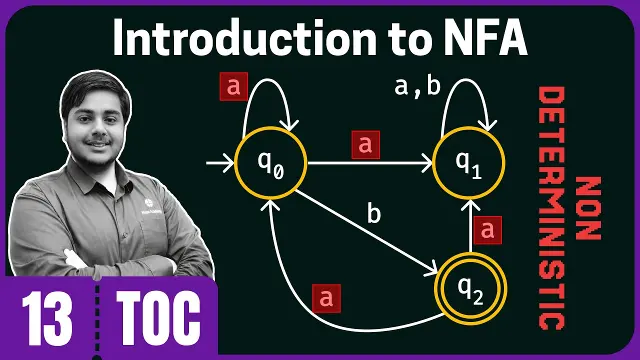
Introduction to Non-Deterministic Finite Automata
Follows with Non-Deterministic Finite Automata and their own 5-tuple format.
-
 7
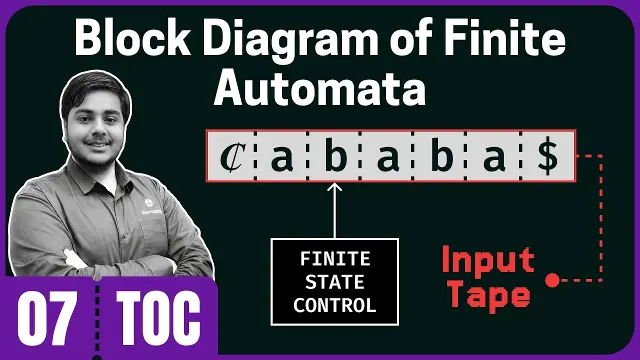
Understanding the Block Diagram of Finite Automata
Explains the block diagram and the different kinds of finite automata in computation theory.
-
 8
Finite Automata: The Smallest Possible Computers
A visual mini-lecture that makes the minimal computing model concrete with turnstile analogies.
-
 9
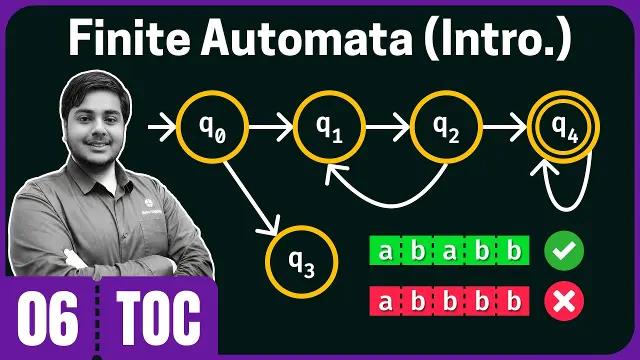
Introduction to Finite Automata and String Processing
Walks through the definition with a practical example of how input strings are processed.
-
 10
Comprehensive Guide to Finite Automata in Computer Science
A structured session covering DFA, NFA, language acceptance and state minimization.
-
 11
Finite Automata Concepts for Computer Science Exams
An exam-oriented review of finite automata, transition functions and deterministic models.
-
 12
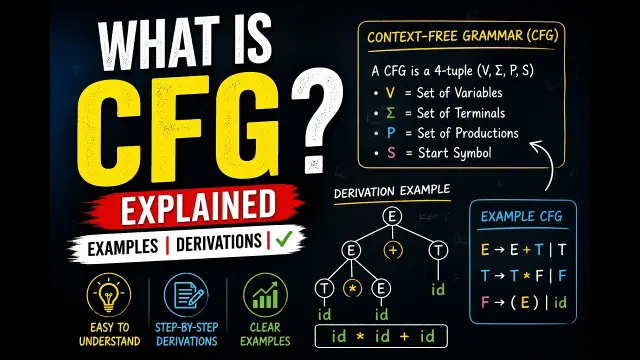
Easy Explanation of Context Free Grammar with Clear Examples
Moves into grammars with definitions, components and derivations explained through clear examples.
-
 13
Introduction to Context Free Grammar in Compiler Design
Shows how context-free grammars act as the grammar of programming languages and how compilers parse code.
-
 14
Quick Introduction to Context Free Grammar in Compiler Design
A fast overview of context-free grammars where every production has a single non-terminal on the left.
-
 15
Mastering Context Free Grammars for Computer Science Exam Preparation
Beginner-friendly session on how grammars generate languages and how to construct them for exam prep.
-
 16
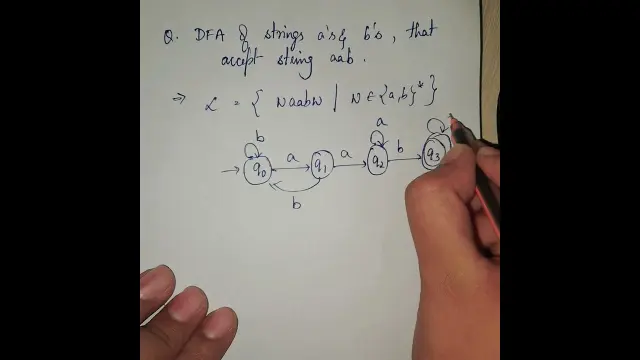
Designing a DFA for Strings Containing the Substring AAB
A step-by-step design tutorial for a DFA accepting strings containing a given substring.
-
 17
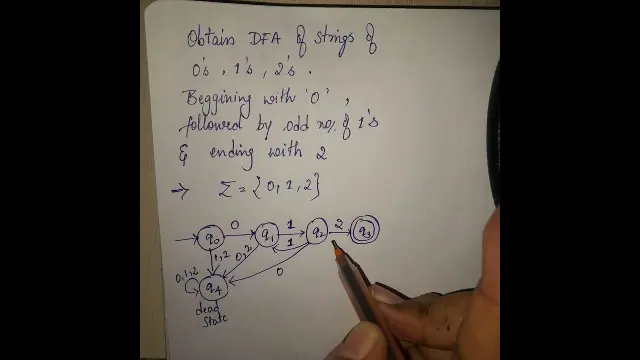
Designing a DFA for Specific String Conditions
Another design walkthrough, this time for strings with specific starting and ending rules.
-
 18
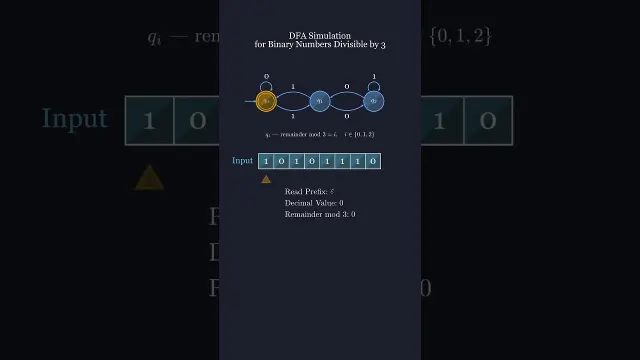
Simulating a DFA for Binary Numbers Divisible by Three
A visual simulation of a DFA recognising binary numbers divisible by three, tying design to a worked case.
More #Computer Science ideas
Picked and written by Tagrazzi; the videos and photos belong to their creators.