8 explainers on P vs NP and the limits of computation
These ideas all circle the same question: what can computers actually solve, and how fast. Rather than teaching you to program, they look at computational difficulty itself — the classes P and NP, NP-complete problems, intractability, and the formal machinery used to reason about them.
It suits readers who have met algorithms and want the theoretical picture behind them, and anyone curious why some problems stay stubbornly out of reach. The items start with the core P versus NP question and broaden out to complexity theory, a proposed proof, and the field's origins.
-
 1
P, NP, and the Core Concepts of Complexity Theory
An overview of how complexity theory, pioneered by Stephen Cook, examines the fundamental nature of computational difficulty.
-
 2
Understanding P vs NP and the Future of Complexity Theory
Explores P versus NP and what the question reveals about the future of computer science.
-
 3
Intractable Problems and Limits of Computational Complexity
Analyses intractable problems and the limits of complexity, including P, NP and NP-completeness.
-
 4
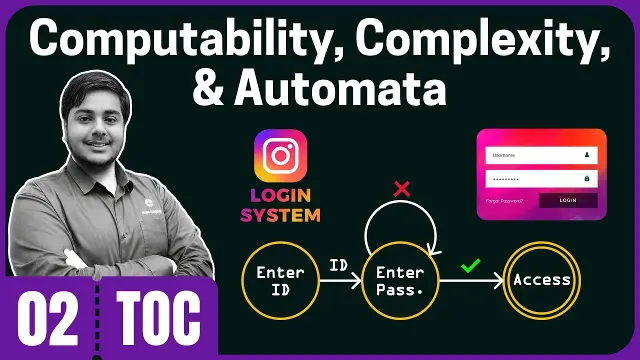
Introduction to Computability and Complexity Theory
Sets computability theory, complexity theory and automata theory side by side as an educational breakdown.
-
 5
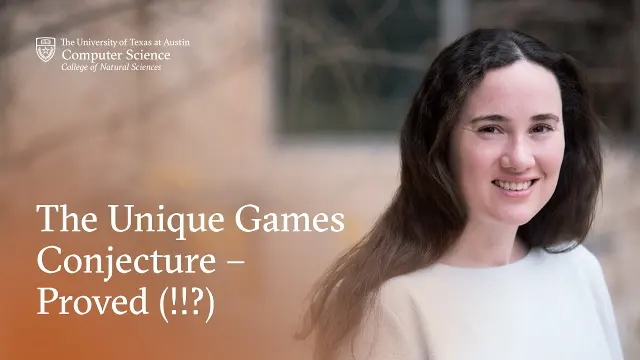
Dana Moshkovitz Explains the Proposed Proof of the Unique Games Conjecture
Maps out a newly released proposed proof of the Unique Games Conjecture and what it would mean.
-
 6
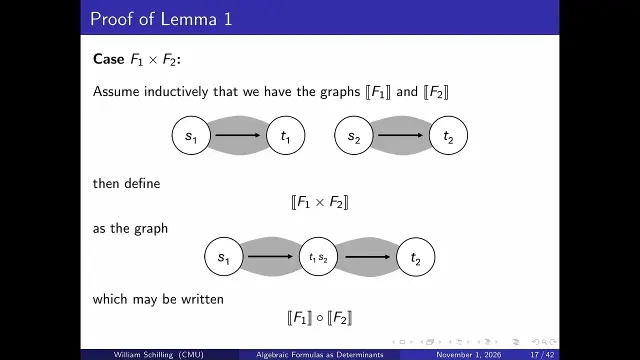
Algebraic Formulas and Matrix Determinants in Complexity
A graduate lecture connecting algebraic formulas of size N to matrix determinants in complexity.
-
 7
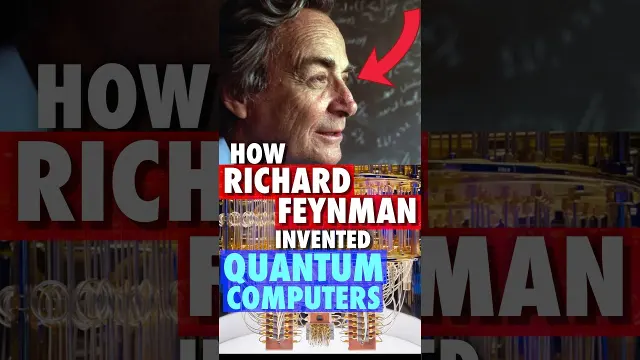
How Richard Feynman Helped Start Quantum Computing
Traces the early questions Feynman posed that helped launch quantum computing as a field.
-
 8
Biggest Breakthroughs in Computer Science and Computational Research
Surveys recent computational breakthroughs, including new relationships between time and other resources.
More #Computer Science ideas
Picked and written by Tagrazzi; the videos and photos belong to their creators.