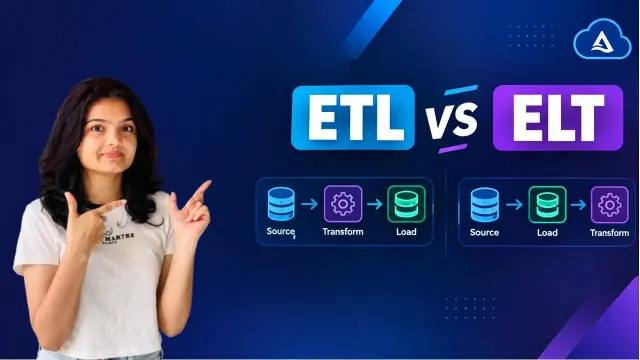
ETL vs ELT Explained with Databricks Examples
Understand the differences between ETL and ELT with a practical demonstration using Databricks and PySpark.
YouTube · The Data Girl · 23 October 2026 Watch on YouTube
Tried this idea? Show how yours turned out.
I made this#ETLvsELT #Databricks #dataengineering #PySpark #DeltaLake #DataPipeline #ETL #ELT #SQL #DataEngineer #LearnDataEngineering #BigData #DataAnalytics #TheDataGirl
How to do it
What you need
- Databricks workspace
- PySpark
- Sample orders dataset
- Delta tables
- SQL (Databricks SQL)
Step by step
- Create the raw orders DataFrame with the given schema
- Inspect the raw data with display()
- Clean and transform the data in PySpark: trim product names, remove rows with null customer_id, drop negative quantity or unit_price rows
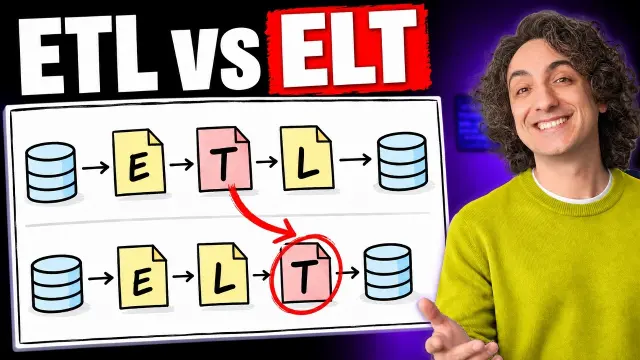
- Write the transformed result to a Delta table (ETL)
- For ELT, first load the raw DataFrame as-is into a Delta table
- Then transform that raw Delta table using SQL
- Compare the ETL and ELT outputs
Tips
- Watch the raw data for the same problems this dataset has — padded and inconsistently cased product names, a null customer_id, and negative quantities or prices — and fix them explicitly rather than assuming the source is clean.
- Choose ETL when the target should only ever receive clean data; choose ELT when you want the raw data preserved in the lakehouse and transformed on demand with SQL.
- Land the raw data in a Delta table first so the transformation logic can be rerun and adjusted without re-extracting from the source.
Written by Tagrazzi from the original's description and photo.
The title and summary are written by Tagrazzi; the video belongs to its creator and plays from YouTube.









Comments (0)
No comments yet. Be the first to comment.
Sign in to write a comment.