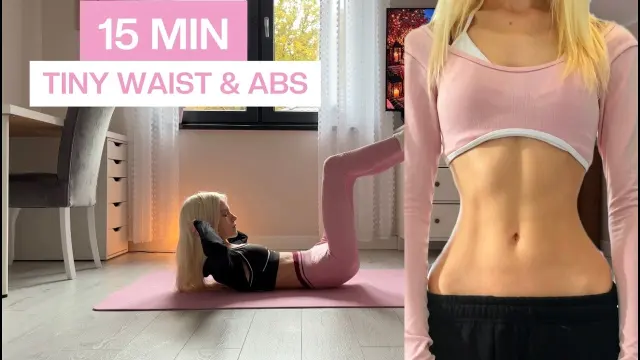
 15-Minute Pilates Core Workout for a Slimmer Waist and Flat Abs
#15 Minute Workout
1 ideas
15-Minute Pilates Core Workout for a Slimmer Waist and Flat Abs
Get new #15 Minute Workout ideas by email
Every Thursday: the week's best ideas, with the newest from #15 Minute Workout.
Related tags
The 15-Minute Workout: A Practical Guide
Fifteen minutes is not a compromise. It is a deliberate format, and it has become one of the most popular ways to fit movement into a day that is already full. The idea is simple: instead of waiting for the perfect free hour, you work with a small, fixed window and make it count. What began as a way for busy people to keep training has grown into a whole approach to exercise, with its own structures, styles and logic.
Why short sessions work
The value of a 15-minute workout lies less in the clock than in the structure. A short session forces focus. There is no time for drifting between machines or long rests, so the work tends to be organised: a warm-up of a couple of minutes, a main block, and a brief cool-down. Many people also find that a small commitment is easier to keep, and consistency matters more than intensity over the long run. A session you actually do beats a longer one you keep postponing.
The main formats
Read more
Most 15-minute workouts fall into a few recognisable shapes. Circuit training moves through a series of exercises back to back with short rests, which works several muscle groups in one pass. Interval formats alternate bursts of harder effort with easier recovery, and suit bodyweight moves, skipping, cycling or running. Timed flows, drawn from yoga or Pilates, link movements continuously so the session doubles as mobility work. Strength-focused sessions use a handful of compound exercises, such as squats, push-ups, rows and lunges, performed slowly with attention to form. Any of these can be done at home with little or no equipment, or fitted into a gym visit as a compact block.
What beginners should know
Start with movement you can control. Choose a small number of exercises, learn them properly, and repeat them rather than chasing variety in the first weeks. A warm-up is not optional even when time is tight: a few minutes of easy movement and gentle joint rotations prepare the body for what follows. Keep the pace honest but not frantic, and let your breathing stay comfortable. If an exercise causes sharp pain, stop and choose something else.
Practical tips
Decide in advance what the session will be, so the fifteen minutes go to training rather than deciding. Lay out what you need the night before. Use a timer, but treat it as a guide rather than a target to beat. Leave a minute or two at the end to slow down and stretch. Progress by making an exercise slightly harder or a rest slightly shorter, not by adding time. Rest days are part of the plan, and a short session done three or four times a week will serve you better than an intense one followed by a week of nothing.
The appeal of fifteen minutes is that it removes the excuses. It is small enough to fit almost anywhere, and structured enough to be genuinely useful.
#15 Minute Workout: frequently asked questions
How do I start a 15-minute workout if I've never exercised before?
Pick a handful of simple movements you can do with control — a bodyweight squat, a modified push-up, a gentle row, a lunge — and repeat those rather than collecting new exercises. Always begin with a couple of minutes of easy movement and joint rotations so the body is ready. Keep the breath comfortable and stop any move that causes sharp pain.
What equipment do I actually need?
Very little. Most short sessions can be done with your own bodyweight and a bit of floor space, and the only real essentials are a timer and clothes you can move in. If you want to add resistance later, a sturdy chair, a step or a single weight is enough — there is no need to kit out a whole home gym first.
Which format should I choose — circuit, intervals, flow or strength?
Choose by what you enjoy and what your body needs that day. Circuits and intervals suit people who want to feel worked and keep moving; flows from yoga or Pilates are good when you also want mobility and calm; slow compound strength work is best when form and gradual progress matter most to you. The format you'll actually repeat is the right one.
How do I progress without making the session longer?
Keep the fifteen minutes fixed and change the difficulty inside it instead. Make one exercise slightly harder, slow the tempo down, or trim the rest between movements by a few seconds. Adding time is the least useful change — a short session done consistently will serve you better than an intense one followed by nothing.
What are the most common mistakes people make?
The big ones are skipping the warm-up, spending the session deciding what to do, and treating the timer as something to beat rather than a guide. Another frequent slip is chasing variety too early instead of learning a few exercises properly, and forgetting that rest days belong in the plan. Deciding the night before and laying out what you need removes most of these.
Can I really get anything useful out of only fifteen minutes?
Yes — the structure does the work, not the clock. Because there's no room for drifting or long rests, a short session tends to be organised and focused, and a small commitment is far easier to keep. Done a few times a week, it builds consistency, which matters more over the long run than a single long session.
Videos come from YouTube and posts from Instagram; titles and summaries are our own. All rights belong to their creators.