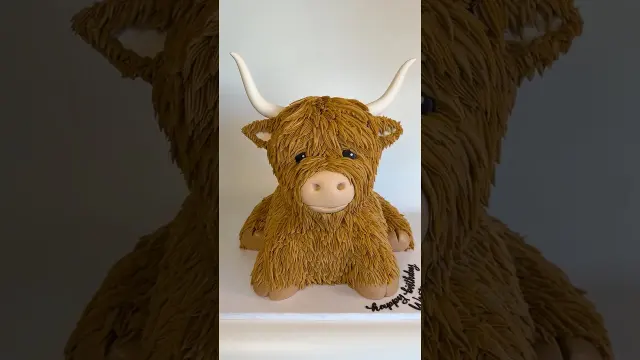
 Decorating a 3D Highland Cow Birthday Cake
#3D Cake
1 ideas
Decorating a 3D Highland Cow Birthday Cake
Get new #3D Cake ideas by email
Every Thursday: the week's best ideas, with the newest from #3D Cake.
Related tags
3D Cakes: Sculpted Cakes With Shape and Detail
What a 3D cake is
A 3D cake is a sculpted cake made to look like an object, animal, character, or scene rather than a simple round or square cake. Instead of decorating only the top, you build shape and volume into the cake itself. That can mean a cake shaped like a handbag, a car, a head, a house, or a whimsical animal. The goal is not just decoration, but a cake that has presence from every angle.
Where the idea comes from
Sculpted cakes have long been part of celebration baking, especially for special occasions where a cake is meant to surprise. The idea combines baking, carving, and decorative work, borrowing techniques from pastry, cake design, and sometimes even sculpture. Over time, 3D cakes have become popular for birthdays, themed parties, weddings, and other events where a custom centerpiece is wanted.
Read more
Common kinds of 3D cakes
There are many ways to approach a 3D cake:
- Fully sculpted cakes: carved into a complete shape, such as an animal or object
- Tiered cakes with 3D toppers: a shaped figure or design placed on top of a more traditional cake
- Illusion cakes: decorated to look 3D while the structure stays simpler
- Novelty cakes: playful designs made to match a theme or hobby
- Character-inspired cakes: shaped to suggest a person, animal, or favorite figure without needing perfect realism
Some designs are meant to be cute and stylized, while others aim for a more lifelike look. Your choice depends on your skill level, the event, and how much detail you want to include.
Basic techniques
A successful 3D cake usually starts with a dense cake that holds its shape well. Softer cakes can still work, but they may need extra chilling and support. Builders often use multiple layers, stack them with filling, then carve the outside into the desired form.
Helpful techniques include:
- Chilling the cake before carving so it is easier to handle
- Using a simple sketch or template before you start
- Crumb-coating to lock in loose crumbs
- Adding support with dowels, boards, or internal structure when needed
- Using buttercream, ganache, fondant, or modeling paste for a smooth finish
What beginners should know
If you’re new to 3D cakes, begin with a simple shape. A ball, a loaf-based design, or a basic animal form is often easier than a highly detailed character. Plan the cake so the carved parts still leave enough structure to stay stable. It also helps to keep the design slightly simplified; clean lines and clear shapes often look better than overcomplicated details.
Practice is important because carving changes the size of the cake quickly. It’s wise to bake a little extra batter in case trimming removes more than expected. Think about how the cake will be cut and served as well, since unusual shapes can affect slicing.
Practical tips
- Keep decorations lightweight if the cake is tall or narrow
- Work in stages so the cake stays firm
- Use edible details to define features instead of overloading the surface
- Make sure your base board is sturdy enough for the design
- Decide in advance whether the cake will be fully edible or include some non-edible supports hidden inside
A 3D cake works best when shape, stability, and decoration all support each other. With careful planning, you can make a cake that is not only eye-catching but also balanced and enjoyable to eat.
Videos come from YouTube and posts from Instagram; titles and summaries are our own. All rights belong to their creators.