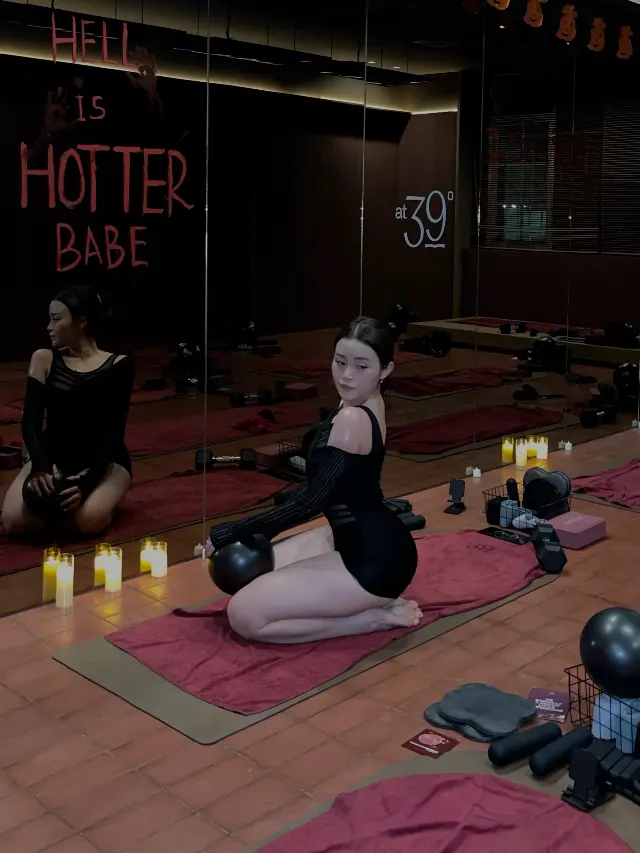
 Intense Pilates class focusing on abs and glutes
#Abs and Glutes
1 ideas
Intense Pilates class focusing on abs and glutes
Get new #Abs and Glutes ideas by email
Every Thursday: the week's best ideas, with the newest from #Abs and Glutes.
Related tags
Abs and Glutes Training Guide
What abs and glutes training means
Abs and glutes training focuses on two major muscle groups that work together every day: the muscles around your midsection and the muscles in your buttocks. Your abs help support your spine, control movement, and keep your body stable. Your glutes help with standing, walking, climbing, lifting, and keeping your hips aligned. When you train them well, you are not only shaping these areas, you are also building strength for everyday movement.
Why these muscles matter
Strong abs and glutes can improve posture, balance, and overall body control. They also help support many other exercises, from squats and lunges to running and dancing. Because these muscles are involved in so many movements, training them well often means training the whole body in a more efficient way.
Read more
Common ways to train them
There are many good exercises for abs and glutes, and the best approach usually includes both bodyweight work and loaded movement.
- For the abs: planks, dead bugs, leg raises, crunch variations, and hollow holds
- For the glutes: bridges, hip thrusts, squats, lunges, step-ups, and donkey kicks
- For both together: movements that challenge stability, such as single-leg work or controlled Pilates-style exercises
A balanced routine usually includes exercises that bend the torso, resist twisting, and hold the core steady. For the glutes, it helps to include movements that extend the hips and work one leg at a time as well as both legs together.
Technique matters more than speed
A slow, controlled movement is often more effective than rushing through many repetitions. Try to keep your spine neutral, your core gently engaged, and your breathing steady. For glute work, focus on pushing through the heel or midfoot and squeezing the glutes at the top without over-arching your lower back. For abdominal work, avoid pulling on your neck or forcing your lower back to lift off the floor.
If you are new to this type of training, start with a few simple exercises and small sets. Good form will help you feel the right muscles working and reduce strain.
Helpful tips for beginners
- Start with basic movements before trying advanced variations
- Work both sides of the body evenly
- Rest between sets so you can keep your form steady
- Use a mat or soft surface for floor exercises
- Build gradually rather than trying to do too much at once
A balanced approach
Abs and glutes training works best as part of a wider routine that includes legs, upper body, mobility, and recovery. You do not need to train these muscles every day to make progress. Consistent practice, sensible effort, and attention to form are usually more effective than intensity alone. If an exercise causes pain rather than ordinary effort, stop and choose a simpler variation.
With a steady routine, these two muscle groups can become stronger, more coordinated, and easier to use in daily life.
Videos come from YouTube and posts from Instagram; titles and summaries are our own. All rights belong to their creators.