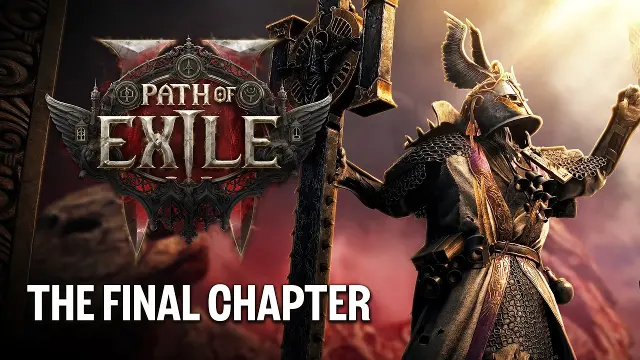
 Path of Exile 2: A Return to Oriath Trailer
#Action RPG
1 ideas
Path of Exile 2: A Return to Oriath Trailer
Get new #Action RPG ideas by email
Every Thursday: the week's best ideas, with the newest from #Action RPG.
Related tags
Action RPGs: A Beginner's Guide to the Genre
An action role-playing game is what you get when the numbers, choices and long-term growth of a role-playing game meet combat you play with your own reflexes rather than by picking options from a menu. You aim, dodge, time your strikes and move through space in real time, while underneath sits a system of attributes, skills and equipment that quietly decides how strong you actually are. That double layer is the heart of the genre: skill matters, and so does the character you have built.
The idea grew out of tabletop role-playing and early computer RPGs, which inherited dice, classes and experience points, then gradually let players take direct control of the fighting. Over the years the genre split into recognisable branches, and most games borrow from several at once.
The main kinds
- Hack-and-slash: fast, crowd-clearing combat with big abilities and a steady stream of enemies. Easy to pick up, hard to master at higher difficulty.
- Loot-driven dungeon crawlers: randomised or hand-built areas, dense with enemies and items. The appeal is the loop of fighting, finding better gear and refining a build.
- Challenge-focused games: slower, heavier combat where stamina, timing and enemy patterns decide fights, and bosses must be learned rather than out-damaged.
- Story-driven action RPGs: a strong narrative, voiced characters and a world to explore, with combat systems kept approachable.
- Open-world and co-op variants: exploration and shared play layered on top of the same progression mechanics.
Read more
What beginners should know
Start by deciding how you like to play — up close and durable, fast and fragile, or at range — and pick a character or class that matches. It is easier to learn a style you enjoy than to force yourself into one that feels wrong.
Read what your abilities actually do. Tooltips in these games are dense, but the details about damage type, cooldowns and scaling are the difference between a build that works and one that stalls.
Learn to move before you learn to attack. Positioning, spacing and knowing when to retreat carry more players through difficult fights than raw damage does. Expect to lose, especially against bosses, and treat each attempt as information rather than failure.
Do not hoard. Keep gear you will use soon, sell or dismantle the rest, and spend your currency on upgrades rather than saving it for a perfect future purchase. Most games also let you respec, so an early experiment is rarely permanent.
Finally, take breaks from optimising. Build guides are useful, but discovering your own combination is where the genre gives the most back.
#Action RPG: frequently asked questions
What actually makes a game an action RPG rather than a regular RPG?
In a regular RPG the fighting usually happens through menus and turn choices, while an action RPG has you aim, dodge, time your strikes and move through space in real time. Underneath that, a system of attributes, skills and equipment still decides how strong your character really is, so both reflexes and build matter.
How should a complete beginner start with action RPGs?
First decide how you like to play — close up and durable, fast and fragile, or attacking from a distance — and choose a character or class that matches, because learning a style you enjoy is far easier than forcing one that feels wrong. Then read what your abilities actually do, since the details about damage type, cooldowns and scaling are what separate a working build from one that stalls.
Which kind of action RPG is right for me?
If you want fast fights against crowds of enemies with big abilities, hack-and-slash is the natural pick. If the fun for you is fighting, finding better gear and refining a build, a loot-driven dungeon crawler fits better, while players who enjoy learning enemy patterns and heavy, deliberate combat should look at challenge-focused games. Those who mainly want a story and a world to explore can go for narrative-driven ones.
What mistakes do newcomers usually make?
The most common ones are ignoring ability tooltips and hoarding gear or currency for a perfect future purchase that never comes. Keep only what you will use soon, put the rest into upgrades, and remember that many games let you respec, so an early experiment is rarely permanent.
Can I play an action RPG with friends?
Yes — co-op and open-world variants layer shared play and exploration on top of the same progression mechanics, so you can build characters alongside each other. It helps to agree beforehand on how far apart you are willing to wander, since one player rushing ahead while another explores can make the pace frustrating.
Is it bad to follow build guides?
Guides are genuinely useful when you are stuck or want to understand why a combination works, but leaning on them from the start removes the part the genre gives back most: discovering your own setup. Take breaks from optimising, and treat losing to a boss as information about the fight rather than as failure.
Videos come from YouTube and posts from Instagram; titles and summaries are our own. All rights belong to their creators.