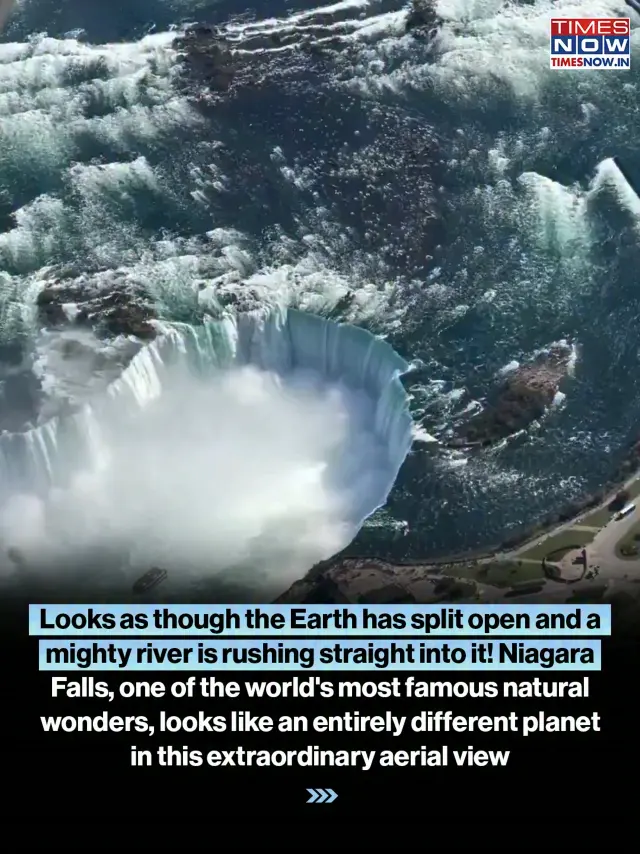
 Aerial view of Horseshoe Falls and the mist over Niagara Falls
#Aerial Photography
1 ideas
Aerial view of Horseshoe Falls and the mist over Niagara Falls
Get new #Aerial Photography ideas by email
Every Thursday: the week's best ideas, with the newest from #Aerial Photography.
Related tags
Aerial Photography: A Beginner's Guide to Views From Above
Aerial photography means capturing images from a position in the air, looking down at the ground rather than across it. The shift in perspective is the whole point: patterns that are invisible at eye level — field boundaries, coastlines, the curve of a road, the way shadows fall across a city — become the subject itself. Seen from above, ordinary places turn abstract, and large ones become legible.
Where it comes from
The idea is older than most people expect. Photographers were sending cameras up on kites, balloons and small rockets in the nineteenth century, and by the early twentieth century aircraft had made aerial views a practical tool as well as a spectacle. Military reconnaissance drove much of the early development, and surveyors soon followed, using overlapping frames to map terrain. The modern hobbyist with a small flying camera is working in a tradition that is well over a century old.
The main kinds
Read more
Aerial work generally falls into a few broad approaches. Straight-down views, sometimes called top-down or map-style, treat the ground as a flat graphic and reward strong shapes and symmetry. Oblique views, taken at an angle, keep a sense of depth and are closer to how we imagine a landscape. Panoramic and wide sweeps suit coastlines and mountain ranges. Then there is the deliberate close pass — skimming a roofline, a treetop, a boat — which gives scale without showing much distance at all.
What changes when you go up
Light behaves differently from altitude. Haze builds up between camera and ground, so early morning is often clearer than midday, and long shadows near sunrise and sunset give texture to flat ground that would otherwise look featureless. Water, glass and snow reflect brightly and can fool an automatic exposure. Wind is the other constant: it decides whether a small aircraft hovers steadily or drifts, and it is worth respecting rather than fighting.
Getting started
Learn the rules where you intend to fly before you fly there — altitude limits, restricted areas and permissions vary enormously between countries and even between neighbouring districts, and privacy expectations matter just as much as written rules. Never fly over crowds, roads or people who have not agreed to be photographed, and keep the aircraft in sight.
Start simple: one subject, one altitude, a handful of frames. Compose in the air the way you would on the ground, with a clear subject and clean edges, and shoot slightly wider than you think you need — the best crop is often found later. Check the forecast, charge everything, and fly with a purpose rather than hovering until the battery complains.
Above all, look before you launch. The most interesting aerial pictures usually come from noticing something on the ground first and then deciding that it deserves to be seen from a height.
#Aerial Photography: frequently asked questions
How do I get started with aerial photography if I have never flown before?
Begin by learning the rules that apply where you intend to fly, since altitude limits, restricted areas and permission requirements differ from place to place. Then keep your first outings deliberately modest — one subject, one height, a small handful of frames — and fly with a clear purpose rather than hovering until the battery runs low. Noticing something interesting from the ground first, and only then deciding it deserves to be seen from above, is usually what produces the strongest images.
What kind of aerial shot should I aim for?
Straight-down views turn the ground into a flat graphic and reward strong shapes and symmetry, while angled views keep a sense of depth and feel closer to how we picture a landscape. Wide sweeps suit coastlines and mountain ranges, and a deliberate close pass over a roofline or a treetop gives a sense of scale without showing much distance. Pick the approach that matches what made you want to photograph the place.
What do I actually need to take pictures from the air?
A camera that can be carried aloft steadily, and enough practice to keep it stable in wind, matter more than a long list of gear. Check the forecast beforehand, make sure everything is charged, and always keep the aircraft within sight. Composition still works the way it does on the ground, so shoot a little wider than you think you need and look for a clean subject and clean edges.
How do I deal with light, haze and reflections from up high?
Haze builds between the camera and the ground, so the early part of the day is generally clearer than the middle, and long shadows near sunrise and sunset add texture to ground that would otherwise look flat. Water, glass and snow bounce a lot of light back and can mislead an automatic exposure, so watch those scenes closely. Wind is the other thing to respect rather than fight, since it decides whether your camera holds still or drifts.
What mistakes should a beginner avoid?
Flying over crowds, roads, or people who have not agreed to be photographed is the biggest one, and it matters as much as any written rule about where you may fly. Losing sight of the aircraft, or launching without checking the weather and your charge levels, causes most of the rest. Remember that privacy expectations count too, not just altitude limits and restricted zones.
Videos come from YouTube and posts from Instagram; titles and summaries are our own. All rights belong to their creators.