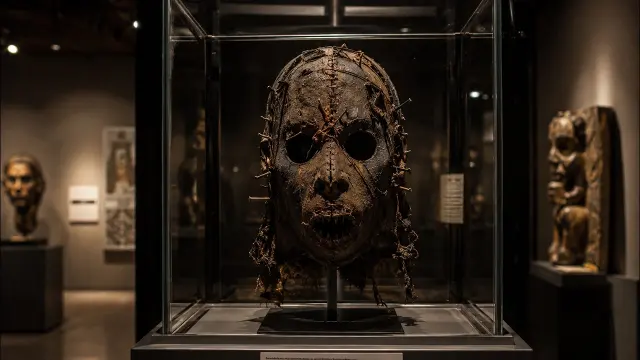
 Museum Artifacts Too Dangerous to Put on Public Display
#Ancient Artifacts
1 ideas
Museum Artifacts Too Dangerous to Put on Public Display
Get new #Ancient Artifacts ideas by email
Every Thursday: the week's best ideas, with the newest from #Ancient Artifacts.
Related tags
Ancient Artifacts: A Beginner's Guide to the Past
An artifact is any object that people made, shaped, or used. It might be a hand axe chipped from flint, a cooking pot, a coin, a bead, a nail, or a page of writing. The word is usually reserved for things from the distant past, but the idea is simple: an artifact is the physical trace of a decision someone made. Alongside it, archaeologists also study ecofacts, the natural remains such as seeds, pollen and animal bone that show what the world around people was like.
Most of it was never treasure
Museums train us to expect gold, but the bulk of what survives is ordinary: broken pottery, worn tools, food waste, building rubble. This is not a disappointment. A rubbish pit tells you what people ate, what they threw away, how they built and repaired things. The humblest objects often carry the most information, which is why archaeologists get excited about pottery sherds and animal bones.
What survives, and what does not
The archaeological record is shaped by the material itself. Stone, fired clay, metal, glass, shell and bone endure for a very long time. Wood, textile, leather and plant fibre usually rot away, and survive only in unusual conditions: waterlogged ground, deep desert, extreme cold or the sealed air of a tomb. This means the past we can hold is skewed towards the durable, and whole crafts may have vanished without leaving much behind.
The main kinds
- Stone tools, from rough cutting edges to finely worked blades and arrowheads
- Pottery and ceramics, often the most common find on a settlement site
- Metalwork: tools, weapons, vessels, fittings and jewellery
- Coins, seals and weights, which speak to trade and administration
- Personal ornament: beads, rings, brooches, cosmetics and grooming items
- Writing: clay tablets, inscriptions, papyri and manuscript fragments
- Everyday objects in bone, antler, glass and wood
Read more
Context is everything
An object found in a museum drawer with no record of where it came from has lost most of its meaning. Archaeologists care about provenance: the exact place, layer and associations of a find. A pot in a floor deposit tells you about a household; the same pot bought on an antiques market tells you almost nothing. This is why looting is so destructive — it destroys the information while keeping the object.
How they are studied
Specialists compare shapes and styles, examine wear and residues, and use scientific dating methods where the material allows. Every technique has limits, and conclusions are usually offered with caution rather than certainty. Good archaeology is slow, collaborative and willing to revise.
Ethics and care
Many countries regulate the excavation, export and sale of antiquities, and questions of repatriation are debated with real seriousness. If you find something, the responsible move is to record it, photograph it in place and report it to the relevant authority rather than clean or move it. Handling artifacts with bare hands leaves salts and oils; museums control light, humidity and temperature for good reason. Some objects are kept in restricted storage because their materials are genuinely hazardous, which is a sensible precaution rather than a mystery.
Getting started
Read the labels in museums, join a local archaeological or historical society, volunteer on a survey, and learn to look closely at ordinary things. Curiosity, patience and honesty about what you don't know will take you a long way.
#Ancient Artifacts: frequently asked questions
How do I get started learning about ancient artifacts?
Start with the objects already around you: read the labels in museums carefully and get into the habit of looking closely at ordinary things rather than only the showpieces. Joining a local archaeological or historical society and volunteering on a survey will put you alongside people who can explain what they are seeing. Curiosity, patience and honesty about what you don't yet know matter more than any equipment.
What should I do if I find an artifact myself?
Leave it where it lies and record it first — note the exact spot, photograph it in place, and describe what is around it. Then report it to the relevant authority rather than cleaning, moving or keeping it, since an object lifted out of its layer loses most of what it could have told anyone. Cleaning in particular can strip away residues and surface detail that specialists would have wanted to examine.
Which kinds of artifacts are worth paying attention to?
The humble ones usually repay attention best: broken pottery, worn stone tools, food waste and building rubble carry far more information than gold does. Pottery and ceramics tend to be the most common find on a settlement site, while stone, fired clay, metal, glass, shell and bone all survive well. Wood, textile, leather and plant fibre rot away unless conditions are unusual, so what survives is skewed toward the durable.
How should ancient artifacts be handled and cared for?
Handle as little as possible, and avoid bare hands, which leave salts and oils on the surface. Light, humidity and temperature are controlled in museums for good reason, so keep objects stable and out of harsh sun rather than improvising your own cleaning or repair. If something is fragile or you are unsure what it is made of, get advice before touching it.
What is a common mistake people make about ancient artifacts?
Assuming the point is treasure. Most of what survives is ordinary — broken pots, worn tools, rubble — and that ordinariness is exactly what makes it informative. The other frequent mistake is ignoring provenance: an object with no record of where it came from has lost most of its meaning, which is why buying antiquities on the open market is so destructive.
Why are some museum artifacts kept off public display?
Some materials are genuinely hazardous to be around, so restricted storage is a sensible precaution rather than a mystery. Others are simply too fragile for prolonged exposure to light and open air. Either way, an object in storage is still being cared for, not hidden away.
Videos come from YouTube and posts from Instagram; titles and summaries are our own. All rights belong to their creators.