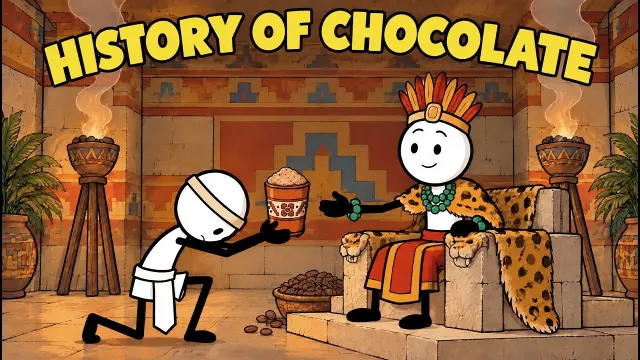
 When Chocolate Was Money You Could Drink in Ancient Times
#Ancient Civilizations
1 ideas
When Chocolate Was Money You Could Drink in Ancient Times
Get new #Ancient Civilizations ideas by email
Every Thursday: the week's best ideas, with the newest from #Ancient Civilizations.
Related tags
Ancient Civilizations: An Evergreen Guide
Ancient civilizations are the early complex societies that shaped human history long before the modern world took form. They grew from small farming communities into organized cultures with cities, rulers, laws, trade, religion, art, and writing. When people talk about ancient civilizations, they often mean the great early societies of Mesopotamia, Egypt, the Indus Valley, China, Greece, Rome, Mesoamerica, and the Andes, though many others flourished as well.
What makes a civilization “ancient”
A civilization is usually considered ancient when it has settled communities, social organization, specialized work, and shared systems for communication and belief. These societies often left behind monuments, tools, texts, and artworks that help us understand how they lived. Some grew near rivers, where water made farming possible and supported large populations. Others developed in coastal areas, mountain regions, or fertile valleys.
Ancient civilizations were not all the same. Some were ruled by kings or emperors, while others had councils, city-states, or layered social classes. Some were highly centralized, and others were networks of smaller communities connected by trade and shared culture.
Read more
Main features and achievements
Many ancient civilizations are known for their lasting achievements in:
- Architecture, such as temples, pyramids, palaces, roads, and fortifications
- Writing systems, including cuneiform, hieroglyphs, alphabets, and pictographs
- Agriculture, irrigation, and food storage
- Mathematics, astronomy, calendars, and measurement
- Law, administration, and record-keeping
- Art, sculpture, pottery, jewelry, and textiles
These achievements were practical as well as symbolic. A temple could be a religious center, a political statement, and an engineering feat all at once. Writing was used for trade records, prayers, royal decrees, stories, and everyday administration.
Common styles and differences
Each civilization had its own character. Some emphasized monumental stone construction, while others relied more on earthworks, wood, or adobe that may not have survived as well. Some left extensive written records, while others are known mostly through archaeology. Their art and objects often reflect local beliefs, available materials, and the environment they lived in.
Despite their differences, ancient civilizations often shared certain patterns: the rise of cities, the growth of trade, the development of social classes, and the need to manage food, water, and authority.
Why they still matter
Ancient civilizations continue to matter because they influenced later cultures in language, religion, law, science, and art. They also remind us that human beings have long been inventive, adaptable, and interconnected. Studying them can deepen your understanding of how societies begin, grow, and sometimes decline.
If you are exploring the topic
If you are new to ancient civilizations, start with a broad overview rather than trying to memorize every kingdom or dynasty. Look for:
- Where the civilization developed and why that location mattered
- How people farmed, traded, and governed
- What kinds of writing, art, or buildings survive
- How archaeologists and historians piece together the past
It helps to compare civilizations side by side, because similarities can be just as revealing as differences. And remember that what survives is only part of the story. Many everyday lives, especially those of ordinary people, are harder to see but just as important.
Videos come from YouTube and posts from Instagram; titles and summaries are our own. All rights belong to their creators.