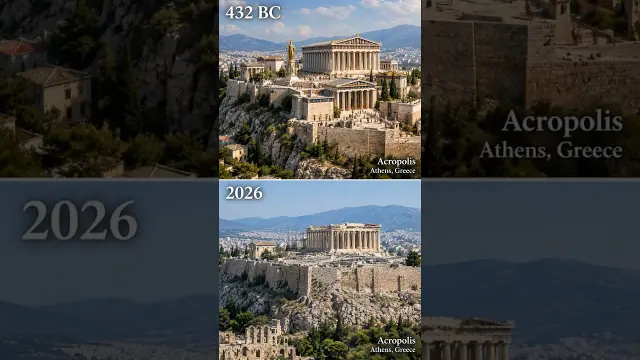
 Historical Places Then and Now: Two Thousand Years of Architecture
#Ancient World
1 ideas
Historical Places Then and Now: Two Thousand Years of Architecture
Get new #Ancient World ideas by email
Every Thursday: the week's best ideas, with the newest from #Ancient World.
Related tags
Ancient World: A Guide to Early Civilizations
The ancient world is the long stretch of human history before the medieval period, when the first great civilizations formed, cities grew, writing began, and organized societies took shape. It includes many cultures from different regions, such as the societies of Egypt, Mesopotamia, Greece, Rome, the Indus Valley, China, and the ancient Americas. Though these worlds were separated by distance, they shared important developments in farming, trade, law, religion, architecture, and artistic expression.
What makes the ancient world so fascinating is that it gave rise to many of the ideas and forms that still shape life today. People built temples, palaces, tombs, roads, and public buildings. They created systems of writing, kept records, told myths, and developed laws. They made pottery, jewelry, sculpture, textiles, and painted objects for both practical use and ceremony. Much of what we know about these societies comes from ruins, inscriptions, objects, and the stories they left behind.
Main civilizations and traditions
The ancient world was not one single culture, but many. Some civilizations are especially well known because they left extensive remains or written records. In Egypt, monumental stone buildings and tombs reveal a culture deeply connected to religion and the afterlife. In Mesopotamia, early city-states developed irrigation, cuneiform writing, and complex administration. In Greece, philosophy, theater, and civic life became highly influential. In Rome, engineering, law, and imperial organization reached a remarkable scale.
Read more
Elsewhere, ancient cultures developed in their own distinct ways. The Indus Valley civilization built planned cities. Early Chinese dynasties created bronze work, writing systems, and court traditions. In the Americas, ancient peoples built powerful societies with advanced agriculture, architecture, and ceremonial centers. Each region deserves to be understood on its own terms, not as part of a single storyline.
Art, architecture, and everyday life
Ancient art often served both beauty and function. Images of rulers, gods, animals, and daily labor appeared on walls, vessels, stone reliefs, and small portable objects. Architecture was shaped by materials, climate, religion, and political power. Sun-dried brick, stone, wood, and clay were all used in different places, depending on what was available.
Everyday life in the ancient world was varied and often demanding. Most people worked in farming, herding, crafting, or trade. Families, households, and communities were central to social life. Clothing, food, and shelter differed widely by region, class, and season, but shared a common need for practicality.
How to approach the ancient world
If you’re new to the subject, it helps to begin with the basics: geography, chronology, and material culture. Ask where a civilization developed, what resources it had, and how people lived. Try to see objects and buildings not only as art, but as evidence of beliefs, labor, status, and technology.
A few useful things to keep in mind:
- Ancient societies were diverse, not primitive copies of later ones.
- Many of their achievements were practical as well as symbolic.
- Surviving evidence is incomplete, so interpretation always matters.
- What looks familiar today may have had a very different meaning then.
The ancient world invites curiosity because it is both distant and recognizable. Its ruins, stories, and artifacts remind you that people long ago built homes, made choices, worshipped, traded, governed, and created beauty in ways that still speak across time.
Videos come from YouTube and posts from Instagram; titles and summaries are our own. All rights belong to their creators.