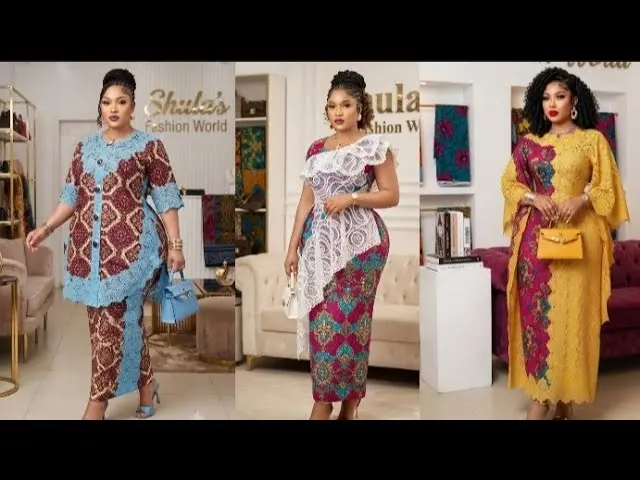
 Millionaire Style Guide on Mixing Lace and Ankara Like a Pro
#Ankara Style
1 ideas
Millionaire Style Guide on Mixing Lace and Ankara Like a Pro
Get new #Ankara Style ideas by email
Every Thursday: the week's best ideas, with the newest from #Ankara Style.
Related tags
Ankara Style: A Guide to African Wax Print Fashion
Ankara is the name most often used in West Africa, and especially in Nigeria, for the vivid wax-printed cotton cloth that has become one of the most recognisable fabrics in the world. In East Africa the same family of cloth is usually called kitenge. The fabric is woven cotton, printed with a wax-resist technique that leaves fine crackle lines across the design — those hairline veins are one of the surest signs that you are looking at genuine wax print rather than a flat industrial copy.
Where it comes from
The technique itself grew out of wax-resist dyeing practised on the island of Java, where hot wax is drawn or stamped onto cloth to block dye and create patterns. European textile makers industrialised the process and took it to West African markets, where traders and customers reshaped it entirely: they chose the colours, rejected the designs that missed the mark, and gave the cloth its own names and meanings. Since then the fabric has become thoroughly African — designed for, sold in and worn across the continent, and central to how many families mark weddings, naming ceremonies, funerals and festivals.
Reading the patterns
Read more
Ankara is a fabric that talks. Many prints carry proverbs, sayings or social commentary in their names, and designs are built from repeated motifs: concentric circles, fans, seeds, leaves, combs, birds, household objects. Colour carries mood as much as meaning — deep indigos and browns feel ceremonial and grounded, while bright yellows, oranges and greens read as celebratory. Because patterns repeat across a bolt, the cloth invites careful cutting: a good tailor thinks about where each motif lands on the body, matching seams and placing strong motifs at the shoulder, waist or hem rather than letting them fall at random.
The main garments
Ankara is worn as wrappers and blouses, as the two-piece kaba and slit, as flowing boubou and agbada robes, as fitted dresses, skirts, shirts, jackets, headwraps and bags. Because the print is busy, silhouette matters more than decoration: a simple, well-cut line lets the cloth do the talking. Tailored pieces in a single print make a strong, coherent outfit; mixing two or three prints works when the scales differ clearly — one large, one small — and the palettes share a colour.
Getting started
If you are new to Ankara, begin with a smaller piece: a shirt, a skirt, a headwrap or a tote. Buy a little more fabric than you think you need, so the tailor can align patterns, and check the cloth in daylight, since wax prints shift colour under shop lighting. Pre-wash before sewing, as cotton can shrink and some dyes bleed at first. Wash finished garments in cool water, inside out, separately for the first few washes, and dry in shade to protect the colours.
Wearing it well
One printed statement piece with plain companions — denim, linen, crisp white, black — keeps an outfit confident rather than crowded. Lace and Ankara are a classic pairing in West African formalwear, and they work best when one of the two is quieter. Above all, wear it as it was meant to be worn: Ankara has always been a cloth people adapt, argue with and reinvent, so let the print say something that is yours.
#Ankara Style: frequently asked questions
How can I tell whether Ankara fabric is genuine wax print or a flat imitation?
Turn the cloth over and look closely at the surface: real wax print carries fine hairline crackle lines where the wax broke during dyeing, and the pattern usually shows through on the reverse side. A flat industrial copy looks uniformly smooth and the print often sits only on the face of the fabric. Feeling the cotton and holding it up in daylight will tell you a lot, since wax prints also shift colour depending on the light.
I have never worn Ankara before — what is a sensible first piece?
Start with something small and easy to style, such as a headwrap, a tote, a simple skirt or a shirt, rather than committing to a full outfit. That lets you live with the print and see how you like it before investing in tailoring. If you are having it made, buy a little extra fabric so the tailor has room to align the repeating motifs.
How do I pick a print that will actually suit me?
Let colour set the mood first: deep indigos and browns read as grounded and ceremonial, while bright yellows, oranges and greens feel celebratory, so choose according to where you plan to wear it. Then look at scale — a large motif on a small frame can overwhelm, and a fine motif can disappear in a busy outfit. Because the print is naturally loud, a simple silhouette lets the cloth carry the look.
What is the right way to wash and care for Ankara garments?
Pre-wash the fabric before sewing, since cotton can shrink and some dyes bleed the first time. Wash finished pieces in cool water, turned inside out, and keep them separate for the first few washes so any loose dye does not transfer. Dry in shade rather than direct sun, which dulls the colours over time.
What occasions is Ankara worn for?
It is worn across the whole range of family life — weddings, naming ceremonies, funerals, festivals and ordinary days — and the print chosen often reflects the seriousness or joy of the event. For formal wear, pairing Ankara with lace is a long-standing habit in West Africa, and it works best when one of the two fabrics is the quieter partner. Mixing prints is fine as long as the scales clearly differ and the palettes share a colour.
What are the common mistakes people make when wearing Ankara?
The most frequent one is crowding the outfit: a bold print plus bold accessories plus another pattern leaves nothing for the eye to rest on, so plain denim, linen, white or black usually serves the fabric better. Another is ignoring motif placement, which lets strong designs land awkwardly at the body instead of being placed deliberately at a shoulder, waist or hem. Slight mismatched pattern alignment at the seams is also worth watching for when a piece is made to measure.
Videos come from YouTube and posts from Instagram; titles and summaries are our own. All rights belong to their creators.