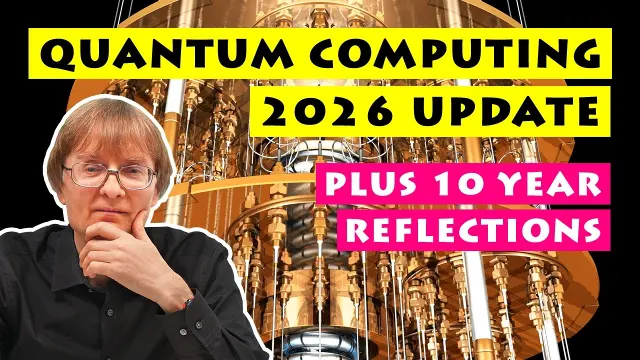
 Quantum Computing in 2026: An Annual Review of Progress
#Annual Review
1 ideas
Quantum Computing in 2026: An Annual Review of Progress
Get new #Annual Review ideas by email
Every Thursday: the week's best ideas, with the newest from #Annual Review.
Related tags
Annual Review: Looking Back to Plan Ahead
An annual review is a deliberate pause at the end of a cycle — a year of work, a year of a project, a year of ordinary life — in which you look back at what happened and decide what to carry forward. It is less a verdict than a conversation with your own record: what you set out to do, what you actually did, and what you learned in the gap between the two.
The practice has two roots. One is organisational: companies have long run yearly performance and planning cycles, partly because budgets, contracts and reporting periods follow the calendar. The other is personal: cultures everywhere mark the turning of a year with reflection and resolution. An annual review borrows the structure of the first and the honesty of the second.
The main kinds
- Performance review: a formal conversation between a person and their manager about the year's work, usually tied to goals agreed in advance.
- Team or business retrospective: what the group achieved, what slowed it down, what to change in how it works.
- Project post-mortem: a look at one finished piece of work, often closer to its end than the calendar year.
- Personal annual review: a private reckoning with habits, health, relationships, money, learning or creative output.
Read more
What a good review contains
Most useful reviews answer four questions in order. What did I intend? What actually happened? Why was there a difference? What will I do differently? The third question is the one people skip, and it is the one that produces insight. Facts first — a list of finished work, kept commitments, abandoned intentions — then interpretation. Judgement applied before evidence tends to produce either self-flattery or self-punishment, neither of which changes anything.
Practical tips for a first one
Set aside a real block of time rather than doing it in spare moments; an hour or two, away from the usual interruptions. Gather your raw material beforehand: a calendar, a notebook, a list of what you completed. Memory rewrites the year more than most of us expect. Write the review down, whatever the format — a page of notes is enough — because a review you can reread next year is worth far more than one you only think through.
Keep the scope honest. A review that catalogues every unfinished thing becomes a punishment; choose a handful of areas that matter and let the rest go. Resist the temptation to turn the review into a plan for a completely different person. The most durable changes come from small adjustments to what you already do, not from a wholesale reinvention.
Finally, separate the looking back from the looking forward. Spend the first half on the past year without defending it, and only then decide what the next one should hold. Ending with two or three concrete intentions, rather than a long list, gives the review something to be measured against when you sit down to do it again.
#Annual Review: frequently asked questions
How do I actually start an annual review without putting it off?
Book a proper stretch of quiet time rather than squeezing it into spare moments, and gather your raw material beforehand — a calendar, notes, a list of what you finished. Start by writing down what you intended at the beginning of the cycle, then what really happened, before you judge any of it. Putting it on paper matters: a review you can reread later is worth much more than one you only think through.
What should I have ready before I sit down to review my year?
You mainly need evidence, not inspiration — anything that records the year as it was lived, such as a calendar, a notebook, a folder of completed work or a list of commitments kept and dropped. Memory rewrites a year far more than people expect, so the material is there to correct it. Beyond that, only a block of uninterrupted time and something to write with.
Which kind of annual review should I choose?
It depends on what you are reviewing: a formal performance conversation with a manager, a group retrospective on how a team worked, a post-mortem on one finished project, or a private personal review of habits and priorities. The structures differ, but they share the same spine — intention, what happened, why the gap, what changes. Pick the one that matches the scope of what you actually want to understand.
How do I keep a review from turning into self-criticism?
Limit the scope on purpose: choose a handful of areas that matter and consciously let the rest go, rather than cataloguing every unfinished thing. Put facts down before interpretation, since judging ahead of evidence tends to produce either flattery or punishment, and neither changes anything. The aim is a conversation with your own record, not a verdict on yourself.
What is the most common mistake people make in an annual review?
Skipping the question of why the difference between intention and outcome existed — it is the step that produces actual insight, and the easiest to avoid. Another frequent slip is designing the next year for a completely different person, which rarely survives contact with real life. Durable change tends to come from small adjustments to what you already do.
How should I end a review so it leads somewhere?
Keep the looking back and the looking forward separate: spend the first part on the past year without defending it, and only then decide what comes next. Close with a few concrete intentions instead of a long list, so the review has something to be measured against when you return to it. That is also what makes caring for the practice easy — each cycle builds on a record rather than starting from nothing.
Videos come from YouTube and posts from Instagram; titles and summaries are our own. All rights belong to their creators.