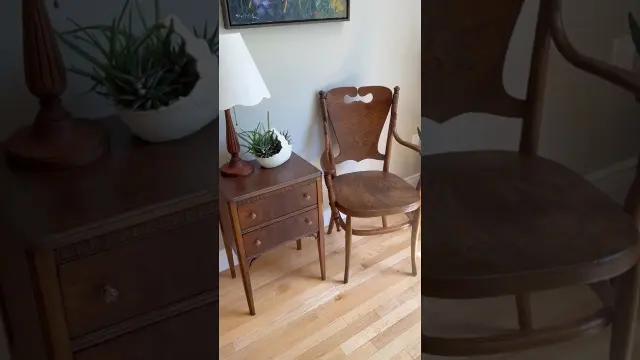
 Challenging Restoration of a Damaged Antique Accent Chair
#Antique Chair
1 ideas
Challenging Restoration of a Damaged Antique Accent Chair
Get new #Antique Chair ideas by email
Every Thursday: the week's best ideas, with the newest from #Antique Chair.
Related tags
A Guide to Antique Chairs: Styles, Craft and Care
An antique chair is more than a seat. It is a piece of furniture that has survived long enough to carry the marks of its own history, and for many people that history is exactly what makes it worth owning. There is no single official definition, but the common understanding is that a chair becomes antique once it is around a hundred years old; older pieces that are merely well used are usually described as vintage instead. Age alone, though, says little about quality, and a well-made chair of modest age can be more rewarding than a fragile one that happens to cross the century line.
A short background
Chairs began as symbols of authority long before they became ordinary household objects. For centuries only the most important people in a room sat on a proper chair while everyone else used stools or benches. As furniture-making spread and towns grew richer, chair design divided into two broad traditions: the formal, carved and upholstered chair made for drawing rooms, and the simpler rush-seated or spindle-backed chair made for kitchens, farms and workshops. Both traditions survive today, and both have their collectors.
Main styles and kinds
Read more
Antique chairs are usually sorted by period or by the materials and methods used to build them.
- Windsor chairs, with their spindle backs and shaped seats, are associated with English and early American country furniture.
- Ladder-back and rush-seated chairs are sturdy, light and often rural in origin.
- Carved mahogany chairs with upholstered seats belong to the formal tradition of the eighteenth and nineteenth centuries.
- Bentwood chairs, made by steaming and shaping lengths of wood, come from a later industrial era.
- Caned and upholstered variants appear across all of these, and re-upholstery is common enough that the fabric rarely tells you much about the frame.
What to look for
Inspect before you decide. Turn the chair over and look at the joints: hand-cut dovetails, wooden pegs and slightly irregular tool marks suggest older handwork, while uniform screws and machine-perfect edges often mean a later piece. Check that the legs are sound, that the seat frame is not split, and that the chair stands level without rocking. A little wear on the arms and feet is normal and even desirable; fresh, even scratches all over a frame deserve a second look.
Smell and finish matter too. Old wood dries, darkens and develops a patina that is difficult to fake convincingly.
Practical care
Keep antique chairs out of direct sunlight and away from radiators and damp walls, since wood and glue both dislike rapid changes in temperature and humidity. Dust regularly with a soft cloth, use wax rather than heavy polishes, and avoid dragging a chair across the floor by its back. Loose joints should be repaired promptly by a competent restorer, before a small wobble becomes a broken rail.
Repairs are part of a chair's life, and honest restoration need not reduce its charm. Ask yourself whether you want a piece that looks untouched or one that is comfortable and safe to sit on; both answers are reasonable.
#Antique Chair: frequently asked questions
How can I tell whether a chair is genuinely antique?
Age is not stamped anywhere on a chair, so you read it from how the piece was built. Hand-cut dovetails, wooden pegs and slightly uneven tool marks point to older handwork, while machine-perfect edges and uniform screws usually suggest something later. The patina and smell of old, dried wood are very hard to imitate convincingly.
What should I inspect before buying an antique chair?
Turn the chair over and study the joints, then confirm the legs are sound and the seat frame is not split. Set it on a flat floor to see whether it rocks, and read the wear carefully: a little on the arms and feet is normal and even welcome, while fresh, even scratches all over the frame deserve suspicion.
Which kind of antique chair should I choose?
Begin with how the chair will actually be used — a spindle-backed or rush-seated piece suits a kitchen or hallway, while a carved upholstered chair belongs in a drawing room. Many collectors pick a single period or making tradition they respond to and stay with it, since scattering unrelated eras is what makes a room feel muddled. Comfort and sturdiness matter as much as looks if the chair is going to be sat on.
How should I care for an antique chair day to day?
Keep it out of direct sunlight and away from radiators and damp walls, because wood and glue both dislike fast swings in temperature and humidity. Dust with a soft cloth, use wax rather than heavy polish, and lift the chair instead of dragging it by its back. Deal with a loosened joint promptly, before a slight wobble becomes a broken rail.
Should I restore an antique chair or leave its wear alone?
Both answers are reasonable, and the real question is whether you want a piece that looks untouched or one that is comfortable and safe to sit on. Honest repairs do not erase a chair's character, and a re-covered seat says almost nothing about the frame beneath it — judge the wood, not the fabric.
What mistakes do people make when starting out with antique chairs?
The most common is buying on age alone, as though anything old must be good, when the quality of the making counts for far more than crossing the age line. Others overlook a rocking leg or a split seat frame because the finish looks convincing, or polish away a sound patina until the surface goes flat and lifeless.
Videos come from YouTube and posts from Instagram; titles and summaries are our own. All rights belong to their creators.