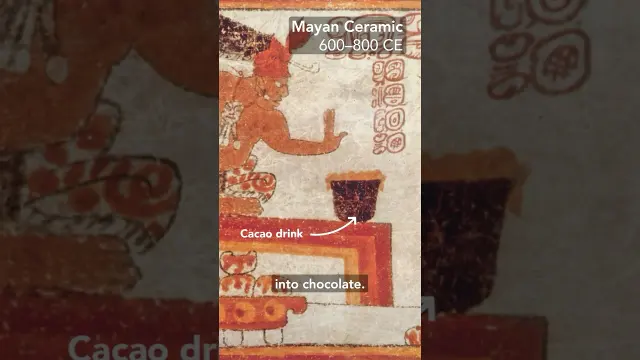
 The Ancient South American Origins of Chocolate Revealed
#Archaeology
2 ideas
The Ancient South American Origins of Chocolate Revealed
 Hiking to Find Ancient Cave Paintings on a Mountain in Turkey
Get new #Archaeology ideas by email
Every Thursday: the week's best ideas, with the newest from #Archaeology.
Related tags
Archaeology: Exploring the Human Past
Archaeology is the study of the human past through the things people left behind. These can include buildings, tools, pottery, bones, art, rubbish, and even traces in the soil. By carefully finding, recording, and interpreting these remains, archaeologists piece together stories about how people lived, moved, worked, traded, and believed.
Unlike history, which often relies on written records, archaeology can reveal the lives of people who did not leave texts behind. It also helps fill in gaps where written sources are incomplete or biased. In this way, archaeology gives a broader picture of the past and often shows that everyday life mattered just as much as kings, wars, and great events.
What archaeology includes
Archaeology is a wide field. Some archaeologists focus on ancient settlements, tombs, or temples. Others study shipwrecks, landscapes, industrial sites, or very recent remains from the modern era. There are also specialists who work with animal bones, plant remains, pottery, stone tools, or human burial sites. Each kind of evidence adds a different piece to the puzzle.
Read more
The field also overlaps with other disciplines such as history, anthropology, geology, and conservation. That is because understanding the past often means looking not only at objects themselves, but also at where they were found and how they fit into the surrounding environment.
Main methods and approaches
A careful archaeological project usually begins with survey, where sites are located and mapped. Excavation follows only when needed, because digging destroys the original context of a site. That is why recording is so important. Archaeologists note layers of soil, the position of objects, and the relationship between finds. These details can be just as important as the objects themselves.
After excavation, objects are cleaned, studied, and compared with other evidence. Dating methods, laboratory analysis, and interpretation help build a fuller picture. In some cases, archaeologists also use non-invasive techniques to study a place without digging deeply into it.
Why context matters
One of the most important ideas in archaeology is context. A single object can be interesting, but its meaning changes depending on where it was found and what was around it. A pot in a kitchen, a grave, or a rubbish pit may tell very different stories. Because of this, even small fragments can be valuable when they are recorded carefully.
What beginners should know
If you are new to archaeology, start with curiosity and patience. The subject is not only about treasure hunting. It is about careful observation, respectful handling of remains, and thoughtful interpretation. Sites and artifacts should always be treated as part of a shared heritage, not as souvenirs.
A few practical points are worth keeping in mind:
- Never dig at an archaeological site without permission.
- Leave objects where they are found unless you are part of a proper survey or excavation.
- Take notes about location, layers, and nearby features if you are studying a site.
- Remember that preservation matters; many remains are fragile and easy to damage.
Archaeology is ultimately about human lives. It helps you see that the past was made up of ordinary people as well as famous ones, and that even the smallest trace can open a window onto a much larger story.
Videos come from YouTube and posts from Instagram; titles and summaries are our own. All rights belong to their creators.