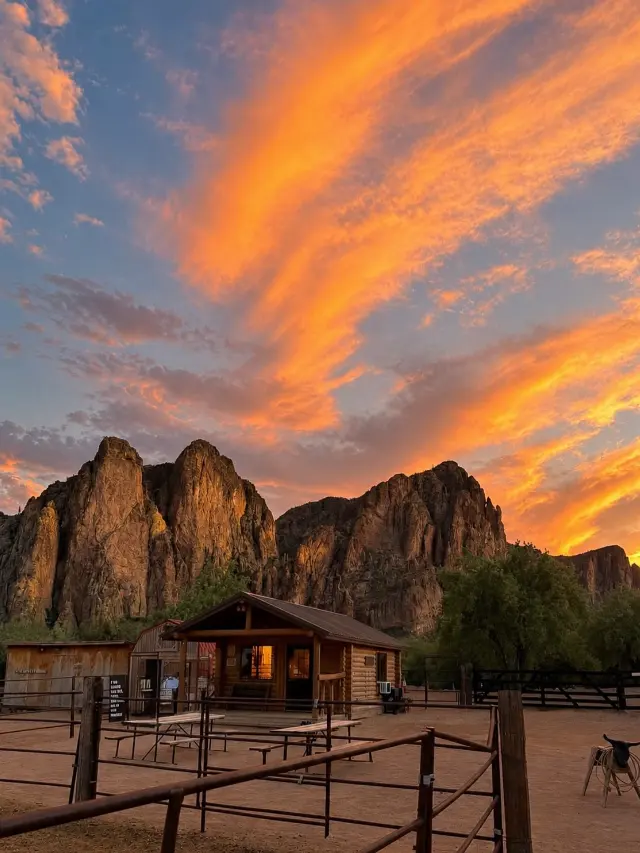
 Taking in a vibrant and colorful Arizona sunset
#Arizona Sunset
1 ideas
Taking in a vibrant and colorful Arizona sunset
Get new #Arizona Sunset ideas by email
Every Thursday: the week's best ideas, with the newest from #Arizona Sunset.
Related tags
Arizona Sunset: A Guide to Desert Light and Colour
Few skies are as talked about as the one over Arizona at the end of the day. If you have ever stood in the Sonoran Desert as the light drops, you already know the feeling: the horizon turns amber, then coral, then a deep violet that seems to spread upward rather than fade. It is a landscape that makes sunsets feel like an event.
Why the colours look like that
A sunset's palette comes from the way sunlight travels through the atmosphere. Low on the horizon, light passes through much more air than at midday, so the shorter blue wavelengths scatter away and the longer reds, oranges and pinks come through. What makes Arizona particularly generous is the dry air combined with fine dust and other particles lifted from the desert floor. Those particles scatter and tint the light, softening it into the layered, almost painted gradients the state is known for. Cloud cover matters too: high, thin clouds catch the light from below after the sun has dipped, which is where the famous pinks and purples come from.
What you will actually see
Read more
The desert sky changes quickly, and the show usually runs in stages. There is the warm build-up before the sun touches the horizon, the intense flash of colour at contact, and then the afterglow — often the richest part, when the sky above turns rose and lavender while the ground falls into silhouette. Saguaro cacti, rocky buttes, distant mesas and open grassland all read as clean dark shapes against that light, which is part of why the view feels so graphic and still.
Getting the most from it
Give yourself time. Arrive before the sun is low and stay well after it disappears; the minutes after sunset are frequently better than the ones before. Look behind you as well as ahead — the opposite horizon often takes on a soft pink glow that most people miss because they are facing the sun.
For photographs, expose for the sky and let the land go dark, or use the silhouettes deliberately as foreground. A single cactus, a fence line or a ridge gives the eye somewhere to rest. Keeping the sun just out of frame usually preserves more colour than pointing straight at it.
If you are new to desert evenings, remember that temperatures drop quickly once the light goes, and that the ground cools fast underfoot. Bring a layer, carry water, and watch where you step in fading light. Then simply stop, turn off the screen, and let the colour do its work.
#Arizona Sunset: frequently asked questions
Why do Arizona sunsets look so much more dramatic than sunsets elsewhere?
Desert air is dry and carries fine dust lifted from the ground, and those particles scatter and tint low sunlight into soft, layered gradients rather than one flat wash of colour. High, thin clouds also catch light from below after the sun has dropped, which is what produces the pinks and lavenders the state is known for. The result is a sky that seems to build in bands instead of simply fading.
How do I plan an evening around an Arizona sunset?
Get to your spot well before the sun gets low and plan to stay long after it disappears, because the afterglow is often richer than the moment of sunset itself. Bring a warm layer, since the desert cools fast once the light goes, and carry water. Also turn around now and then — the horizon opposite the sun frequently glows softly and most people never see it.
What should I look at or photograph to capture the feeling of it?
Treat the land as a dark shape and let the sky hold the colour, so a lone cactus, a ridge or a fence line becomes a clean silhouette that gives the eye somewhere to rest. Exposing for the sky keeps the rich tones intact, and keeping the sun just outside the frame usually preserves more colour than aiming straight at it. Look for the build-up, the flash at the horizon, then the rose-and-lavender afterglow as separate moments worth shooting.
Which kind of desert setting gives the best sunset view?
Open ground with a clear western horizon helps most, whether that is grassland, a rocky butte or a line of distant mesas. Saguaro country is popular because the tall shapes read so sharply against bright sky, but any spot with uncluttered distance and a few strong silhouettes will do. Choose somewhere you can stand safely as the light fades rather than somewhere you have to scramble out of in the dark.
What mistakes do first-time visitors make with desert evenings?
The most common one is leaving too early, right when the sun touches the horizon, and missing the best colour minutes later. Another is dressing for daytime heat and being caught out by how quickly the air and the ground cool once the light goes. Watch your footing in fading light too, since desert ground is uneven and easy to trip on when the shadows take over.
Videos come from YouTube and posts from Instagram; titles and summaries are our own. All rights belong to their creators.