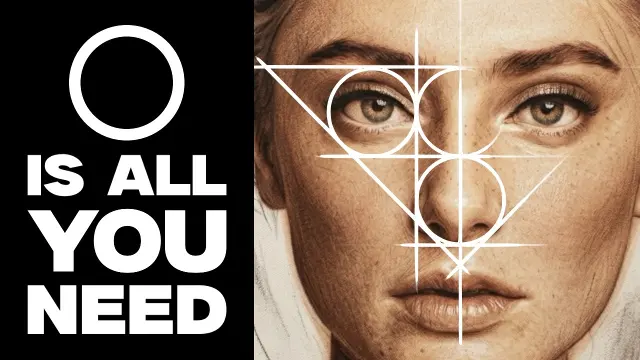
 Simple Geometry Tricks for Perfect Face Proportions
#Art Basics
1 ideas
Simple Geometry Tricks for Perfect Face Proportions
Get new #Art Basics ideas by email
Every Thursday: the week's best ideas, with the newest from #Art Basics.
Related tags
Art Basics: A Gentle Guide to Getting Started
What art basics mean
Art basics are the building blocks that help you create and understand visual work. They include observation, line, shape, form, value, colour, texture, space, and composition. Whether you draw, paint, collage, or work digitally, these basics give you a foundation that makes your ideas easier to express.
You do not need to master everything at once. In fact, most artists return to the basics again and again. They are less about strict rules and more about learning how to see, simplify, and decide what matters in a picture.
The main foundations
Read more
Line is often the first tool you use. It can describe an edge, suggest movement, or create pattern. Shape is the flat outline of an object, while form gives it a sense of three-dimensional volume. Value refers to light and dark, and it is one of the most important parts of making artwork feel solid and believable.
Colour adds mood and emphasis. You may work with warm or cool tones, strong contrasts, or quiet, harmonious combinations. Texture can be real, as in raised paint or fabric, or implied, when marks make a surface look rough, smooth, soft, or shiny. Space is how the parts of a picture relate to one another and to the empty areas around them.
Composition brings these elements together. It is the arrangement of shapes, colours, and spaces in a way that feels balanced, focused, or expressive.
What beginners should know
A strong start often comes from drawing what you can actually see, not what you think you know. This is why simple objects, hands, faces, plants, and everyday scenes are useful practice subjects. Start with basic shapes first, then refine the details. This helps you avoid getting lost too early.
It also helps to practice lightly and often. Short sketches can teach you more than a single long drawing, because they train your eye to notice proportion, angles, and value relationships. If something looks wrong, check the big shapes before adjusting the small ones.
Mistakes are part of learning. In the beginning, the goal is not perfect art but better seeing and more confident choices.
Simple ways to practice
- Draw one object using only lines, then draw it again using light and dark values.
- Break a complex scene into circles, boxes, and triangles before adding detail.
- Try the same subject in different compositions: close up, far away, centered, or off to one side.
- Copy simple forms from real life to study proportion and shading.
- Limit your tools sometimes, so you can focus on observation rather than options.
Keeping your practice useful
The most helpful habit is consistency. Even a few minutes of focused practice can build skill over time. Look carefully, work slowly when needed, and simplify before you complicate. If you learn to see shape, value, and space clearly, many other art skills become easier.
Art basics are not only for beginners. They are the quiet foundation behind almost every visual style, and returning to them can help you grow at any stage.
#Art Basics: frequently asked questions
How do I start learning art basics if I've never drawn before?
Begin by drawing what is actually in front of you rather than what you assume an object looks like, since careful observation is the skill everything else builds on. Pick everyday subjects such as a cup, a plant, or your own hand, and reduce them to simple shapes before adding detail. Short, frequent sketches will teach you more than one long effort, because they train your eye to notice proportion and value.
What supplies do I actually need to practice the foundations?
Very little — a pencil, some paper, and something to draw from are enough to work on line, shape, value, and space. In fact, limiting your tools on purpose can help, because fewer options keep your attention on looking closely instead of on choosing materials. Add colour, textured surfaces, or digital tools later once the basic habits feel natural.
Which foundation should I focus on first — line, shape, value, or colour?
Line and shape usually come first, since they let you block in the outline and proportions of a subject quickly. Value, the light and dark relationships, is worth attention early too, as it is what makes a drawing feel solid and believable. Colour and texture are easier to use well once shape and value are under control.
Why does my drawing look wrong even when I copy the details carefully?
Small details are usually not the problem — the big shapes underneath them are. When something feels off, step back and check the overall proportions, angles, and placement before adjusting anything fine. Breaking a complex scene into circles, boxes, and triangles first makes those larger relationships easier to judge.
How can I keep improving when I only have a few minutes a day?
Consistency matters far more than session length, so a few minutes of focused practice done regularly will build skill over time. Use those short sessions for one clear aim, such as studying values on a single object or trying a subject in a different composition. Return to the basics often — they are not a beginner stage you leave behind, but a foundation you keep drawing on at every level.
Is it worth practicing the same subject more than once?
Yes — repeating a subject is one of the fastest ways to learn. Try drawing the same object using only lines, then again using light and dark, or place it close up, far away, centred, and off to one side to see how arrangement changes the picture. Comparing the versions shows you what you actually observed versus what you assumed.
Videos come from YouTube and posts from Instagram; titles and summaries are our own. All rights belong to their creators.