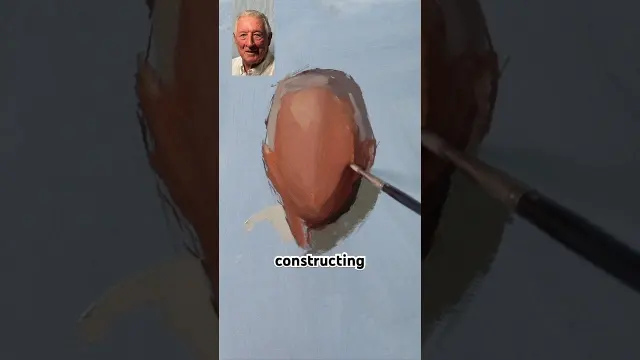
 Why Shorter Studies Beat Long Detailed Portraits for Learning
#Art Education
1 ideas
Why Shorter Studies Beat Long Detailed Portraits for Learning
Get new #Art Education ideas by email
Every Thursday: the week's best ideas, with the newest from #Art Education.
Related tags
Art Education: A Beginner's Guide to Learning to Make Art
Art education is the practice of teaching people to make, look at and think about art. It happens in many places and takes many shapes: a primary school classroom with pots of powder paint, a community studio, a museum workshop, an evening class in life drawing, or a kitchen table with a pencil and a spare hour. What all of it shares is the belief that making images and objects is a learnable skill rather than a mysterious gift, and that looking closely is something that can be taught too.
Where it comes from
Organised art teaching has deep roots in apprenticeship, where a young person learned by grinding pigments, preparing panels and copying the master's work before being trusted with a brush. Later, academies formalised this into a curriculum of drawing from plaster casts, then from live models, before attempting original composition. In the nineteenth and twentieth centuries, a different idea gained ground: that children's natural mark-making should be encouraged rather than corrected, and that art could be a way of exploring materials and ideas rather than a set of rules to obey. Most contemporary teaching sits somewhere between those two instincts — structure and freedom in some proportion.
What it usually covers
Read more
A rounded art education tends to develop several things at once:
- Observation: learning to see shape, value, edge, proportion and colour rather than assuming you already know what things look like.
- Technique: how a material actually behaves — how graphite smudges, how watercolour dries lighter, how clay behaves when it loses moisture.
- Composition: arranging elements in a frame so the eye knows where to travel and where to rest.
- Vocabulary: knowing the words for what you and others are doing, so critique is possible.
- Context: meeting the art of different times and places, which widens the range of pictures you can imagine making.
Approaches you will meet
Some teaching is skills-first, building up from simple exercises. Some is project-led, where a theme drives the work and skills arrive as needed. Some is rooted in experimentation, with an emphasis on play and accident. Some is historical or critical, treating art primarily as something to be discussed. Portfolio preparation sits in its own category, shaped by the requirements of whatever comes next.
What beginners should know
Start with a material that forgives and is cheap: a soft pencil, a pad of paper, perhaps charcoal. Draw things in front of you rather than from imagination at first, because reality supplies the information your mind would otherwise invent incorrectly. Short, frequent practice beats long, rare sessions — small studies build fluency faster than a single ambitious piece, and they cost you less when they go wrong. Keep everything, including the failures; a dated pile of work is the clearest record of your own progress and far more instructive than a portfolio of favourites.
Find some feedback. A class or a group of people willing to talk honestly about what they see will move you faster than solitary effort, though solitary effort is not wasted. Look at original work where you can — the scale and surface of a thing rarely survive reproduction. And give yourself permission to be a beginner for a long while, because that is what learning looks like from the inside.
#Art Education: frequently asked questions
How do I start learning art as a complete beginner?
Start with a material that is forgiving and cheap — a soft pencil and a pad of paper, or charcoal — and draw things that are actually in front of you rather than working from imagination. Reality supplies the information your mind would otherwise invent incorrectly. Short, frequent sessions will teach you more than occasional long ones.
Do I need to take a class, or can I learn on my own?
Solitary practice is not wasted, but feedback moves you much faster: a class or a group of people willing to talk honestly about what they see will catch habits you cannot spot in your own work. Looking at original pieces where you can is worth the effort too, since scale and surface rarely survive reproduction.
Which approach should I choose — skills-based, project-led, or experimental teaching?
Skills-first teaching builds up from simple exercises, project-led teaching lets a theme pull in techniques as they are needed, and experimental teaching emphasises play and accident. Pick according to what you want next: solid foundations, finished pieces, or freedom to explore materials without a fixed outcome.
What mistakes do beginners most often make?
The usual ones are practising rarely in long bursts instead of often in small ones, and discarding the work that went wrong. Drawing only from imagination too early is another, because it locks in assumptions about how things look. Keep everything you make, failures included — a dated pile of work records your progress more honestly than a folder of favourites.
Why do short studies teach faster than long, detailed pieces?
A small study lets you test an idea, see the result, and move on before a bad habit settles in. A long ambitious piece carries so much invested effort that mistakes tend to get defended rather than corrected. Frequent small studies also cost you little when they fail, which makes you willing to try more.
Is art a natural gift, or can anyone learn it?
Art education rests on the belief that making images and objects is a learnable skill rather than a mysterious gift, and that close looking can be taught as well. Observation, technique, composition and vocabulary all improve with guided practice. Give yourself permission to be a beginner for a long while, because that is what learning actually feels like from the inside.
Videos come from YouTube and posts from Instagram; titles and summaries are our own. All rights belong to their creators.