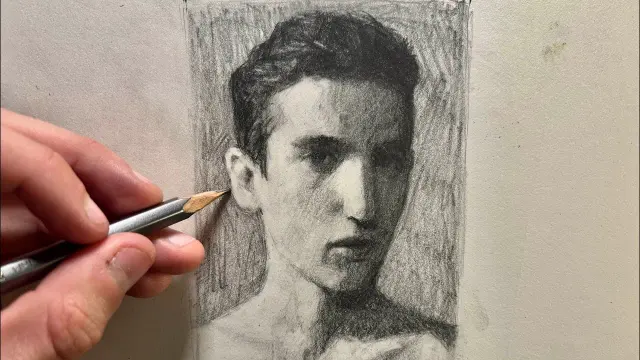
 The Easiest Way to Draw Realistic Portraits
#Art Guide
1 ideas
The Easiest Way to Draw Realistic Portraits
Get new #Art Guide ideas by email
Every Thursday: the week's best ideas, with the newest from #Art Guide.
Related tags
Art Guide: How to Start Making Art
Art is one of the oldest things people do. Long before writing, humans were marking walls, shaping clay and carving figures, and the impulse behind it has not changed much: the wish to notice something carefully and to leave a trace of that noticing. A guide to art is therefore less a set of rules than a way of organising your attention. You can begin with almost nothing — a pencil and a sheet of paper are enough — and the skills you build are cumulative, which means the practice itself matters more than any particular starting point.
Drawing before anything else
Most traditions of art teaching put drawing first, and for good reason. Drawing is where you learn to see: to check whether two things are actually the same size, whether a line really curves the way you assumed, whether a shadow is truly that dark. Beginners usually draw what they expect to see rather than what is in front of them, and correcting that habit is the central work of early practice. Simple exercises help. Draw an object from life rather than from a photograph. Turn the reference upside down to break your assumptions. Draw the same cup five times in a row and compare the results honestly.
Materials and techniques
Read more
You do not need much to start. Graphite pencils in a couple of grades, a soft eraser, a sharpener and inexpensive paper will carry you a long way. As you continue, the main families of materials each teach something different.
- Graphite and charcoal: forgiving, easy to correct, excellent for studying value and form.
- Ink and pen: decisive, since marks cannot easily be undone, which trains confidence.
- Watercolour: transparent and fluid, teaching patience with drying and restraint with pigment.
- Acrylic and oil paint: opaque and buildable, useful for colour mixing and layering.
- Digital tools: flexible and cheap to experiment with, though the underlying skills are identical.
What beginners should know
Practise regularly in short sessions rather than rarely in long ones; frequency teaches faster than duration. Keep your early work instead of throwing it away, so you can see change over months. Copying is a legitimate way to learn — studying how someone solved a problem is not cheating — but try to understand what you are copying. Learn a little about value, meaning how light and dark a shape is, because it does more for a picture's readability than accurate outline does. And accept that awkward stages are normal: nearly every drawing looks wrong halfway through.
Building a practice
Choose subjects you actually find interesting, since curiosity sustains practice when motivation dips. Work from life when you can, keep a small sketchbook with you, and set aside a fixed time each week. Sharing work with others helps, but protect the early, private phase where you are allowed to be bad at it. Progress in art is slow, uneven and real, and the people who improve are simply the ones who keep showing up with a pencil.
#Art Guide: frequently asked questions
How do I start learning art if I have never drawn before?
Start small and start with drawing, since it teaches you to look closely at what is actually in front of you rather than what you assume is there. All you really need is a pencil, an eraser and some paper, plus the habit of practising often in short sessions. Progress comes from repetition over time, not from expensive supplies or a perfect first attempt.
What materials should a beginner buy first?
A couple of graphite pencils in different grades, a soft eraser, a sharpener and inexpensive paper will take you a long way, and you can add more later. Each new material teaches something different: charcoal is forgiving for studying light and dark, pen work builds decisiveness, watercolour rewards patience, and paint is good for colour mixing. Buy a little at a time and let your curiosity about a medium guide the next purchase.
Should I learn to draw before trying painting or digital tools?
Drawing comes first in most teaching traditions because it trains the eye, and those seeing skills carry over into every other medium. Painting and digital work are largely about colour, layering and control on top of that foundation. You can certainly experiment with other materials early on, but expect the underlying drawing skills to stay the same.
How do I stay motivated when my work looks bad?
Choose subjects you genuinely find interesting, because curiosity keeps you going when enthusiasm dips, and keep a fixed time each week for practice. Keep your old sketches instead of discarding them so you can see how your work changes over the months. Nearly every drawing looks wrong halfway through, so treat that awkward stage as a normal part of the process rather than a sign to stop.
Is copying other people's art a bad habit?
Copying is a legitimate way to learn; studying how another artist solved a problem is not cheating. The value comes from trying to understand what you are copying, asking why a shape, shadow or colour choice works. Copy as a study, not as a substitute for drawing from life.
What is the most common beginner mistake?
Drawing what you expect to see instead of what is actually there, which is why simple tricks like turning a reference upside down help. Another common slip is chasing an accurate outline while ignoring value, the lightness or darkness of a shape, which does more for a picture's readability. Practising regularly on a small scale fixes both faster than occasional long sessions.
Videos come from YouTube and posts from Instagram; titles and summaries are our own. All rights belong to their creators.