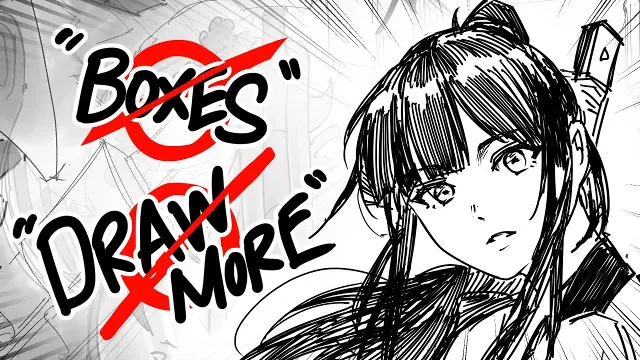
 Practical Advice on How to Actually Improve Your Art
#Art Improvement
1 ideas
Practical Advice on How to Actually Improve Your Art
Get new #Art Improvement ideas by email
Every Thursday: the week's best ideas, with the newest from #Art Improvement.
Related tags
How to Improve Your Art
Improving your art is less about talent and more about steady attention, practice, and curiosity. Whether you draw, paint, or work digitally, progress usually comes from building stronger habits and understanding the basics behind what you make. Art improvement is a broad idea: it can mean learning to draw more accurately, use color with confidence, create more expressive work, or simply feel freer while making art.
Start with the fundamentals
Most artists improve faster when they return to the basics. These usually include shape, proportion, perspective, value, line, composition, and color. You do not need to master them all at once. Focus on one area for a while, then move to the next. For example, if your drawings feel flat, practice light and shadow. If your scenes seem awkward, study perspective and spacing. Strong fundamentals support any style, from realistic art to more stylized work.
Practice by observing carefully
Read more
One of the most useful habits is learning to look closely. When you draw from life, photos, or reference material, try to notice the simple forms underneath what you see. Break objects into basic shapes, compare angles, and pay attention to edges, shadows, and negative space. This trains your eye and helps you avoid guessing. Careful observation also improves memory, so your imagination becomes more informed over time.
Make regular, focused practice
Short, consistent sessions are often more effective than occasional long ones. Try to practice with a purpose instead of only repeating what already feels easy. You might spend one session on hands, another on faces, another on trees, fabric folds, or buildings. Repetition helps, but only if you pay attention to what changes and what still feels difficult. Keep some pieces unfinished if they are only practice; not every drawing needs to become a finished artwork.
Use feedback wisely
Outside feedback can be very helpful, but not all advice will fit your goals. Look for comments that point to specific issues, such as value, composition, or anatomy, rather than vague praise or criticism. Compare your work with art you admire, but do not use comparison to punish yourself. Instead, treat it as a guide to what you want to study next. Improvement is easier when you know what kind of art you want to make and why.
Keep experimenting
Trying new tools, subjects, and methods can reveal strengths you did not know you had. You might work in charcoal, watercolor, ink, collage, or digital brushes to learn different textures and approaches. Experimenting can also mean changing your process: sketching faster, working from imagination, simplifying details, or using limited colors. Exploration keeps art fresh and helps you grow beyond your usual habits.
Stay patient with the process
Art improvement is rarely linear. Some days your work will feel weaker than expected, and that is normal. What matters is showing up, noticing patterns, and making small adjustments over time. Save older work so you can look back and see what has changed. That record can remind you that progress is real, even when it feels slow.
#Art Improvement: frequently asked questions
How do I start improving my art when I feel stuck?
Pick a single basic skill that matches your frustration — value if your work looks flat, perspective if your scenes feel awkward — and give it your attention for a stretch of practice sessions. Working from life or good reference and breaking what you see into simple shapes trains your eye far better than repeating what you already draw well. Small, regular sessions beat rare marathon ones, because steady attention is what actually builds the skill.
Do I need fancy supplies or a particular setup to get better?
No — improvement comes mostly from how you practice, not from what you practice with. A pencil, paper, and something to look at closely are enough to study shape, proportion, light, and spacing. New tools are worth trying later as a way to explore texture and loosen habits, but they rarely fix a gap in the fundamentals.
Should I study the fundamentals or just focus on developing my own style?
The two aren't really in opposition: a solid grasp of proportion, value, and composition gives your style something to stand on, whatever direction it takes. Studying fundamentals doesn't mean copying a realistic look — it means you can choose your simplifications deliberately instead of by accident. Many artists return to basics periodically and find their personal work gets stronger as a result.
How should I handle feedback and comparing my work to art I admire?
Look for comments that name something specific — a value problem, an awkward composition, unclear anatomy — and let vague praise or vague criticism pass by. Comparing your work to artists you love is useful as a map of what to study next, not as a verdict on your ability. Be honest with yourself about what you want to make, since advice that ignores your goals will lead you somewhere you don't want to go.
What are the common mistakes that slow people down?
Practicing only the things that already feel comfortable, drawing on autopilot without checking what looks off, and treating every sketch as a finished piece that must be perfect. Another frequent trap is chasing a new medium or brush in hopes of a shortcut instead of noticing which specific skill is holding the work back. Progress usually looks uneven, so a stretch of weaker work is a normal part of it rather than a sign you've stopped improving.
How do I stay motivated when progress feels too slow to see?
Keep your older work and look back at it now and then — that record makes gradual change visible in a way that day-to-day practice never does. Give each session a purpose, whether it's hands, fabric folds, or trees, so effort goes somewhere specific instead of circling. Patience matters more than intensity here, since showing up repeatedly and making small adjustments is what accumulates over time.
Videos come from YouTube and posts from Instagram; titles and summaries are our own. All rights belong to their creators.