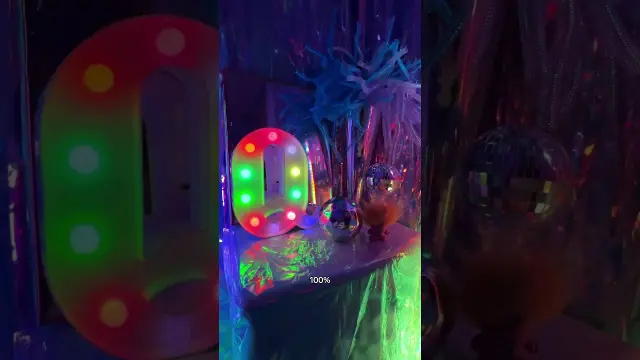
 Vibrant and Colorful Maximalist Art Installations and Sculptures
#Art Installation
1 ideas
Vibrant and Colorful Maximalist Art Installations and Sculptures
Get new #Art Installation ideas by email
Every Thursday: the week's best ideas, with the newest from #Art Installation.
Related tags
Art Installation: A Guide to Immersive, Space-Based Art
An art installation is a work of art made for a particular space, one you can usually walk into, around or through. Rather than hanging on a wall and waiting to be looked at, it arranges objects, light, sound, texture or whole rooms so that the viewer's presence becomes part of the piece. That shift — from looking at an object to being inside a situation — is the heart of the form and the reason it can feel so absorbing.
The idea has roots in the early twentieth century, when artists began treating exhibition space as material. Marcel Duchamp's placement of ordinary objects in galleries, the constructed environments of later movements, and the stripped-back rooms and light works of the 1960s and 1970s all pushed art away from the framed picture and toward the whole room. Since then installation has become one of the most common ways artists work, absorbing sculpture, architecture, theatre, video and craft.
The main kinds
Installations are easiest to understand by what they do to a space:
Read more
- Immersive environments: entire rooms built to surround the visitor, often with colour, fabric, mirrors or constructed landscapes.
- Light and projection works: the piece is made of illumination, shadow or moving image, so the room itself becomes the surface.
- Sound installations: composed spaces where audio changes as you move, or where a single continuous piece fills the room.
- Sculptural and assemblage installations: many objects gathered, stacked or suspended to form one large structure.
- Site-specific works: made for one place and often impossible to move, responding to a building's history, scale or light.
- Participatory pieces: the work is incomplete until visitors add to it, walk on it or interact with it.
What beginners should know
Installations ask for a different kind of attention. Slow down, and notice how your body moves through the space: what you see first, where your eye is led, how the sound changes. Read any instructions at the entrance — some works are entered barefoot, one at a time, or not photographed. Respect barriers even when they seem arbitrary; they are often protecting fragile materials or keeping the piece's effect intact.
If you want to make one, start small and start with the room. Measure the space, note where light falls, and consider how people will enter and leave. Sketch the route rather than the object. Choose one or two materials you can handle well instead of many. Test your idea at home in miniature, and think about safety: cables, weight, sharp edges and anything people might touch or trip over.
A note on seeing
Installation art is generous and often playful, but it is not always comfortable or easy, and it does not have to be. Some works are quiet and contemplative, others overwhelming. Both are legitimate. The most rewarding approach is curiosity without hurry: give the piece the time it needs, and let the space do its work.
#Art Installation: frequently asked questions
What exactly makes something an art installation rather than just a sculpture or a decorated room?
The defining feature is that the work is built for a specific space and the viewer physically enters it, so the experience of being present becomes part of the piece. A sculpture sits in a room to be looked at from outside; an installation arranges the room, its light, sound or objects so that walking through it is the point. If the space itself is doing the work and your movement changes what you notice, you are in installation territory.
How do I start making an installation if I have never done anything like it before?
Begin with the room rather than with an object: measure it, watch where the light falls, and map how people will come in and leave. Sketch the route a visitor takes instead of sketching the thing you want to build. Then choose one or two materials you already handle confidently, and build a small version at home to see whether the idea actually holds up.
Which kind of installation should I choose for my space or idea?
Think about what you want a visitor to feel, and let that point to the category. If the goal is to surround and absorb someone, an immersive environment suits; if your strength is mood or atmosphere, light and projection or sound will do more with less physical material. If the space has real character of its own, a site-specific response usually feels stronger than dropping in a piece that could sit anywhere.
Do I need special equipment or a big budget to put one together?
Not really — the form is friendly to simple materials, and many pieces work because of arrangement and light rather than expense. What matters more is planning: check that cables are safely routed, nothing heavy is precariously stacked, and there are no sharp edges at the height of a curious child or a hip. Anything visitors might touch, lean on or walk over deserves a second look before you open the doors.
Is there a right way to experience an installation as a visitor?
Slow down and pay attention to your own body in the space — what catches your eye first, where you are drawn next, how the sound or light shifts as you move. Read whatever instructions are posted at the entrance, since some works ask for bare feet, one person at a time, or no photography. Respect barriers even when they look arbitrary; they usually protect fragile material or preserve the effect the artist built.
What mistakes do people commonly make when they first try this?
The most frequent one is designing the object and ignoring the room, so the piece never quite fits where it ends up. Another is overloading the work with too many materials and effects instead of committing to one clear idea. Finally, first-timers often skip the logistics of arrival and exit, leaving visitors unsure where to step, which undoes the spell the rest of the piece was building.
Videos come from YouTube and posts from Instagram; titles and summaries are our own. All rights belong to their creators.