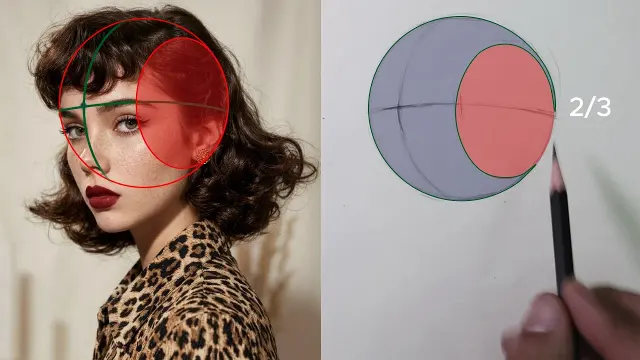
 Face Drawing Without Frustration Using the Loomis System
#Art Lesson
1 ideas
Face Drawing Without Frustration Using the Loomis System
Get new #Art Lesson ideas by email
Every Thursday: the week's best ideas, with the newest from #Art Lesson.
Related tags
How Art Lessons Work and What to Expect
An art lesson is a structured period of time set aside for learning to see and to make. What separates it from simply drawing or painting on your own is intention: a lesson has a focus, whether that is mixing a particular range of colours, capturing the proportions of a face, or learning how to hold a brush so a line stays steady. Lessons exist for every medium and every age, and they can be formal classes, one-to-one tuition, workshops, or informal sessions among friends.
Where it comes from
Teaching art by demonstration is old. Workshops and guilds in Europe passed craft knowledge from master to apprentice for centuries, and drawing from casts and from life became a standard part of artistic training. Alongside that academic tradition sits a much older, quieter habit: people learning to draw and paint because it helps them look at the world more closely. Modern art lessons blend both, combining technical instruction with room for personal expression.
The main kinds of lessons
Read more
Lessons tend to fall into a few broad approaches. Observational lessons work from life: still lifes, objects, people, or the view out of a window. Technical lessons focus on a single skill, such as perspective, shading, colour mixing, or composition. Exploratory lessons introduce a medium or method and let you try it without worrying about the result. Some teaching is step-by-step and direct; other lessons are guided but open-ended, with the tutor asking questions rather than correcting. Neither is better. Beginners often benefit from structure, while people with some experience tend to grow faster with room to experiment.
What beginners should know
Start with fewer materials than you think you need. A pencil, paper, an eraser, and one or two colours will carry you a long way. Expect the first attempts to look unlike what you intended; that gap between eye and hand closes with repetition, not with talent. Drawing is a learnable skill, and most of it is learning to see what is actually there rather than what you assume is there. Measuring proportions, checking angles against a reference, and comparing light against dark are all habits, and habits take practice.
Practical tips
Keep a sketchbook and use it for short, unpressured studies rather than finished pieces. Practise regularly in shorter sessions rather than rarely in long ones. Save older work so you can see progress that is invisible from week to week. If you take a class, ask what the tutor recommends you practise between sessions, and bring your questions. Ask about unfinished work too; the parts that went wrong are usually the most instructive. Finally, treat a lesson as a place to experiment safely. Mistakes are cheap there, and the confidence to make them is often what lets the work improve.
#Art Lesson: frequently asked questions
How do I start taking art lessons if I have never drawn before?
Begin with a simple setup and a single clear focus, such as learning to see proportions or getting a steady line, rather than trying to cover everything at once. A structured, step-by-step lesson suits most beginners because it removes the question of what to do next. Expect your early attempts to look unlike what you intended; that gap closes with repetition, not talent.
What materials do I actually need for a first lesson?
Far less than most people buy: a pencil, paper, an eraser, and a small range of colours will carry you through many sessions. Add materials only when a specific lesson calls for them, so you learn what each one is for. A sketchbook is worth having from the start, since short studies in it teach you more than occasional finished pieces.
Should I choose a technical class or an open, exploratory one?
Neither approach is better — they suit different stages. Beginners usually gain more from direct instruction in a single skill like shading, perspective, or colour mixing, while people with some experience tend to grow faster when the tutor asks questions instead of correcting. If you are unsure, a guided but open-ended workshop lets you try a medium without pressure about the result.
How do I keep improving between lessons?
Practise in short, regular sessions rather than rare long ones, and keep the work loose and unpressured. Ask your tutor what to focus on before the next session, and bring your questions with you, including about the pieces that went wrong — those are usually the most instructive. Saving older work lets you see progress that is invisible week to week.
What mistakes do people make when they take up art lessons?
The most common ones are buying too many supplies up front and treating a lesson as a performance where every piece must succeed. A lesson is a safe place to experiment, and mistakes are cheap there — the confidence to make them is often what allows the work to improve. Another frequent slip is drawing what you assume is there instead of measuring angles and comparing light against dark.
Videos come from YouTube and posts from Instagram; titles and summaries are our own. All rights belong to their creators.