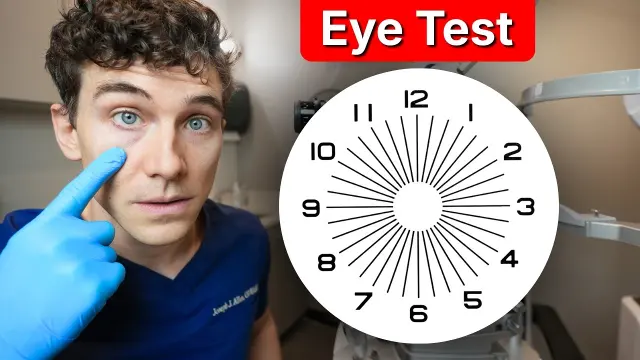
 At-Home Eye Tests You Can Try Between Optometry Appointments
#Astigmatism
1 ideas
At-Home Eye Tests You Can Try Between Optometry Appointments
Get new #Astigmatism ideas by email
Every Thursday: the week's best ideas, with the newest from #Astigmatism.
Related tags
Astigmatism: What It Is and How It Is Corrected
Most people have heard the word at an optician's appointment without ever quite knowing what it means. Astigmatism is not an illness and it is not a sign that something is wrong with your eyes in a serious way. It is a shape: a small imperfection in the curve of the eye that changes how light comes into focus.
How it works
For vision to be sharp, the clear front surface of the eye — the cornea — should curve evenly in every direction, like the surface of a sphere. With astigmatism, part of that surface is slightly steeper than the rest, closer to the shape of an egg lying on its side. Light entering the eye therefore does not come to a single clean point at the back of the eye. Some of the image is focused and some of it is not, and the result is a picture that is blurred or faintly stretched in one direction, whether you are looking at something close or far away.
The same unevenness can come from the lens inside the eye rather than the cornea. Most astigmatism is present from early life and stays fairly stable; a small amount can also follow eye surgery or injury, and some people develop it as the cornea changes shape later on.
Read more
What it feels like
Mild astigmatism is common and often needs no correction at all. When it does cause trouble, the usual signs are blurred or shadowed vision at all distances, tired eyes after reading or screen work, occasional headaches, squinting, and difficulty with lights at night — headlights or street lamps may look streaked or starry rather than round.
The kinds
Regular astigmatism is the ordinary kind, where the unevenness follows a simple pattern and is correctable with lenses. Irregular astigmatism is less tidy and can be harder to correct with glasses. Astigmatism is often described alongside short-sightedness or long-sightedness, since the three frequently occur together, and it is sometimes grouped by whether the cornea is steeper vertically or horizontally.
Correction and everyday care
- Glasses remain the simplest answer, and the lenses are made to compensate for the specific shape of your eye.
- Toric contact lenses are designed for astigmatism and are fitted individually. Soft lenses, rigid lenses and overnight lenses are all options, and comfort varies from person to person.
- Some people choose laser surgery or other refractive procedures to reshape the cornea. Whether that is suitable depends on the eye, so it needs a proper assessment rather than a decision made quickly.
- If you spend long hours at a screen, take regular breaks and make sure your prescription is up to date; strain makes blurred vision more noticeable.
A few myths are worth putting aside. Reading in dim light, sitting close to the television and tired eyes do not cause astigmatism, and eye exercises will not change the shape of the cornea.
Because the change is gradual, it is easy to get used to imperfect vision. Regular eye examinations are the reliable way to find out what is happening, and a sudden change, pain or a marked difference between the two eyes deserves a prompt professional check rather than a guess.
#Astigmatism: frequently asked questions
What actually is astigmatism?
It describes a shape rather than an illness: the clear front surface of the eye curves a little unevenly, more like an egg on its side than a sphere. Because of that, light entering the eye doesn't land on a single clean point, so an image can look blurred or slightly stretched in one direction at any distance.
How would I know whether it needs correcting at all?
A small amount is common and often bothers people very little, so no correction is needed. When it does cause trouble, the usual clues are shadowed or blurry vision near and far, tired eyes after reading or screen time, squinting, and lights that look streaked at night. Because the change is gradual, a routine eye examination is the reliable way to find out what is going on.
What's the difference between the regular and irregular kinds?
Regular astigmatism follows a simple, predictable pattern and lenses can compensate for it neatly. Irregular astigmatism is less orderly, which makes it harder to correct with glasses alone. The two are also often mentioned alongside short-sightedness or long-sightedness, since those commonly occur together.
What are the usual ways of correcting it?
Glasses are the simplest route, with lenses shaped to offset the particular curve of the eye. Toric contact lenses are made specifically for this and are fitted individually, and some people look into procedures that reshape the cornea. Whether any of these suits a given eye is something only a proper professional assessment can settle.
Can eye exercises or bad habits like reading in dim light cause it?
No — reading in low light, sitting close to the television and general eye tiredness don't create astigmatism, and exercises won't alter the curve of the cornea. Most of it is present from early life and stays fairly steady, though it can occasionally follow surgery, injury or later changes in the cornea's shape.
What helps if long hours at a screen make my vision feel worse?
Taking regular breaks and making sure any prescription is current goes a long way, since strain tends to make blurred vision more noticeable. It's also worth remembering that a sudden change, discomfort, or a marked difference between the two eyes is a reason to get a professional check rather than guess.
Videos come from YouTube and posts from Instagram; titles and summaries are our own. All rights belong to their creators.