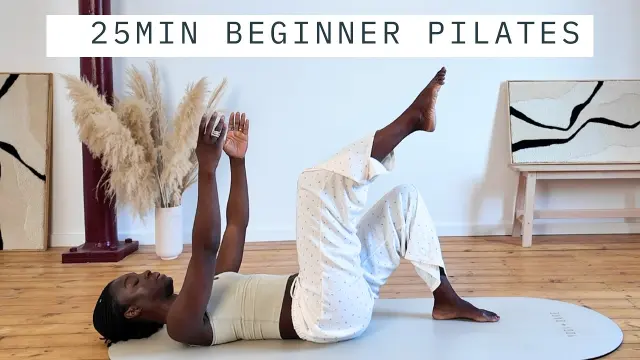
 25 Minute Beginner Pilates Workout for Full Body Strength
#At Home
1 ideas
25 Minute Beginner Pilates Workout for Full Body Strength
Get new #At Home ideas by email
Every Thursday: the week's best ideas, with the newest from #At Home.
Related tags
Exercising at Home: A Beginner's Guide
Training at home means using your own body, a small patch of floor and whatever you already own as your gym. It has no single origin: people have stretched, lifted and moved in their living rooms for as long as there have been living rooms. What is newer is how much guidance is now within reach — written programmes, video classes, phone apps — so that a whole studio can fit into a spare room, and a great many people now do at least some of their moving there. The appeal is simple. There is no travel, no audience and no schedule but your own. The difficulty is also simple: nobody is watching, so structure has to come from you.
The main kinds of home training
- Bodyweight strength: squats, push-ups, lunges, planks and their many variations. These build strength using only your own weight, which makes them easy to start and easy to progress by changing the angle, the tempo or the number of repetitions.
- Mat work such as Pilates and yoga: slower, controlled movement focused on posture, balance, breathing and core stability. Good for people who want to feel steadier in their bodies rather than out of breath.
- Cardio without equipment: walking, stair climbing, skipping, marching or dancing in place. Short bursts are perfectly useful; you do not need an hour.
- Mobility and stretching: gentle, deliberate movement through the joints, best kept short and regular rather than long and occasional.
- Small equipment: resistance bands, a mat, a pair of light dumbbells or a chair. None of it is obligatory, and a towel or a sturdy wall will stand in for most of it.
Setting up a corner
Read more
You need less space than you think — roughly the length of your body lying down, plus room to stand with your arms out. Choose somewhere you can leave a mat unrolled, because a visible mat is a reminder and a folded one is not. Check the floor for slipperiness, keep a chair nearby for balance, and put water within reach.
Starting sensibly
Beginners do best with two or three short sessions a week rather than one heroic one. Learn the shape of each movement before you add repetitions, and favour control over speed. A useful session mixes a few minutes of easy movement to warm up, a handful of strength or mat exercises, and a calm stretch to finish. Write down what you did; progress at home is slow and quiet, and a record is how you notice it.
Listening to your body
Mild effort and next-day soreness are normal. Sharp pain, dizziness or joint discomfort are not, and the right response is to stop and rest. Rest days are part of the programme, not a lapse in it. If you have an injury, are pregnant, or are returning to exercise after a long break, check with a health professional before you begin.
Consistency matters far more than intensity. Twenty unhurried minutes you actually repeat will do more for you than an ambitious hour you dread.
#At Home: frequently asked questions
How do I start training at home if I've never done it before?
Begin with short, unhurried sessions a few times a week rather than one long effort, so your body and your habit both have room to grow. Learn the shape of each movement before you add repetitions, and favour control over speed. Finish with a calm stretch and write down what you did, since progress at home is slow and quiet.
What equipment do I actually need for home training?
Nothing is strictly obligatory. A mat is the one thing worth having, because a spot you can leave unrolled is a reminder and a folded mat is not. A chair, a towel, a resistance band or a pair of light dumbbells are handy extras rather than requirements.
Which kind of home training should I choose?
It depends on what you want to feel: bodyweight work such as squats, push-ups and planks builds strength using only yourself, mat work like yoga or Pilates suits people who want steadiness, posture and balance rather than breathlessness, and walking, marching or dancing in place covers the cardio side. Most people do well mixing a little of each, and the best choice is simply the one you will actually repeat.
How do I set up a corner for training?
You need less room than you would expect — roughly the space to lie down, plus enough to stand with your arms out. Pick somewhere a mat can stay unrolled, check that the floor is not slippery, and keep a chair nearby for balance with water within reach.
What are the most common mistakes people make?
Doing too much too soon is the usual one: speed and long sessions feel productive, but controlled movement is what actually builds progress. Another is treating rest days as a lapse rather than part of the programme. Leaving no record of what you did is a quieter mistake, because it makes your gains invisible to you.
How do I know when to rest or stop?
Mild effort and being a little sore the next day are normal, but sharp pain, dizziness or joint discomfort mean stop and rest. If you have an injury, are pregnant or are returning to exercise after a long break, check with a health professional before you begin.
Videos come from YouTube and posts from Instagram; titles and summaries are our own. All rights belong to their creators.