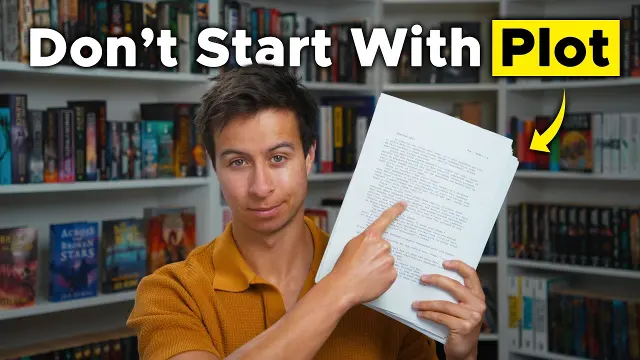
 Essential Writing Tips for Your First Fantasy Novel
#Author Advice
1 ideas
Essential Writing Tips for Your First Fantasy Novel
Get new #Author Advice ideas by email
Every Thursday: the week's best ideas, with the newest from #Author Advice.
Related tags
Author Advice: A Practical Guide for Writers
Writing advice is one of those things every author gathers along the way, partly from teachers and editors, partly from trial and error, and partly from the simple experience of finishing something and discovering what did not work. The value of it is not that there is one correct method, but that certain principles hold up across genres, formats and experience levels. What follows is a grounding in those principles rather than a set of rules to obey.
Start with the habit, not the inspiration
Most finished books are built on ordinary, repeatable sessions rather than bursts of inspiration. A daily word count, a fixed time of day, or a minimum number of pages all work for the same reason: they remove the daily decision about whether to write. Pick a target small enough that you can meet it on a bad day. Consistency matters more than intensity, and a modest habit maintained for months will outproduce an ambitious one abandoned in a fortnight.
Know what kind of book you are writing
Read more
Before the draft gets long, it helps to have a rough sense of your genre, your intended reader, and the promise the book makes to them. Readers of a mystery expect a resolution; readers of a romance expect an emotional payoff; readers of a practical guide expect to be able to do something afterwards. This is not about formula. It is about clarity, so that when you make unusual choices you are doing so deliberately.
Separate drafting from judging
Drafting and revising use different parts of the mind, and trying to do both at once stalls many promising projects. A first draft is allowed to be clumsy. Its job is to exist. Perfectionism during drafting produces beautiful opening chapters and no endings. Give yourself permission to write badly on the way to writing well, then return with an editor's eye once the whole shape is visible.
Learn the craft fundamentals
Point of view, tense, scene and summary, pacing, dialogue that carries subtext, paragraph structure, and the difference between showing and telling are all learnable. So is the plainer work of grammar and punctuation, which readers notice mostly when it goes wrong. Study the books you admire as a writer rather than a reader: how does the author handle transitions, build tension, end a chapter? Imitating structure, not sentences, is one of the fastest ways to improve.
Seek feedback that helps
Not all criticism is useful. Early readers are most helpful when they tell you where they were confused, bored or unconvinced, rather than where they would have written it differently. Share work with a small number of trusted readers, ask specific questions, and weigh comments by whether several people raise the same point. Then decide for yourself: the book is yours.
Protect the long middle
Almost every long project passes through a stage where it feels dull and pointless. This is normal and rarely a sign that the idea is bad. Keep notes on what excited you at the start, change your working method if you are stuck, and remember that a finished imperfect book teaches you more than an abandoned perfect one.
#Author Advice: frequently asked questions
How do I actually start writing a book instead of just talking about it?
Begin with a habit rather than a burst of inspiration: a fixed time of day, a set number of pages, or a modest target you can still hit on a bad day. The point is to take the daily decision about whether to write out of your hands. A small routine kept for months will carry you further than an ambitious one you drop.
Do I need to know my genre and reader before I write the first draft?
A rough sense of genre, intended reader and the promise your book makes helps a great deal once the draft grows longer. It keeps your unusual choices deliberate instead of accidental. This isn't about following a formula, it's about clarity.
Why does perfectionism ruin first drafts, and how do I get past it?
Drafting and judging draw on different kinds of attention, and doing both at once stops more projects than almost anything else. A first draft only has to exist, so let it be clumsy and save the editor's eye for when the whole shape is visible. Otherwise you end up with lovely opening chapters and no ending.
What kind of feedback should I ask early readers for?
Ask for the places they were confused, bored or unconvinced rather than for how they would have written it themselves. Keep the group small, pose specific questions, and pay most attention to remarks several people make independently. The final call stays yours, since the book belongs to you.
Is it worth learning craft fundamentals, or should I just keep writing?
Point of view, tense, pacing, dialogue with subtext and the show-versus-tell distinction are all learnable, and so is plain grammar. Reading admired books as a writer, studying how they handle transitions and chapter endings, speeds up improvement quickly. Copying structure rather than sentences is the useful move.
What do I do when the middle of a long project feels dull and pointless?
That slump is normal and usually says nothing about whether the idea is any good. Reread the notes about what excited you at the start, change your working method if you're stuck, and keep going. An imperfect finished book teaches you far more than a perfect abandoned one.
Videos come from YouTube and posts from Instagram; titles and summaries are our own. All rights belong to their creators.