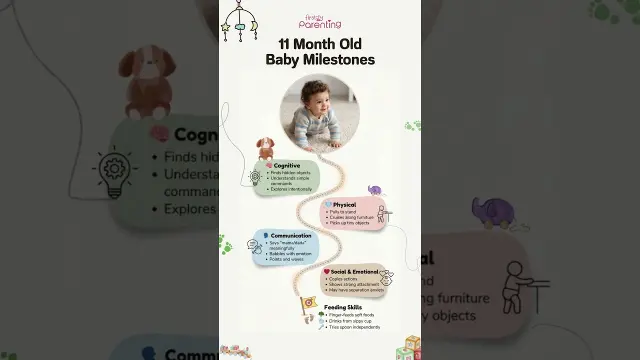
 Important 11 Month Old Baby Milestones and Growth Skills
#Baby Milestones
1 ideas
Important 11 Month Old Baby Milestones and Growth Skills
Get new #Baby Milestones ideas by email
Every Thursday: the week's best ideas, with the newest from #Baby Milestones.
Related tags
Baby Milestones Guide
What baby milestones are
Baby milestones are the skills and behaviors many babies reach as they grow. They cover movement, communication, social interaction, play, and early self-help skills. Milestones are not a competition or a strict timetable. Babies develop in their own way, and it is normal for one child to be quicker in one area and slower in another.
These milestones come from the natural process of growth and brain development. In the first year and beyond, your baby is learning to control the body, notice people and sounds, explore the world, and begin to connect actions with responses. Small steps often build gradually into bigger skills.
Common kinds of milestones
Read more
Some milestones are physical, such as lifting the head, rolling, sitting, crawling, pulling up, and eventually walking. Others are language-based, like turning toward voices, babbling, making sounds back and forth, recognizing familiar words, and later saying simple words.
There are also social and emotional milestones. Your baby may begin to smile at faces, enjoy interaction, show recognition, copy expressions, and seek comfort from familiar people. Play milestones include reaching for toys, passing objects from one hand to another, exploring textures, and using toys in more purposeful ways.
What to expect as your baby grows
In early months, babies usually focus on basic body control and connection with caregivers. As they get older, they often become more active, more curious, and more responsive to people and surroundings. Later, you may notice more coordinated movement, clearer communication, and stronger preferences.
It helps to think of development as a wide range rather than a checklist. Some babies are physically advanced before they are talkative. Others are very social or observant before they become especially mobile. These differences can be completely normal.
How to support development
You do not need special equipment to help your baby grow. Simple, repeated everyday experiences matter most.
- Talk, sing, and respond to your baby often.
- Give your baby safe floor time to move and explore.
- Offer age-appropriate toys that can be grasped, touched, and examined.
- Read aloud, even if your baby cannot understand the words yet.
- Follow your baby’s cues for rest, feeding, and play.
- Give lots of calm attention and encouragement.
A steady routine can also help babies feel secure. Tired, hungry, or overstimulated babies may seem less interested in practicing new skills, so comfort and rest are part of healthy development too.
When to pay attention
Milestones vary, but it is sensible to notice whether your baby is making progress over time. If you are concerned about movement, hearing, vision, feeding, speech, or social responsiveness, speak with a qualified health professional. Trust your instincts if something feels not quite right.
The most useful approach is gentle observation, not pressure. Celebrate what your baby can do now, offer chances to practice, and remember that development is a journey made of many small steps.
Videos come from YouTube and posts from Instagram; titles and summaries are our own. All rights belong to their creators.