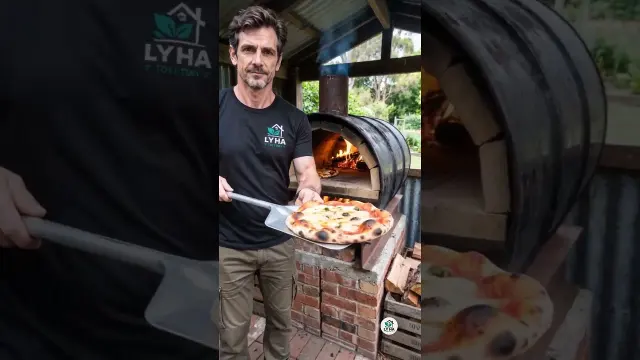
 Building a Wood-Fired Pizza Oven From a Recycled Oil Drum
#Backyard DIY
1 ideas
Building a Wood-Fired Pizza Oven From a Recycled Oil Drum
Get new #Backyard DIY ideas by email
Every Thursday: the week's best ideas, with the newest from #Backyard DIY.
Related tags
Backyard DIY: A Beginner's Guide to Building It Yourself
There is a particular satisfaction in stepping outside and looking at something that did not exist before because you decided to make it. Backyard DIY is the practice of improving your outdoor space yourself, using your own hands, a modest set of tools and a willingness to learn as you go. It ranges from a Saturday afternoon job to a project that takes a whole summer, and it has become one of the most approachable ways for people to shape the place they live in.
Where it comes from
Building and repairing things at home is older than any hobby. For most of history, fences, sheds, benches and outdoor cooking structures were made by the household that needed them, out of whatever was at hand. What has changed is that this practical knowledge is no longer passed down automatically. Backyard DIY as we know it now is partly a revival: people seeking out the skills their grandparents had, and finding that the process of learning them is as rewarding as the result.
The main kinds of projects
Read more
Most backyard projects fall into a few broad groups. Structural work covers fences, raised beds, pergolas, sheds and decking. Growing projects include vegetable beds, compost systems and planters. Cooking and gathering projects run from fire pits and outdoor seating to bread ovens and simple grills. Repair and restoration work is the quiet backbone of all of it: mending a gate, replacing a rotting board, resealing a table before winter.
A large share of the appeal lies in materials. Reclaimed timber, salvaged bricks, offcuts and repurposed containers are cheap, widely available and full of character. Working with salvaged material asks more of you, because nothing is quite the size you expected, but it teaches you to plan around what you have rather than against it.
What beginners should know
Start smaller than you think you should. A planter box or a simple bench teaches you measuring, cutting, joining and finishing without much risk. Those skills transfer directly to the bigger project you are actually imagining.
Plan on paper before you buy anything. Sketch it, write down dimensions, and work out the order of steps. Most frustration in a first project comes from discovering halfway through that a piece is the wrong length or that two parts were meant to meet differently.
Respect the practical basics. Check where underground cables and pipes run before you dig. Build anything tall or heavy with stability in mind, and anchor it properly. Choose materials suited to weather: untreated softwood outdoors will not last, and anything holding soil or water needs to drain. Use protective eyewear, gloves and a mask when cutting or sanding, and keep power tools dry and stored out of the weather.
A few habits worth keeping
Measure twice and cut once, and keep a notebook of your measurements. Buy the best hand tools you can reasonably afford rather than a large set of cheap ones. Leave yourself more time than you estimate, especially for finishing. And accept that some things will be slightly crooked: a handmade fence that leans a little is still a fence you built.
#Backyard DIY: frequently asked questions
How do I start backyard DIY if I have never built anything before?
Start with a project smaller than the one you are imagining, such as a planter box or a simple bench, so you can practise measuring, cutting, joining and finishing with very little at stake. Those skills carry straight over to the bigger build you actually want. Sketch it on paper and work out the order of steps before you buy any materials.
What tools and materials do I really need to begin?
A modest set of hand tools is enough for most first projects, and it is better to buy a few good ones as you need them than a large set of cheap ones. For materials, reclaimed timber, salvaged bricks and repurposed containers are affordable, easy to find and full of character. Just remember that salvaged pieces are rarely the size you expect, so plan around what you have.
Which kind of backyard project should I choose?
Most projects fall into a few groups: structural work like fences, raised beds and decking; growing projects like vegetable beds and planters; and cooking or gathering builds such as fire pits and outdoor seating. Repair work is the quiet backbone of all of it. Pick the group that matches how you want to use the space, then choose the smallest project within it that still teaches you something.
How do I look after what I build so it lasts through the seasons?
Choose materials suited to weather from the start, since untreated softwood left outside will not hold up, and anything holding soil or water needs to drain freely. Reseal or treat timber surfaces before winter arrives, and mend small failures like a sticking gate or a rotting board early rather than later. Keep power tools dry and stored out of the weather too.
What mistakes do beginners most often make?
The most common one is buying materials before planning, then discovering halfway through that a piece is the wrong length or that two parts were meant to meet differently. People also underestimate how long finishing takes. Before you dig, check where underground cables and pipes run, and build anything tall or heavy with stability in mind.
Can I build something ambitious like a pizza oven from salvaged parts?
Yes, and projects like a wood-fired oven made from a recycled drum are popular precisely because they turn cheap salvage into something useful. They do ask more of you, because nothing is quite the size you anticipated and you have to adapt the plan as you go. Build up your measuring and joining skills on smaller jobs first, and plan the whole sequence on paper before you start.
Videos come from YouTube and posts from Instagram; titles and summaries are our own. All rights belong to their creators.