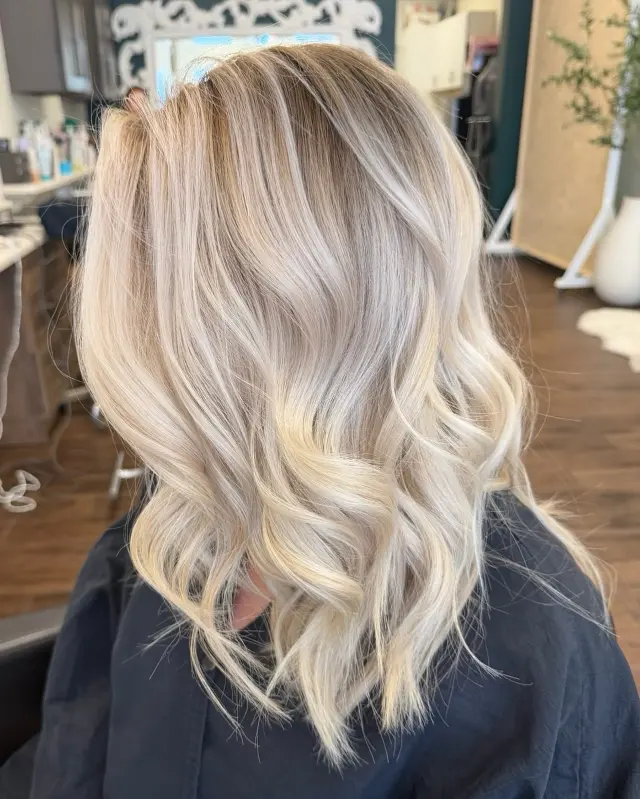
 Cool frosty balayage blonde colour result
#Balayage
2 ideas
Cool frosty balayage blonde colour result
Get new #Balayage ideas by email
Every Thursday: the week's best ideas, with the newest from #Balayage.
Related tags
Balayage: A Guide to Swept, Sun-Kissed Hair Colour
Balayage is a freehand hair colouring technique in which a colourist paints lightener or colour directly onto the surface of the hair with a brush, rather than enclosing sections in foil. The word comes from the French *balayer*, "to sweep", and it describes the motion of the brush as much as the result: a soft, graduated transition from darker roots to lighter ends that mimics the way sun naturally lifts the hair.
Where it comes from
The method was developed in Paris in the twentieth century as a way to create a natural-looking lightness without the stripy, uniform effect of traditional foil highlights. It travelled into mainstream salons and has since become one of the most requested colour services worldwide, precisely because it does not depend on a single look — it is a technique, not a shade.
Balayage, ombré and foils
Read more
These terms are often confused. Ombré describes the *result*: a deliberate gradient from dark to light. Balayage describes the *method* used to get there, though the two are frequently combined. Foil highlights, by contrast, are woven sections saturated in colour and wrapped, which gives a more uniform lift from root to tip. Balayage places colour more sparingly near the root and more densely at the ends, so regrowth arrives softly rather than as a visible line.
Main variations
- Classic balayage: hand-painted pieces concentrated around the face and mid-lengths, with a natural fade.
- Babylights-style painting: very fine, closely spaced strokes for a subtle, blended lift.
- Money piece: brighter sections framing the face, often paired with a softer overall canvas.
- Reverse balayage: darker colour painted over lighter hair to add depth and shadow.
- Colour melting: a related blending technique that softens the boundary between two tones.
What to know before you go
Bring reference images, but treat them as direction rather than a guarantee. Your starting colour, your hair's history of previous colour or bleach, and its texture all change what is achievable in one session — dark or previously coloured hair often needs more than one appointment to reach a very light result.
Ask for a consultation and a strand test, especially if your hair has been chemically straightened or heavily coloured. Be honest about box dye and past salon work; hidden pigment is the most common reason a colour comes out uneven.
Caring for balayaged hair
Lightened hair is more porous and loses moisture faster, so a gentle, sulphate-free wash and a regular conditioning mask help it stay supple. Minimise heat styling and use a heat protectant when you do. Between appointments, a toning shampoo or a gloss can refresh the tone without a full recolour. Because the regrowth line is soft, most people can stretch the time between visits further than with classic highlights — one of balayage's practical advantages.
#Balayage: frequently asked questions
What exactly is balayage, and how is it different from regular highlights?
Balayage is a painting technique: the colourist sweeps colour onto the surface of the hair with a brush instead of sealing woven sections in foil. That freehand approach builds a gradual, sunlit transition rather than an even lift from root to tip. Foil highlights tend to be more uniform and deliberate, while balayage looks softer and grows out less harshly.
Which style of balayage should I ask for?
It depends on the effect you want: fine, closely spaced strokes give a subtle blended lift, brighter painted pieces around the face create a framing effect, and darker colour painted over lighter hair adds depth instead of lightness. Bringing reference images helps, but use them as direction rather than an exact promise. Your colourist can translate the idea to suit your starting colour and hair texture.
Can I get a very light result in one appointment?
Not always. Dark hair, or hair that has been coloured or lightened before, usually needs more than one visit to reach a very light tone safely while keeping the hair in good condition. A consultation and a strand test will tell you what is realistic to aim for first and what to build toward later.
What should I tell my colourist before the appointment?
Be upfront about every colour you have used, including box dye and work done in other salons, because hidden pigment is the most common reason a result turns out patchy. Mention chemical straightening or any heavy colour history too, since those change how the hair will respond. Honesty here is what lets the colourist plan properly rather than guess.
How do I keep balayaged hair looking good between visits?
Lightened hair holds less moisture, so a gentle, sulphate-free cleanser plus a conditioning mask now and then keeps it feeling soft rather than straw-like. Go easy on heat styling and always use a protectant when you do style with heat. A toning shampoo or a gloss refreshes the shade without committing to a full recolour, and the soft regrowth line usually lets you wait longer between appointments.
What are the most common mistakes people make with balayage?
The biggest ones are choosing a shade without considering the starting colour, hiding past colour or dye from the stylist, and expecting a dramatic lift in a single session. Skipping the consultation and strand test is another frequent misstep. Treating the result as maintenance-free is a mistake too, since lightened hair always needs some care at home to stay looking fresh.
Videos come from YouTube and posts from Instagram; titles and summaries are our own. All rights belong to their creators.