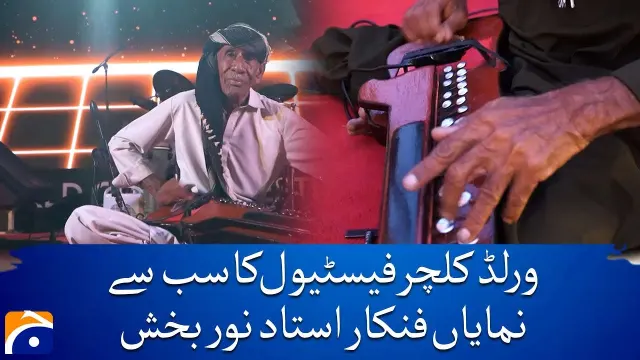
 Ustad Noor Bakhsh performs Balochi music at the World Culture Festival
#Balochi Music
1 ideas
Ustad Noor Bakhsh performs Balochi music at the World Culture Festival
Get new #Balochi Music ideas by email
Every Thursday: the week's best ideas, with the newest from #Balochi Music.
Related tags
Balochi Music: Songs, Instruments and Traditions
Balochi music is the music of the Baloch people, an oral tradition shaped by the wide, dry landscapes of Balochistan and the sea coast that borders it. The Baloch live across a region that today stretches through Pakistan, Iran and Afghanistan, and communities of Baloch descent have settled far beyond it, in the Gulf and in Europe. Their language, Balochi, belongs to the Iranian branch of the Indo-European family, and almost everything sung in this tradition begins with poetry.
At its heart, Balochi music is a poetry-carrying art. Verses are sung in a declamatory style, closer to the spoken word than to a fixed melody, and the audience follows the story as much as the tune. Love poetry, praise of generous patrons and ancestors, descriptions of camel-herding, migration and the sea all circulate this way. Long narrative songs recount the deeds of tribal heroes and are remembered as much for their lineages as for their plot. Alongside these are lighter forms: lullabies, work songs, wedding songs and sung games.
Instruments
The sound of the region is usually recognised by a handful of instruments. The sorud is a bowed fiddle with a small, often rounded body, played across the lap; it can carry a whole melody for hours and is often heard at gatherings and in the accompaniment of sung verse. The benju, a keyed zither brought in from outside and adopted enthusiastically, has become one of the most loved instruments in southern Balochistan, capable of a shimmering, droning sound. The tanburag, a long-necked lute, provides rhythm and drone. The doneli is a double pipe, two reeds played at once, giving a piercing, open-air tone suited to pastoral life. Percussion is dominated by the dhul, a large drum that drives dance and celebration.
Read more
Styles and regions
There is no single Balochi sound. Coastal Makran, the inland valleys around Kalat and the desert fringes of Sistan each favour different instruments, dialects and tempos, and singers often specialise in particular repertoires — heroic, devotional, or purely lyric. Devotional music in Balochi shares ground with neighbouring traditions, and religious poetry is sung in its own recognised modes.
For beginners
Start by listening to the voice alone, without trying to follow every word; the melodic patterns become recognisable quickly. Notice how the sorud or tanburag holds a drone while the melody moves above it, and how rhythm is carried by hand percussion rather than by harmony. If you want to go further, learn a few Balochi words about music and song, and seek out recordings made at family gatherings rather than only concert stages — the music is at home in rooms, courtyards and open ground. Treat the poetry with respect: much of it is remembered and transmitted by particular families, and hearing it done well matters more than hearing it fast.
#Balochi Music: frequently asked questions
How do I start listening to Balochi music if I'm new to it?
Begin with the voice on its own and let the words go for a while — the melodic patterns repeat and become familiar long before the vocabulary does. Listen for the drone held beneath the melody by the sorud or tanburag, and notice that rhythm is carried by hand percussion rather than by chords. Recordings made at family gatherings often teach you more than polished stage recordings, because that is where the music actually lives.
What instruments are used in Balochi music?
The most recognisable are the sorud, a small bowed fiddle played across the lap, the benju, a keyed zither that has become a favourite in southern Balochistan, and the tanburag, a long-necked lute that supplies rhythm and drone. The doneli, a paired reed pipe, gives the piercing open-air tone associated with pastoral life, while the dhul, a large drum, drives dance and celebration.
Which style or regional tradition should I explore first?
There is no single Balochi sound: coastal Makran, the inland valleys around Kalat and the desert fringes of Sistan each favour different instruments, dialects and tempos. Pick the repertoire that draws you in — heroic narrative songs, devotional poetry sung in its own modes, or the lighter lyric, wedding and work songs. Singers tend to specialise, so following a single voice is an easy way in.
How should I care for instruments like the sorud or tanburag?
Keep them away from strong heat, direct sun and damp, since wooden bodies and skin or gut parts react badly to sharp swings in humidity. Dust them with a soft dry cloth and store them in a case instead of leaning them against a wall. If the instrument will sit unused for a long stretch, ease the tension off the strings.
What occasions suit Balochi music?
It belongs to ordinary settings as much as to performance: lullabies at home, work songs, sung games, weddings where the dhul sets the dancing going, and devotional gatherings. Long narrative songs about heroes and ancestors are heard in courtyards and rooms where people listen closely to the story. For a gathering of your own, a sung verse over a drone instrument and hand percussion works better than a large ensemble.
What mistakes do newcomers make?
The most common is chasing every word before the melody has settled in — Balochi singing is declamatory, closer to speech than to a fixed tune, so the story arrives gradually. Another is expecting harmony and chord changes, when the music moves through drone, melody and rhythm instead. Above all, don't rush it: much of the poetry is held and passed on by particular families, and hearing it done well matters more than hearing it fast.
Videos come from YouTube and posts from Instagram; titles and summaries are our own. All rights belong to their creators.