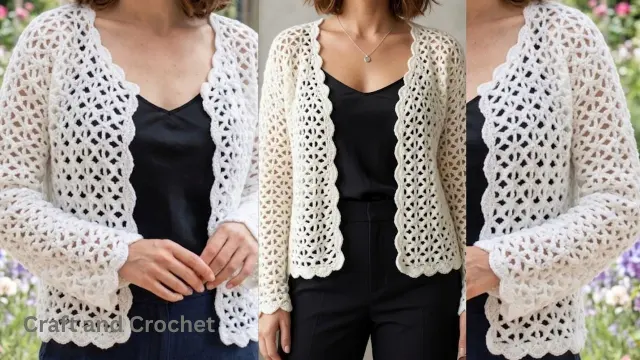
 Basic Adult Crochet Cardigan for Beginners
#Basic Cardigan
1 ideas
Basic Adult Crochet Cardigan for Beginners
Get new #Basic Cardigan ideas by email
Every Thursday: the week's best ideas, with the newest from #Basic Cardigan.
Related tags
Basic Cardigan: A Simple Guide to a Wardrobe Staple
A cardigan is a knitted garment that opens down the front and closes with buttons, a zip or simply hangs loose. Unlike a pullover, it goes on and off without disturbing your hair or your makeup, and it can be worn open for a relaxed line or closed for warmth. That practicality is why it has stayed in wardrobes for generations and why it is one of the first garments many people make for themselves.
The name comes from the Earl of Cardigan, a nineteenth-century British officer, and the garment grew out of the knitted waistcoats soldiers wore under their uniforms. From there it moved into everyday dress, and today the basic cardigan — a simple shape, a plain stitch, no fuss — is the version that gets worn most.
The main shapes
Most cardigans fall into a few familiar silhouettes, and knowing them helps you choose both a pattern and a fit.
Read more
- Cropped: ends at the waist or just above, good over dresses and high-waisted trousers.
- Classic hip-length: the most versatile, easy to layer under a coat.
- Longline: reaches the thigh, reads more like a light jacket.
- Oversized: dropped shoulders and extra ease, worn open as a soft outer layer.
- Fitted: shaped at the waist, often fine-gauge, suited to wearing closed.
Sleeves vary too — set-in, raglan, drop-shoulder or sleeveless — and each changes how the shoulders sit.
Yarns and textures
The yarn decides how the cardigan behaves. Smooth wool and wool blends hold shape and warmth; cotton is cooler and drapes softly; alpaca and mohair give a halo of fuzz and lightness; acrylic and its blends are affordable and easy to wash. Choose a light or medium weight for a first project and a paler colour, which makes stitches easier to see.
What beginners should know
A basic cardigan is a realistic first garment, but it is a longer project than a hat or a scarf. Start with a plain stockinette body and simple ribbed bands, and pick a pattern that tells you the finished measurements rather than only a size label — ease, the difference between your body and the garment, is what makes a cardigan look right.
- Work a swatch and check your tension before casting on; a small difference adds up over a whole garment.
- Keep notes on your row count so both fronts match.
- Learn to pick up stitches along the front edges cleanly, since the button band is what everyone sees.
- Practise buttonholes on a scrap piece first.
Crochet versions follow the same logic: a simple rectangle body with shaped armholes, joined at the shoulders, with bands added afterwards. The principles of ease, tension and finishing apply either way.
Wearing and care
A plain cardigan works as a neutral layer over a shirt, a dress or a t-shirt, and it earns its place by fitting well at the shoulder. Wash according to the yarn's label, dry flat to keep the shape, and store folded rather than hung, which stretches the shoulders over time.
#Basic Cardigan: frequently asked questions
How do I choose my first basic cardigan pattern?
Look for a pattern that states the finished garment measurements, not just a size label, because that is what tells you how the cardigan will actually fit over your body. Choose a plain shape with simple stockinette and ribbed bands, and pick a light or medium-weight yarn in a pale colour so the stitches are easy to read.
What supplies do I need before I start a basic cardigan?
You need the yarn the pattern calls for, the needle or hook size that gives you the right tension, and a few extras such as stitch markers, a tape measure and a blunt needle for seaming and tidying ends. Buttons or a zip are needed only if you plan to close the front, so check the pattern before buying them.
Which cardigan shape should I pick?
A classic hip-length cardigan is the most versatile and layers easily under a coat, while a cropped version suits dresses and high-waisted trousers. Longline, oversized and fitted shapes each change how the garment sits, so match the silhouette to how you expect to wear it — open as a soft layer or closed for warmth.
How do I stop my two front panels from coming out different lengths?
Keep a written note of your row count as you work, and refer to it when you start the second front so both sides match. Working a swatch first and checking your tension also keeps the whole garment consistent, since a small difference in gauge adds up over a large piece.
How should I wash and store a hand-made cardigan?
Follow the care instructions on the yarn label, and dry the cardigan flat rather than hanging it, which pulls the shape out while it is damp. Store it folded in a drawer or on a shelf instead of on a hanger, since hanging stretches the shoulders over time.
What are the most common mistakes beginners make?
Skipping the swatch is the big one, because the tension you measure on a small square decides how the finished garment will fit. Other frequent slips are neglecting to practise buttonholes on a scrap piece first and rushing the button band, which is the detail everyone sees, so it is worth learning to pick up those edge stitches cleanly.
Videos come from YouTube and posts from Instagram; titles and summaries are our own. All rights belong to their creators.