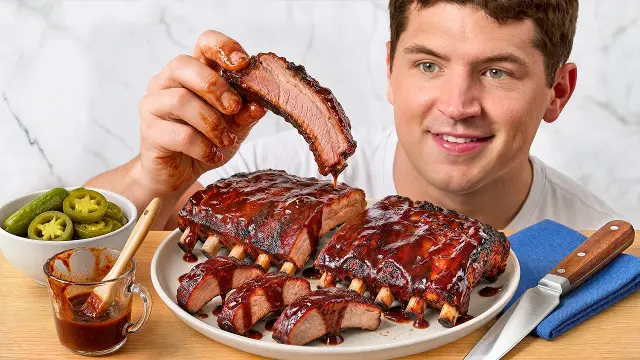
 St. Louis Style Pork Ribs Recipe with BBQ Flavor
#BBQ Ribs
1 ideas
St. Louis Style Pork Ribs Recipe with BBQ Flavor
Get new #BBQ Ribs ideas by email
Every Thursday: the week's best ideas, with the newest from #BBQ Ribs.
Related tags
BBQ Ribs: A Beginner's Guide to Slow-Cooked Perfection
Barbecued ribs are one of the great slow pleasures of the table: a rack of pork or beef, cooked gently over indirect heat until the meat turns tender and the outside darkens into a savoury crust. What looks like a simple dish is really a small lesson in patience. Most of the work happens while you do nothing at all.
The main cuts
Pork ribs come in two families. Baby back ribs sit high on the back, close to the loin. They are smaller, leaner and cook faster, with a curved bone that gives them their shape. Spare ribs come from the belly side: fatter, more bone, more flavour, and they need longer over the heat. St. Louis style ribs are simply spare ribs trimmed into a neat rectangle, with the tough cartilage and skirt removed, so the rack cooks evenly and looks tidy on the board. Beef ribs are larger and beefier altogether, and they reward an even longer, gentler cook.
Rubs, sauces and seasoning
Read more
A dry rub is the classic starting point: salt, black pepper, paprika, garlic, cumin, perhaps a little sugar, patted over the rack. Salt applied some hours ahead works its way in and seasons the meat properly; sugars sit on the surface and can scorch, so use them with care. Sauces vary enormously by region, from thick tomato-and-molasses glazes to thin vinegar-and-pepper dressings and mustard-based or creamy white sauces. Whichever you choose, brush it on near the end, since sugar-heavy sauces burn quickly over a fire. Offering extra at the table is never a bad idea.
Low and slow
The method is indirect heat: coals or wood pushed to one side, the ribs on the other, the lid down, the temperature held steady in a moderate range rather than blasting the meat. Wood adds character — hickory and oak are robust, apple and cherry sweeter and gentler. Many cooks wrap the rack in foil or paper for part of the cook to push it through the stall and soften the meat; others leave it bare the whole way for a firmer crust. Both approaches work. A popular shorthand for spare ribs divides the cook into stages of smoking, wrapping and glazing, but treat any such schedule as a starting point rather than a rule.
Knowing when they're done
First, deal with the membrane: the thin silvery sheet on the bone side does not soften with cooking and blocks seasoning. Slip a knife under it and pull it away. From there, judge by feel rather than by the clock. Lift the rack with tongs — it should bend and the surface should crack slightly. A toothpick should slide between the bones with little resistance, and the meat should pull away cleanly when you bite, without disintegrating. Ribs that fall apart entirely are past the point many cooks aim for, though plenty of people prefer them that way.
Let the rack rest briefly before slicing between the bones, and keep the lid closed as much as you can while cooking. Ribs are forgiving, but they are not fast — give them the afternoon and they will repay you.
Videos come from YouTube and posts from Instagram; titles and summaries are our own. All rights belong to their creators.