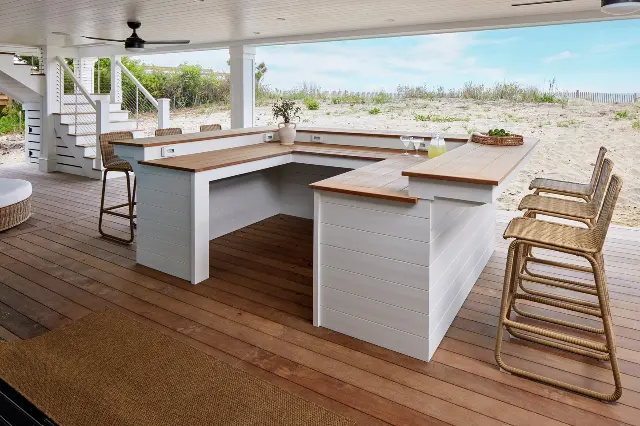
 Why Every Custom Beach Home Wants a Bar, From Morning Coffee to Cocktails
#Beach House
2 ideas
Why Every Custom Beach Home Wants a Bar, From Morning Coffee to Cocktails
 Cliffside Beach House Designed by SAOTA in Montauk
Get new #Beach House ideas by email
Every Thursday: the week's best ideas, with the newest from #Beach House.
Related tags
Beach House Living: Design, Light and Coastal Comfort
A beach house is a home built for a place where land and water meet — a dwelling designed around salt air, strong light, wind, sand and the slow rhythm of tides. It is less a single architectural style than an attitude: rooms that open outward, floors that tolerate wet feet, and materials chosen for how they age rather than how they look on the first day.
Where the idea comes from
Coastal dwellings have always been practical structures first. Fishing cottages, pilots' houses and summer cabins were built from whatever the shore offered — timber, thatch, stone, shingle — and were meant to be repaired, not preserved. What we recognise today as beach house style grew out of those modest buildings: simple volumes, deep porches, pitched roofs and a close relationship between inside and out. Later interpretations kept the relaxed spirit while adding comfort, glazing and insulation suited to year-round use.
The main approaches
Read more
- **Shingle and weatherboard.** Timber cladding left to silver or painted in soft whites and greys, often paired with white trim and a gabled roofline.
- **Modern coastal.** Clean lines, large sliding glass, flat or low-pitched roofs, and a palette drawn from sand, stone and sea.
- **Mediterranean and whitewashed.** Thick walls, small shaded openings, terraces and courtyards that temper heat and glare.
- **Tropical and open-air.** Deep overhangs, louvres, cross-ventilation and living space that flows onto a deck or veranda.
What makes a beach house work
The building's placement matters more than its decoration. Orienting the house to catch breezes while blocking the harshest sun, lifting living areas slightly above the ground, and giving the entrance a sheltered spot all make daily life easier. Durable choices pay off: tile or sealed concrete floors, washable upholstery, outdoor fabrics, and finishes that do not mind humidity or sandy feet.
Light is the other great material. Coastal light is bright and reflective, so a restrained palette of off-whites, pale timber, linen and muted blues keeps interiors calm rather than glaring. Texture does the work that pattern might in a darker house: rattan, rope, rough timber, woven rugs, unglazed ceramics.
Practical notes for beginners
Start with how you actually want to use the place. A house for long summers of family meals needs different things from a small retreat for two. Prioritise outdoor space, shade and storage — for boards, towels, boots and garden furniture — before you think about decoration. Choose fabrics and finishes you can clean. Let furnishings stay low and light so views remain the main feature. And resist filling every corner: the pleasure of a beach house is its ease.
Living with the coast
Salt, wind and sun are relentless, so expect maintenance and plan for it. Rinse metal fittings, keep gutters clear, choose materials that patinate gracefully rather than fail suddenly. A beach house rewards a certain humility — it is a shelter in a powerful landscape, and it is at its best when it lets that landscape in without pretending to tame it.
#Beach House: frequently asked questions
How do I start planning a beach house?
Begin with how you actually intend to use the place, since a home for long family summers needs different things from a small retreat for quiet weekends. Walk the site at different times of day to see where the breeze comes from, where the sun hits hardest and where you would naturally sit. Let those observations, rather than a decorative style, shape the layout.
What does a beach house really need to function well?
Priority goes to the unglamorous things: generous outdoor space, shade, and storage for boards, towels, boots and garden furniture. Floors that tolerate wet feet and fabrics you can clean quietly do more for daily comfort than any statement piece. Shelter at the entrance and living areas lifted slightly off the ground also make a real difference.
Which style of beach house should I choose?
Think about climate and how much maintenance you want, then pick from the broad approaches: timber shingle and weatherboard, modern coastal with large glazing, whitewashed Mediterranean with thick shaded walls, or tropical open-air with deep overhangs and louvres. Each handles sun, salt and wind differently, so the right choice is the one that suits your site rather than the one that photographs best.
How do I care for a beach house over time?
Assume that salt, wind and sun will keep working on the building and plan for upkeep rather than trying to prevent all weathering. Rinse metal fittings, keep gutters clear, and favour materials that patinate gracefully instead of failing suddenly. Choosing finishes you can clean and repair easily turns maintenance from a chore into a routine.
What are good ideas for furnishing a coastal home?
Keep furnishings low and light so views stay the main feature, and let texture carry the room through rattan, rope, rough timber, woven rugs and unglazed ceramics. A restrained palette of off-whites, pale timber, linen and muted blues keeps bright coastal light calm instead of glaring. Resist filling every corner, because the pleasure of the place is its ease.
What mistakes do first-time beach house owners make?
The common ones are decorating before solving shade, storage and outdoor living, and choosing delicate materials that humidity and sandy feet will ruin. Another is treating the house as something to preserve rather than something to repair, which leads to constant frustration by the sea. A beach house works best when it accepts the landscape instead of pretending to tame it.
Videos come from YouTube and posts from Instagram; titles and summaries are our own. All rights belong to their creators.