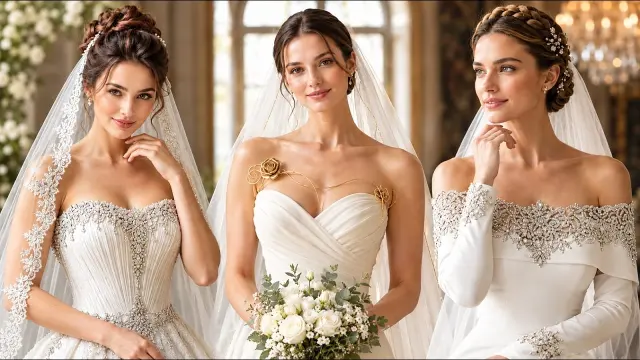
 White and Ivory Bridal Gowns from Eternal Bridal Couture
#Beaded Bodice
1 ideas
White and Ivory Bridal Gowns from Eternal Bridal Couture
Get new #Beaded Bodice ideas by email
Every Thursday: the week's best ideas, with the newest from #Beaded Bodice.
Related tags
Beaded Bodices: A Guide to Sparkle, Style and Craft
A beaded bodice is the upper part of a garment — a dress, a corset top, a wedding gown — covered in beads, sequins, pearls or crystals. The beading may cover the whole panel in a dense shimmer, trace a few scattered motifs, or gather at the neckline and seams. It is one of the oldest forms of decoration in dress, and one of the most labour-intensive, which is why a heavily beaded bodice reads as special occasion almost everywhere in the world.
A long tradition of sewing on small things
Small objects have been stitched to cloth for as long as people have had both. Shells, seeds, bone, coral, amber, glass and metal beads appear in ceremonial and court dress across many cultures, often marking status or a rite of passage: a wedding, a coming of age, a formal entrance. Glass bead making and the trade that carried beads from place to place shaped regional styles, and hand beading became a recognised craft with its own vocabulary, tools and workshops. What has not changed is the principle: patience, good light and thousands of tiny, even stitches.
How the beading is done
Read more
- Tambour beading: a fine hook is used to pull thread and beads through fabric stretched on a frame, producing chain-like rows very quickly once mastered.
- Hand embroidery: each bead or sequin is caught with a stitch, either individually or strung several at a time on the thread.
- Appliqué: motifs are beaded separately on a light backing and then attached to the bodice.
- Beadweaving: beads are woven into a fabric-like panel that is then shaped into the garment.
- Machine and glued work: faster and more uniform, usually used for allover sparkle rather than fine detail.
The main looks
Dense encrustation gives a mirrored, almost metallic surface. A scattered or "sprinkle" layout lets the base fabric breathe and looks lighter. Lattice and trellis patterns create geometric structure. Isolated motifs — flowers, feathers, scallops — draw the eye to a neckline or hem. Fringe and drops add movement. The bead itself sets the mood: matte seed beads for a soft, vintage feel, crystal for sharp brilliance, pearl for a quiet, romantic glow.
Choosing one
Weight is the first thing to notice. Beading is heavy, and a bodice that feels fine on the hanger can pull at the shoulders after an hour. Look for a lining that protects your skin from rough thread ends, and check that the bodice is structured enough to carry the weight. Try it on seated as well as standing, since beaded panels stiffen where they bend.
Making or repairing your own
Work on a frame or hoop so the fabric stays taut. Test the pattern, thread and bead size on a scrap of the same cloth first. Use a thread close in colour to the fabric, wax it to reduce tangling, and make a secure knot at the start and end of every thread. Keep stitches small and tension even; pulling too hard puckers the fabric permanently.
Caring for it
Hand beading does not belong in a washing machine. Spot-clean gently, avoid soaking, and let the piece dry flat and away from direct heat. Store beaded bodices flat or rolled rather than hung, pad the folds with acid-free tissue, and check periodically for loose beads before they are lost.
#Beaded Bodice: frequently asked questions
What do I need to start beading a bodice myself?
You need the fabric stretched taut on a frame or hoop, a fine needle or a tambour hook, thread waxed so it resists tangling, and beads sorted into shallow trays within easy reach. Good light matters as much as the tools, because even stitches are hard to judge in a dim room. Test your chosen thread, pattern and bead size on a scrap of the same cloth before you touch the garment.
How do I decide between dense beading and a scattered look?
Dense encrustation gives a mirrored, almost metallic surface that reads as formal, while a scattered layout lets the base fabric breathe and feels lighter on the body. Let the occasion and how long you will wear it decide, since heavy beading begins to pull at the shoulders over a long evening. The bead itself sets the mood too: matte seed beads feel soft and vintage, crystal sharp and brilliant, pearl quiet and romantic.
How can I tell whether a beaded bodice will be comfortable?
Weight is the first thing to notice, so try it on seated as well as standing, because beaded panels stiffen where they bend. Look for a lining that shields your skin from rough thread ends, and check that the bodice is structured enough to carry the beading without dragging at the seams.
How should a beaded bodice be cared for?
Hand beading does not belong in a washing machine; spot-clean gently and avoid soaking the piece. Let it dry flat and away from direct heat, and store it flat or rolled rather than hung, padding the folds with acid-free tissue. Check it periodically for loose beads so a small repair does not turn into a missing motif.
What mistakes do people make when beading their own bodice?
Pulling stitches too tight is the most common, since it puckers the fabric permanently, so keep stitches small and tension even. Skipping a test on a scrap of the same cloth, or leaving threads without a secure knot at the start and end, leads to gaps and unraveling later. Working in poor light is another trap, because it hides unevenness until the piece is finished.
What occasions suit a beaded bodice?
Because the work is so labour-intensive, a beaded bodice reads as special occasion almost everywhere: weddings, formal entrances, milestone celebrations and evening events. A dense crystal panel carries a grand evening look, while scattered pearls or matte seed beads suit a quieter romantic occasion such as a bridal gown.
Videos come from YouTube and posts from Instagram; titles and summaries are our own. All rights belong to their creators.