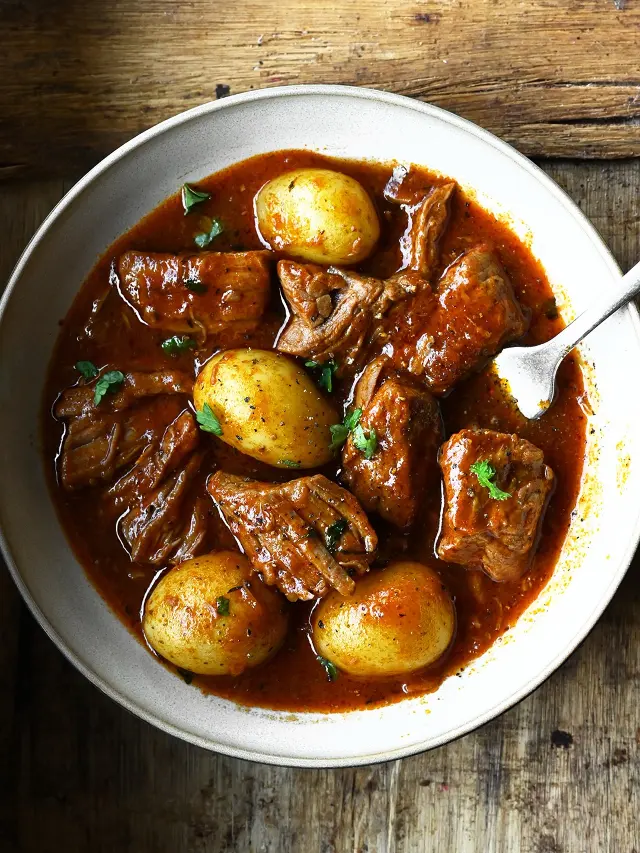
 Slow-Cooked Beef and Potato Stew for a Hearty Homemade Meal
#Beef Stew
2 ideas
Slow-Cooked Beef and Potato Stew for a Hearty Homemade Meal
Get new #Beef Stew ideas by email
Every Thursday: the week's best ideas, with the newest from #Beef Stew.
Related tags
Beef Stew: A Hearty Guide to Comfort Cooking
Beef stew is one of those dishes that seems to exist everywhere people cook with fire and a heavy pot. At its heart it is simple: pieces of beef simmered slowly in liquid with vegetables until everything turns tender and the broth thickens into something worth spooning over bread, rice or mashed potatoes. The idea is ancient, born of the practical need to make tougher, cheaper cuts of meat palatable and to stretch a little protein across a lot of hungry people. Almost every food culture has its own version, from dark beer-braised pots to tomato-rich stews spiced with paprika or chilli, and each one reflects what grows nearby.
What actually makes a stew work
The single most important decision is the cut of meat. Stewing rewards the hard-working muscles: chuck, shin, neck, cheek, brisket, short rib. These contain a lot of connective tissue, which is unpleasant when cooked fast but melts into gelatin during a long, gentle simmer, giving body to the sauce and that characteristic unctuous texture. Lean, expensive cuts are wasted here, as they dry out and turn stringy.
The second principle is patience. Stew is not a dish to hurry. A bare simmer, with the surface trembling rather than boiling hard, keeps the meat tender and the sauce clear. Too much heat tightens muscle fibres and can leave the meat tough no matter how long it cooks.
Read more
Building the flavour
Most stews follow a similar sequence, and it is worth understanding rather than memorising. Dry the meat well and brown it in batches, giving each piece space, because a crowded pan steams instead of searing. Those browned crusts are where much of the depth comes from. Set the meat aside, then soften onions, carrots, celery or leeks in the same pot, scraping up the stuck brown bits as you go. Add aromatics, return the meat, and pour in enough liquid to come partway up rather than to drown everything.
The liquid can be stock, water, wine, beer, cider or tomatoes, or a combination. Season modestly at the start, since flavours concentrate as the liquid reduces, and adjust at the end. Herbs that stand up to long cooking, such as thyme, bay and rosemary, can go in early; delicate ones are better added near the finish.
Timing and the vegetables
Root vegetables tolerate hours of simmering, but softer additions do not. Potatoes, carrots and swede can go in with the meat; peas, beans or greens belong in the last minutes. If you want a thicker sauce, lift the lid for the final stretch, or mash a few pieces of vegetable against the side of the pot. A flour coating on the meat before browning is another traditional route.
Tips for beginners
Make stew a day ahead if you can. It genuinely tastes better reheated, and the fat is easier to skim off once cold. Salt early enough to penetrate the meat but taste again at the end. Keep the pieces roughly the same size so they cook evenly. And do not be afraid of the long, quiet hour: that is where the dish is made.
#Beef Stew: frequently asked questions
What kind of beef should I buy for stew?
Look for cuts from hard-working muscles — chuck, shin, brisket, short rib, cheek or neck — because their connective tissue breaks down into gelatin during long cooking and gives the sauce body. Tender, expensive cuts are a poor choice here: they dry out and go stringy when simmered. Ask a butcher which of their cuts is best suited to slow braising if you are unsure.
Do I really need to brown the meat first?
Yes, and it is the step that decides how deep the finished stew tastes. Pat the pieces dry, give them room in the pan and sear them in batches, since a crowded pot steams the meat instead of browning it. Those dark crusts and the sticky bits left in the pot, scraped up with the vegetables, are where much of the flavour comes from.
How do I know when it is done?
The meat should give way under a spoon rather than resist it, and the sauce should have thickened enough to coat the back of that spoon. If the liquid still looks thin and watery, leave the lid off for the last stretch of cooking, or crush a few pieces of vegetable against the side of the pot. If the meat is still firm, the usual culprit is heat that is too high rather than time — the surface should tremble, not boil.
Can I make beef stew in advance?
It is arguably better that way: cooling it overnight lets the flavours settle and makes the fat easy to lift off the top. Reheat it gently rather than bringing it back to a hard boil. It also freezes well, though potatoes can turn a little grainy, so some cooks leave them out until the day of serving.
Why does my stew turn out tough or bland?
Toughness usually means the wrong cut or too aggressive a simmer, both of which tighten the muscle fibres instead of relaxing them. Blandness often comes from under-seasoning early, skimping on browning, or using too much liquid so the sauce never concentrates. Taste near the end and correct the salt then, since the flavours intensify as the pot reduces.
What should I serve with beef stew?
Something plain that soaks: mashed potatoes, rice, bread, polenta or buttered noodles all work, which is why the dish travels so well between cuisines. A sharp, fresh contrast on the side — a crunchy salad, pickles, or a squeeze of lemon — keeps the plate from feeling heavy. If you want to change the character of the pot itself, the liquid is the place to experiment: stock, wine, beer, cider or tomatoes each push it in a different direction.
Videos come from YouTube and posts from Instagram; titles and summaries are our own. All rights belong to their creators.