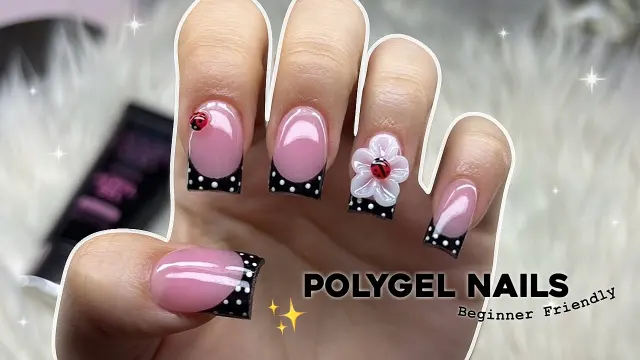
 Extra Short Summer Polygel Nails: Beginner Nail Art Tutorial
#Beginner Nail Art
1 ideas
Extra Short Summer Polygel Nails: Beginner Nail Art Tutorial
Get new #Beginner Nail Art ideas by email
Every Thursday: the week's best ideas, with the newest from #Beginner Nail Art.
Related tags
Beginner Nail Art: A Simple Guide to Getting Started
Nail art is the practice of decorating the nails for beauty and self-expression rather than simply keeping them neat. It can be as minimal as a single coat of colour or as elaborate as hand-painted designs, and it has been part of human adornment for a very long time: people have tinted and decorated their nails across many cultures, from ancient staining with plant dyes to the polished manicures of the early twentieth century. What has changed over the years is access. Today the materials are inexpensive, widely available, and forgiving enough for anyone to experiment with at home.
If you are just starting, the useful thing to understand is that nail art is really two skills sitting on top of each other: preparing the nail well, and applying decoration cleanly. Most disappointing results come from the first, not the second.
Start with the basics
A small kit is enough. You will want a base coat, one or two opaque colours, a top coat, a fine brush or dotting tool, and something to clean up mistakes. Orange sticks, cotton buds and a little remover on a small brush will fix more than any fancy tool.
Read more
- Keep nails clean, dry and shaped before you begin.
- Push back the cuticles gently rather than cutting them.
- Use a base coat: it protects the nail and helps colour last.
- Work in thin layers. Two thin coats dry better than one thick one.
- Finish with a top coat to seal the design and add shine.
Simple techniques to try first
Beginners often assume they need to draw. They usually don't. Most accessible designs rely on shape and placement instead.
- **Solid colour:** the foundation of everything else. Practise getting an even edge near the cuticle.
- **French tips:** a curved band of light colour at the tip, traditionally done freehand or with a guide.
- **Dots:** a dotting tool or the end of a pin makes flowers, borders and simple patterns.
- **Stripes and lines:** thin tape or a fine brush gives clean geometric looks.
- **Gradients:** sponging two colours together for a soft blend.
- **Stamping:** a pre-made plate transfers a design onto the nail, useful if drawing isn't your strength.
A few practical tips
Let each layer dry properly before adding the next; impatience ruins more designs than shaky hands. Rest your hand on a table and your wrist on something stable while painting. Keep your brush strokes slow and follow the natural curve of the nail. If you are decorating only some nails, choose an accent nail rather than attempting a full set at once. When you make a mistake, wait for it to dry slightly, then lift it with a clean-up brush dipped in remover.
Be gentle with your nails between manicures. Give them time without polish now and then, keep them moisturised, and avoid using them as tools for opening or scraping. None of this needs to be perfect. Nail art is a small, repeatable pleasure, and the pleasure is in the practising.
#Beginner Nail Art: frequently asked questions
How do I start with beginner nail art at home?
Start with clean, dry, shaped nails and focus on getting the prep right before trying a design. A simple kit with base coat, one or two colours, a top coat, and a fine brush or dotting tool is enough to begin.
What do I need for simple nail art?
You only need a few basics: a base coat, polish colours, a top coat, and one small tool for detail work. Cotton buds, an orange stick, and a little remover are also helpful for cleaning up edges and fixing mistakes.
Which nail art style is easiest for beginners?
Solid colour, dots, simple stripes, and French tips are usually the easiest places to begin. These styles rely more on neat placement than advanced drawing, so they are great for practising control and clean edges.
How can I make beginner nail art last longer?
Use a base coat, apply thin layers, and finish with a top coat to seal everything in. Let each layer dry properly and avoid using your nails as tools, since that can chip the design quickly.
What are the most common mistakes when doing nail art for the first time?
Rushing the prep, using thick coats, and not waiting between layers are some of the biggest mistakes. Another common issue is trying to do too much at once, so it helps to start with one accent nail or a very simple pattern.
Videos come from YouTube and posts from Instagram; titles and summaries are our own. All rights belong to their creators.