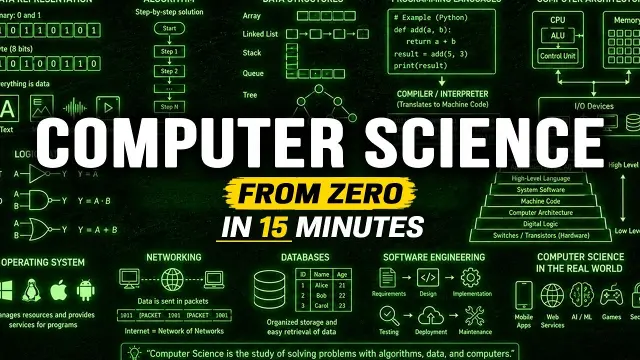
 Computer Science Finally Explained for Complete Beginners
#Beginners
2 ideas
Computer Science Finally Explained for Complete Beginners
 English Conversation Practice for Beginners and Daily Use
Get new #Beginners ideas by email
Every Thursday: the week's best ideas, with the newest from #Beginners.
Related tags
A Beginner’s Guide to Starting Out
What being a beginner means
Being a beginner simply means you are new to a skill, subject, or activity. Everyone starts somewhere, whether you are learning to cook, speak a language, use a camera, sew, or explore a new hobby. At the beginner stage, you are not expected to know everything. The goal is to understand the basics, get comfortable with the process, and build confidence little by little.
How beginners usually learn
Most people learn best when a new subject is broken into small, manageable parts. First comes familiarising yourself with the main ideas and tools. Then you practice simple tasks before moving on to more difficult ones. Repetition matters, because skills become easier when you do them often enough to feel natural.
Read more
A beginner’s path often includes:
- Learning the most important terms or steps
- Watching or reading simple explanations
- Trying the activity yourself in a low-pressure way
- Making mistakes and correcting them
- Repeating the basics until they feel familiar
What beginners should know
The hardest part of starting is often not the subject itself, but the feeling of not being good at it yet. That is normal. Progress at the beginning can feel slow, and that does not mean you are failing. Small improvements matter. Understanding one new idea, remembering one new word, or completing one simple task is real progress.
It also helps to avoid comparing your starting point with someone else’s finished skill. People who look confident have usually had a lot of practice. Your job at the beginning is not to be perfect. Your job is to begin.
Practical tips for starting well
- Start with the basics, not the hardest version of the skill.
- Keep your first goals small and clear.
- Practice regularly, even if only for a short time.
- Use simple instructions until the subject feels less overwhelming.
- Ask questions when something is unclear.
- Make room for mistakes, because they are part of learning.
- Notice what helps you remember and what makes learning easier for you.
Different kinds of beginner stages
You can be a beginner in almost anything: a craft, a language, a recipe, a sport, a work skill, or a creative hobby. Some things need more patience than others, but the same general approach applies. Learn the essentials, practice in order, and give yourself time to improve.
A good mindset for beginners
Curiosity is more useful than pressure. If you stay open, patient, and willing to try again, learning becomes much easier. It can help to think of yourself as someone in training rather than someone who has to know everything immediately. That mindset makes space for steady growth.
If you are just starting something new, remember that every expert was once a beginner too.
Videos come from YouTube and posts from Instagram; titles and summaries are our own. All rights belong to their creators.