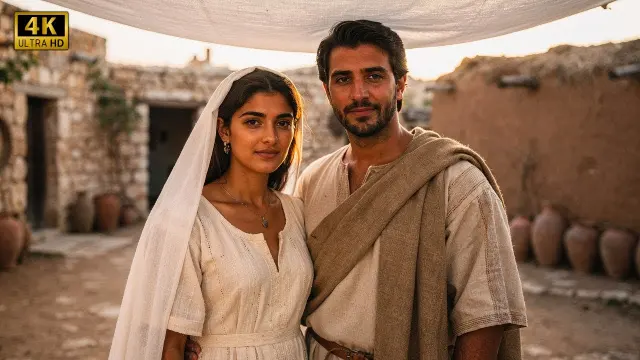
 Historical Documentary About Jewish Weddings 2,000 Years Ago
#Biblical
1 ideas
Historical Documentary About Jewish Weddings 2,000 Years Ago
Get new #Biblical ideas by email
Every Thursday: the week's best ideas, with the newest from #Biblical.
Related tags
A Guide to Biblical Themes, History and Inspiration
The word biblical simply means something belonging to, drawn from, or shaped by the Bible. That makes it an unusually wide hashtag: it covers scripture itself, the ancient world the texts came from, the art and music they inspired, and the quiet ways people bring their imagery into everyday life.
What the Bible actually is
It helps to begin with the obvious but often forgotten point: the Bible is not one book. It is a library of texts, written across many centuries and in more than one language, and gathered into a collection by communities who copied, preserved and argued over it. It contains history, law, poetry, proverbs, prophecy, letters and stories, and each of those kinds of writing is read differently. Treating a psalm the way you would treat a legal code, or a parable the way you would treat a chronicle, tends to produce confusion. Knowing what sort of text you are holding is the first skill worth learning.
The world behind the stories
Read more
Much of the Bible is set in the ancient Near East, among farming and herding communities, small towns and empires. Everyday details that readers once took for granted, such as how a household made bread, how a marriage was arranged, how a tent was pitched or how a well was shared, now need explaining. That is where history, archaeology and cultural study become useful: they fill in the setting so the narrative makes sense again. If you are new to this, start with a good illustrated atlas or a book on daily life in the ancient world rather than with dense commentary.
Imagery in art and craft
Biblical imagery has travelled far beyond places of worship. Light, vines, wheat, doves, olive branches, shepherds and gardens appear in painting, embroidery, stained glass and hand-lettering. Many makers use these motifs for their beauty and their long associations rather than as doctrine. If you are working with a particular symbol, it is worth reading about how it was used in different periods, since the same image can carry quite different meanings depending on where and when it was made.
Weddings and family celebrations
Ancient Jewish wedding customs, the betrothal agreements, processions and shared meals that feature in historical accounts, have long fascinated couples planning a ceremony. Most people today borrow the poetry rather than attempt a reenactment, choosing readings, songs or decorations that echo the old imagery without pretending to reproduce it exactly. Traditions vary widely between communities, so if a particular custom matters to your family, ask an elder or a local community leader rather than relying on a general summary.
Practical starting points
- Read a passage in two different translations before reaching for commentary.
- Keep a notebook of symbols and phrases you keep meeting.
- When using a quotation, check the wording and the source.
- Look for context, the people, places and customs behind a line, before drawing conclusions.
Approach the subject with curiosity rather than certainty, and it rewards you for years.
#Biblical: frequently asked questions
How do I start learning about the Bible if I have no background in it?
Begin by reading a passage in more than one translation, since comparing wordings shows you where the language is doing interpretive work. Before turning to commentary, get a feel for what kind of writing you are holding — a poem, a law code and a letter all ask to be read differently. A notebook for the symbols and phrases you keep running into will serve you better than a shelf of reference books at the start.
What background knowledge helps the stories make sense?
Much of the material is set among herding and farming communities, small towns and empires, and the everyday details of that world — how bread was made, how a well was shared, how a tent was pitched — are no longer obvious to most readers. A good illustrated atlas or a book on daily life in the ancient world is a friendlier entry point than dense scholarly commentary. History and cultural study exist precisely to restore that setting.
Which symbols are best to use in craft projects, and does the choice matter?
Motifs like vines, wheat, doves, olive branches, shepherds and gardens are widely used for their beauty and their long associations rather than as statements of doctrine. Because the same image has carried quite different meanings in different periods and places, it is worth reading up on how a symbol was used before you commit it to a design. That small bit of research usually makes the finished piece richer.
How can I include biblical elements in a wedding without staging a reenactment?
Most couples borrow the poetry rather than the practice — selecting readings, music or decorations that echo the old imagery instead of trying to reproduce ancient customs exactly. Since traditions differ a great deal between communities, ask an elder or a local community leader if a particular element matters to your family rather than trusting a general summary. That conversation is usually more valuable than any guide.
What mistakes do newcomers most often make?
The common ones are treating every part of the collection as the same kind of text, and pulling a line out of context before understanding the people, places and customs behind it. Another is quoting from memory — check the exact wording and which source it comes from, since small slips travel far once printed or posted. Approaching the subject with curiosity rather than certainty avoids most of these.
Videos come from YouTube and posts from Instagram; titles and summaries are our own. All rights belong to their creators.