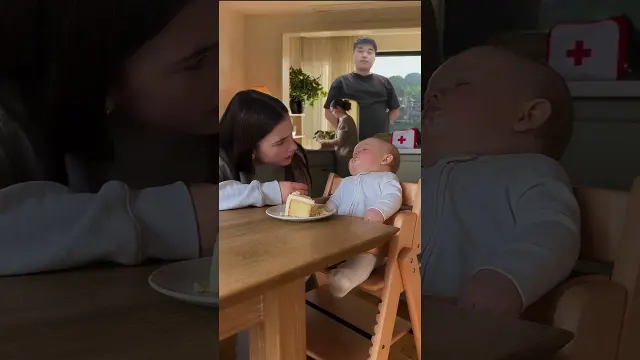
 Big Sister Feeding Cake to the Baby
#Big Sister
1 ideas
Big Sister Feeding Cake to the Baby
Get new #Big Sister ideas by email
Every Thursday: the week's best ideas, with the newest from #Big Sister.
Related tags
Big Sister: The Role, the Bond and Everyday Life
A big sister is the older of two siblings, or simply the older girl among them. The phrase describes a place in the family rather than a job description, which is part of why it carries so much feeling. Many languages keep a separate, warmer word for an older sister than for a younger one, and that distinction says something: the role is understood as a relationship with its own texture, not just a birth-order fact.
A role shaped by family, not by rule
There is no single way to be a big sister. In some families she is the steady one who explains things, in others the mischievous one who invents the games. Age gaps change everything — a sister ten years older often feels half-parent, half-hero, while one born barely a year apart grows up more like a twin. Stepfamilies, adopted siblings and late arrivals all redraw the map, and a child can become a big sister overnight to a baby she has only just met.
The everyday texture
Read more
Much of the relationship lives in small, repeatable moments rather than big declarations.
- Sharing food, toys, a bed on holiday, a secret.
- Teaching: tying shoes, riding a bike, the rules of a game.
- Translating the world for a younger sibling — why the dog barked, what the teacher meant.
- The comedy of being copied, and the irritation of it too.
These rituals are what a child actually remembers. A photograph of a big sister carefully feeding cake to a baby captures the whole idea: clumsy, funny, tender, and repeated a hundred times.
The weight of "you're the big one"
Being the older child often comes with unspoken expectations — to be sensible, to set an example, to wait. It is worth noticing that a big sister is still a child, and that the role should not quietly turn into a duty. Praise her for who she is, not only for how well she looks after someone else. Let her be small sometimes.
Practical things that help
- Talk about the role before and after a new baby arrives, in plain language, without promising more responsibility than is fair.
- Give her time and attention that belong only to her, not borrowed from the baby's schedule.
- Let the relationship find its own shape; do not force affection or sharing before she is ready.
- Expect rivalry and sweetness in the same afternoon. Both are normal and neither lasts.
- Notice the quiet caretaking she does and name it, so it does not go unseen.
Beyond family, the phrase stretches easily into affection: a friend, a mentor, a colleague who looks out for you can all be called a big sister in spirit. Whether the bond is by blood or by choice, it tends to be one of the more durable things a person carries from childhood into adult life.
#Big Sister: frequently asked questions
How can I help my child get ready to become a big sister?
Talk about the role in plain language, both before the baby arrives and after, and be honest that some things will change while others stay the same. Let her ask questions and offer small ways to join in rather than handing her responsibilities she never agreed to. Assuming she will be a helper usually lands better than promising it.
What should I do when she seems jealous of the new baby?
Expect it and don't treat it as a problem to fix — rivalry and tenderness often show up in the same afternoon, and neither mood lasts. Let her name the feeling without being scolded for it, and protect stretches of time that are hers alone rather than borrowed from the baby's schedule. Pushing affection or sharing before she's ready tends to backfire.
How do I stop "you're the big one" from becoming too much pressure?
Remember that being the older child doesn't stop her from being a child, and that the role can quietly turn into a duty if no one watches it. Praise her for who she is, not only for how well she looks after someone else, and let her be small sometimes. Naming the quiet caretaking she does helps too, so it feels noticed instead of expected.
How can siblings with a big age gap still build a close bond?
Lean on the small repeatable rituals — sharing food, teaching a game, explaining the world to a younger sibling — because those ordinary moments are what a child actually carries forward. Keep it short and let her lead, so it feels like play rather than a chore. A wide gap often makes her half hero and half helper, and both parts can be fun.
What are the most common mistakes when a new sibling arrives?
Two of the usual ones are loading the older child with more responsibility than is fair and expecting instant affection between the siblings. Another is letting her attention always come last behind the baby's schedule. Slowing down, avoiding forced sharing, and accepting that both sweetness and friction are normal covers most of it.
What makes a good photo or keepsake of a big sister moment?
Everyday scenes tend to say more than posed portraits — a big sister carefully feeding cake to the baby captures the clumsiness, the tenderness and the repetition all at once. Shoot the ordinary rituals as they happen, since those are the ones the family will recognise years later.
Videos come from YouTube and posts from Instagram; titles and summaries are our own. All rights belong to their creators.