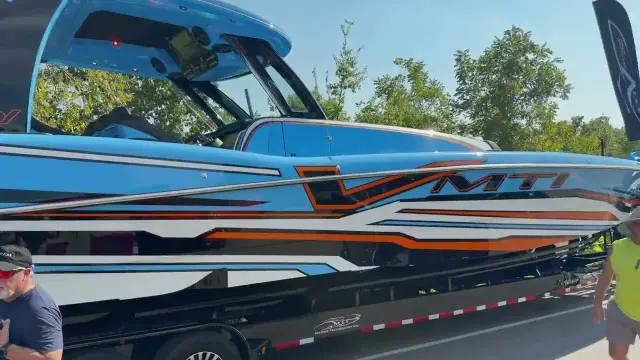
 Showcase of Fast Boats at the LOTO Shootout Street Party
#Boats
2 ideas
Showcase of Fast Boats at the LOTO Shootout Street Party
 Lake of the Ozarks Shootout Street Party Recap
Get new #Boats ideas by email
Every Thursday: the week's best ideas, with the newest from #Boats.
Related tags
Boats: A Beginner's Guide to Life on the Water
A boat is simply a vessel built to float, carry people or cargo, and move across water — and few human inventions are older or more widely shared. Long before engines, people hollowed out logs, lashed reeds into bundles and stretched animal skins over frames, then learned to shape hulls so that wind, current or muscle could do the work. Nearly every culture with a coastline or a river arrived at some version of the same idea. That is part of what draws people to boats today: they are practical tools, but they also carry a long history of craft and skill.
How a boat stays afloat and moves
A hull stays up because it pushes aside water whose weight is greater than its own — buoyancy does the rest. How a boat sits and travels in the water shapes everything else about it. Displacement hulls sit deep and push water aside, which makes them steady and efficient at modest speeds. Planing hulls are shaped to climb onto the surface and skim, which is fast and lively but demands more power. Multihulls use two or more hulls for stability, and their wide stance gives a lot of deck space.
Propulsion falls into a few familiar families: human power such as paddles, oars and pedals; sails; and engines, whether outboard, inboard or inboard-outboard. Each has its own feel on the water and its own maintenance routine.
Read more
The main kinds
- Sailboats, from small dinghies to cruising yachts with cabins
- Powerboats, including runabouts, cruisers and sport boats
- Human-powered craft: kayaks, canoes, rowing shells, paddleboards
- Fishing boats built around decks, storage and stability
- Inflatables and rigid-hulled inflatables, valued for lightness and forgiveness
- Houseboats and liveaboards, where the boat is also a home
- Workboats: tenders, ferries, tugs and utility craft
What beginners should know
Learn the vocabulary early — bow, stern, port, starboard, hull, keel, deck, cleat, fender, helm — because it makes every lesson and manual easier to follow. Learn a handful of knots properly, particularly a cleat hitch and a bowline; they come up constantly. Practise manoeuvring slowly and docking in calm conditions before you attempt anything ambitious, since low-speed control is the harder skill.
Weather is the other half of boating. Read the forecast before you leave, keep an eye on the sky while you're out, and be willing to turn back. Know the local rules and what licensing or registration your area requires, and carry the safety equipment specified for your vessel. Wear a life jacket, especially in small or open boats.
Care and courtesy
Rinse and inspect your boat after use, watch for wear in lines and fittings, and store it covered and drained. On the water, keep a courteous distance, respect speed limits and no-wake zones, and take your rubbish home. Anchor where you won't damage seabed or shore. Good seamanship, in the end, is mostly patience, preparation and attention.
#Boats: frequently asked questions
How do I get started with boating if I have never been on the water?
Start by learning the basic vocabulary — bow, stern, port, starboard, hull and helm — because it makes every lesson and manual far easier to follow. Then take some instruction or go out with someone experienced in calm conditions, and practise slow-speed handling and docking before trying anything ambitious. Low-speed control is the harder skill, so give it real time.
Which kind of boat should a beginner choose?
It depends on where you will use it and what you want to do: a small sailboat or a human-powered craft teaches the water cheaply and simply, while a modest powerboat suits day trips and fishing. Think about how the hull behaves — displacement hulls are steady and efficient at gentle speeds, planing hulls are faster but want more power, and multihulls trade speed for stability and deck space. Choose the smallest and simplest boat that does the job you actually have in mind.
What should I know before heading out on the water?
Check the forecast before you leave, keep watching the sky while you are out, and be willing to turn back — weather is half of boating. Know the local rules along with whatever licensing or registration your area requires, and carry the safety gear specified for your vessel, including a life jacket for everyone aboard, especially in small or open boats.
How do I take care of a boat between trips?
Rinse and inspect it after every use, since salt, grit and sunlight do most of the quiet damage. Watch for wear in lines and fittings so small problems are caught before they become failures, and store the boat covered and drained. A few minutes of attention at the end of each outing saves a great deal of work later.
What are the most common mistakes new boaters make?
Underestimating slow-speed control is the classic one — docking and manoeuvring in tight spaces take practice, so rehearse them in calm, open conditions first. Others are neglecting the forecast, skipping a life jacket in a small open boat, and leaving knots half-learned; a cleat hitch and a bowline cover most everyday needs. Carelessness on the water is usually just impatience wearing a different coat.
Any tips for a good day out on the water with family or friends?
Keep the plan modest and the pace relaxed, with a destination that can be reached comfortably and room to turn back if the weather shifts. Brief everyone on where to sit, what to hold, and how to behave near the helm, and keep a courteous distance from other craft while respecting speed limits and no-wake zones. Anchoring where you will not damage the seabed or shore, and taking your rubbish home, keeps the day pleasant for the next boat too.
Videos come from YouTube and posts from Instagram; titles and summaries are our own. All rights belong to their creators.