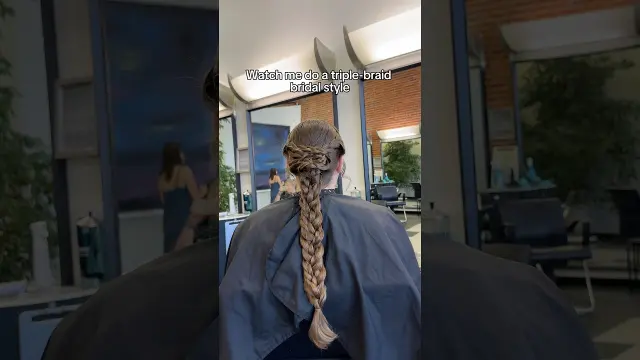
 Triple Braid Bridal Hairstyle Tutorial for Long Hair
#Braid Tutorial
1 ideas
Triple Braid Bridal Hairstyle Tutorial for Long Hair
Get new #Braid Tutorial ideas by email
Every Thursday: the week's best ideas, with the newest from #Braid Tutorial.
Related tags
Braid Tutorial Guide for Beginners
What a braid is
A braid is a hairstyle made by weaving three or more sections of hair together in a repeating pattern. It is one of the oldest and most familiar ways to style hair, and it appears in many cultures around the world. Braids can be neat and close to the head, loose and casual, or used as the base for more elaborate styles.
Because braiding helps gather and control the hair, it is useful for everyday wear, special occasions, and protective styling. You can wear a single braid, two braids, or combine several braids into buns, crowns, ponytails, or half-up looks.
Common braid types
Read more
The simplest braid is the three-strand braid, often called a classic plait. It is the best place to start if you are learning, because the pattern is easy to follow once your hands get used to the movement.
Other common braid styles include:
- French braid, where sections are added as you work down the head
- Dutch braid, which is similar to a French braid but stands out more from the head
- Fishtail braid, made by crossing very small sections for a finer look
- Rope braid, created by twisting two sections around each other
- Boxer braids or double braids, which are usually two braids worn along the head
Each type creates a different finish, but they all depend on the same basic idea: keeping even tension and crossing sections in a steady order.
How to start braiding
If you are new to braiding, it helps to begin with hair that is brushed and slightly controlled. Very slippery hair may need a little texture, while hair with natural grip can be easier to handle. Work with clean sections so the braid stays tidy and balanced.
A few beginner tips:
- Divide the hair evenly before you begin
- Hold the sections firmly, but not too tightly
- Keep your hands close to the braid to avoid losing control
- Practice in front of a mirror if that helps you follow the pattern
- Expect your first braids to look uneven; that is normal at first
Technique and practice
The main skill in braiding is repetition. As you cross one section over another, try to keep the size of each strand consistent. Uneven sections can make the braid look lopsided or loose in places. If you want a smooth result, comb through each section before crossing it.
For styles that begin at the scalp, such as French or Dutch braids, remember to add hair gradually and evenly. For looser styles, gently widen the braid by easing out the edges after you finish. This can give a fuller, softer look without changing the structure.
Practical finishing touches
To finish a braid neatly, secure the end with a hair tie that holds the shape without pulling. If small hairs slip out, you can smooth them back with your fingers or with a little water on your hands. For a softer effect, loosen the braid slightly after it is tied off.
Braids are versatile, but they work best when the hair is handled gently. If you braid often, avoid pulling too tightly, especially around the hairline. With practice, you will find the style and tension that suit your hair best.
Videos come from YouTube and posts from Instagram; titles and summaries are our own. All rights belong to their creators.