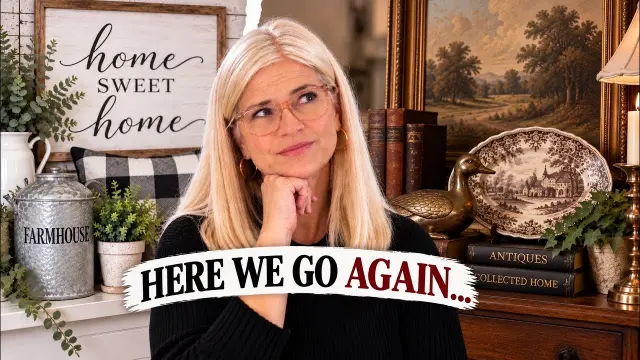
 Is Vintage Decor Becoming the New Modern Farmhouse?
#Brass Decor
1 ideas
Is Vintage Decor Becoming the New Modern Farmhouse?
Get new #Brass Decor ideas by email
Every Thursday: the week's best ideas, with the newest from #Brass Decor.
Related tags
Brass Decor: A Guide to Warm, Timeless Metal Accents
Brass is an alloy of copper and zinc, and it has been used for household objects for centuries. Its warm golden colour, its weight in the hand and the way it catches light have kept it in homes long after other metals fell out of fashion. Today "brass decor" covers everything from door handles and candlesticks to picture frames, trays, mirrors, planters and small sculptural objects. What unites them is not a single style but a material quality: brass brings softness and a little glow to a room without the coldness of steel or chrome.
Where it comes from
Brass has been worked since antiquity, when craftspeople discovered that adding zinc-bearing ore to copper produced a metal that was easier to cast and more golden in tone than pure copper. It was used for vessels, instruments, lamps and ornaments across Europe, the Middle East and Asia, and many traditional decorative techniques — casting, hammering, engraving, repoussé — are still practised in small workshops. Pieces made this way carry slight irregularities that machine-made metal rarely has, and that is often part of their charm.
Finishes and how they age
Read more
Brass comes in several finishes, and understanding them is the single most useful thing a beginner can learn.
- Polished brass is bright and mirror-like. It reflects a lot of light and demands more frequent cleaning.
- Brushed or satin brass has a soft, directional sheen and hides fingerprints better.
- Antique or aged brass is deliberately darkened, often with a patina that settles into recesses, giving depth and a sense of history.
- Lacquered brass has a thin clear coating that slows tarnishing. Unlacquered brass is left bare and will develop a patina over time, moving from gold to a deeper bronze-brown.
None of these is better than another; the question is whether you want a piece that stays bright or one that records its age.
Using brass in a room
Brass is unusually forgiving. In a pared-back modern room a few brass accents add warmth without fuss. Against dark walls or deep colours it reads as jewellery. In traditional and vintage-inspired interiors it sits naturally alongside wood, marble, linen and ceramic. A useful principle is to repeat the metal in two or three places — a lamp, a frame, a handle — so it looks intentional rather than accidental. Mixing brass with other metals works too, provided one of them clearly dominates.
Practical care
Dust brass regularly with a soft cloth; grit is what scratches a finish. For unlaquered pieces, a gentle brass polish used sparingly restores shine, while a light touch of wax can slow tarnishing. Avoid abrasive pads and harsh cleaners, especially on lacquered or antiqued surfaces. Keep brass away from prolonged damp, which encourages spotting, and handle heavy objects with care — cast brass is tough but thin sheet brass can dent.
Start with one or two pieces you genuinely like and let the collection grow. Brass rewards patience: it is a material that changes slowly and looks better for being lived with.
#Brass Decor: frequently asked questions
How do I start decorating with brass without it taking over the room?
Begin with a single piece you actually enjoy looking at — a candle holder, a small tray, a frame — and live with it for a while before adding more. Scatter any further brass around the room rather than clustering it in one spot, so the metal reads as a repeated warm note instead of a theme. The aim is a room that feels gently lit from within, not one that looks like a showroom.
Which brass finish should I pick?
Choose according to whether you want the piece to stay bright or to visibly age: polished and lacquered surfaces hold their shine with little effort, while bare brass darkens gradually and takes on character. Brushed or satin finishes sit in between and are the most forgiving in daily use, since they disguise marks well. There is no correct answer — decide first how much upkeep you are happy to do.
How should I care for brass so it keeps looking good?
Wipe it with a soft dry cloth often, because dust and grit are what dull and scratch a surface over time. If a bare piece has gone dull, use a gentle brass polish sparingly and buff it off thoroughly, then a thin layer of wax will slow the darkening. Skip abrasive pads and strong household cleaners, and keep brass out of damp spots where spotting develops.
Can I mix brass with other metals in the same room?
Yes, and it usually looks better than matching everything perfectly. The trick is to let one metal clearly lead and treat the others as quiet companions, so the mix reads as deliberate. Brass also pairs easily with wood, stone, glass and natural fabrics, which softens its shine.
What are the common mistakes people make with brass decor?
The most frequent one is buying a whole set at once, which makes a room feel staged rather than collected. Another is putting polished brass in hard-working places like a busy hallway or kitchen without accepting that it will need frequent attention. Finally, people often scrub antique or lacquered pieces with abrasives, which strips away exactly the depth they were drawn to.
Is brass a good choice for a gift or a special occasion?
It works well because it feels substantial and lasting without being precious, so it suits housewarmings, weddings and anniversaries alike. A single useful object — a small dish, a candle holder, a photo frame — tends to be appreciated more than an ornamental piece with no job to do. Hand-worked items in particular carry small irregularities that make them feel chosen rather than bought at random.
Videos come from YouTube and posts from Instagram; titles and summaries are our own. All rights belong to their creators.