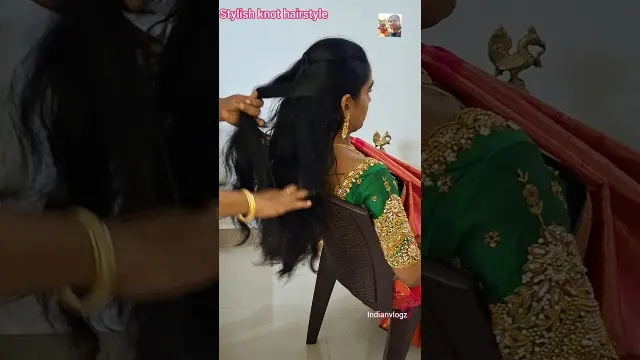
 Stylish knot hairstyle for a bridal look
#Bridal Hairstyle
1 ideas
Stylish knot hairstyle for a bridal look
Get new #Bridal Hairstyle ideas by email
Every Thursday: the week's best ideas, with the newest from #Bridal Hairstyle.
Related tags
Bridal Hairstyles: A Guide to Choosing Yours
A bridal hairstyle is the arrangement of the bride's hair for a wedding day. More than a finishing touch, it is one of the few elements of the outfit that has to hold from the first photograph in the morning until the last dance at night, and it carries a good deal of symbolism in almost every culture. Because of that, it is usually planned well in advance, tried out at least once, and shaped around the dress, the setting and the person wearing it.
A little history
Decorating a bride's hair is an old and widespread custom. Flowers, ribbons, veils, combs and metal ornaments have all served to mark the transition from one stage of life to another, and many of these gestures survive in modern weddings in simplified form. The loose hair of a young unmarried woman, the covered head of a married one, the crown of blossoms, the braid woven by friends the night before: each belongs to a particular tradition, and families often keep the version they grew up with.
The main styles
Read more
Most bridal looks fall into a few broad families.
- Updos. Hair is gathered and pinned, from a smooth low chignon to a soft, deliberately undone knot at the nape. Updos keep the neck and shoulders clear and suit gowns with detailed backs or high collars.
- Half-up, half-down. The front is swept back and secured while the rest falls loose. It reads romantic and works well with medium-length hair.
- Loose and flowing. Soft waves or straight hair worn down, sometimes with a small section pinned back. Simple, but it needs hair in good condition and usually some help holding volume.
- Braided styles. Crown braids, side braids and woven accents, often combined with one of the above.
- Short hair. Cropped cuts can be smoothed and polished, textured, or finished with a decorative pin or small veil.
Within each family, the details matter as much as the shape: how the parting runs, where the volume sits, whether the fringe is left loose, and which ornament finishes it.
Matching hair to dress and setting
Look at the dress first. A high or embellished neckline usually pairs well with hair worn up; a bare back or a deep neckline invites a low chignon or loose waves. Consider the neckline, the fabric and the back of the gown before the hairstyle itself.
Then the setting. Outdoor ceremonies and windy coastlines ask for something secured rather than flowing. A long veil needs an anchor that can carry its weight without pulling. A small ornament or a few fresh flowers often suit a simpler celebration better than a large headpiece.
Practical advice
Plan a trial a few weeks before the wedding, and bring the dress or a photo of it, the veil and the ornaments. Wear the hairstyle for a few hours afterwards to see how it settles. Ask how long the style takes to build on the day, and leave a margin.
Wash your hair the day before rather than the morning of; freshly washed hair can be slippery and harder to pin. If you colour or cut your hair, do it well before the trial so the result is what you planned for. Carry a few pins and a small comb with you, and tell one person close to you how the style is put together, in case it needs a repair later.
Choose what feels like you. The most successful bridal hairstyle is rarely the most elaborate one; it is the one you forget you are wearing.
#Bridal Hairstyle: frequently asked questions
How far in advance should I plan my bridal hairstyle?
Start thinking about the shape you want as soon as the dress is chosen, since the gown usually decides a lot about whether hair goes up or down. Book a trial a few weeks before the wedding, and treat that session as the real decision point rather than a rough sketch.
Should I wash my hair on the wedding morning?
It is usually better to wash it the day before, because freshly washed hair tends to be slippery and pins hold less well. Second-day hair has a bit more grip, which helps an updo stay in place through a long day of photographs and dancing.
How do I choose between an updo, a half-up style and loose hair?
Look at the dress before anything else: a high or embellished neckline tends to suit hair worn up, while a bare back or deep neckline works nicely with a low chignon or soft waves. Then consider the setting, since outdoor or coastal ceremonies usually call for something secured rather than flowing.
What should I bring to my hair trial?
Bring the dress or a clear photo of it, the veil and any ornaments you plan to wear, so the stylist can judge weight and proportion properly. Wear the finished style for a few hours afterwards to see how it settles and whether anything slips, and ask how long it takes to build on the day so you can leave a margin.
How can I keep my hairstyle looking good from morning until the last dance?
Carry a few spare pins and a small comb, and tell one person close to you how the style is put together so it can be repaired if something comes loose. A style that is anchored properly to begin with, rather than pinned loosely for looks alone, will need far less attention later.
What are the most common mistakes with bridal hair?
Overcomplicating the look is the usual one, since the most successful bridal hair is rarely the most elaborate. The other frequent slips are cutting or colouring hair too close to the wedding, and choosing a style that ignores the dress or the weather instead of working with them.
Videos come from YouTube and posts from Instagram; titles and summaries are our own. All rights belong to their creators.