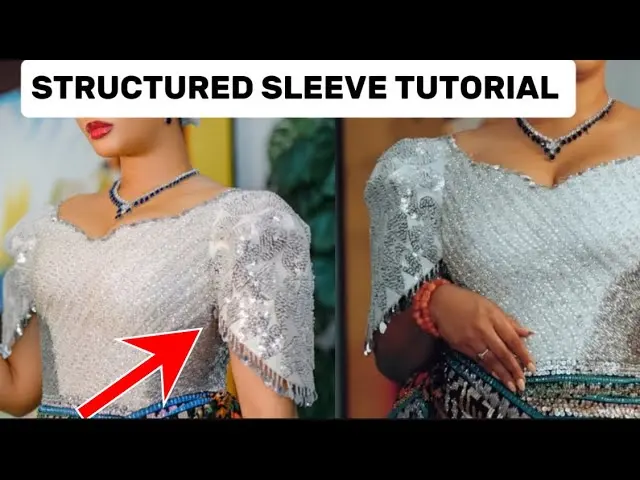
 How to Sew a Structured Pointed Puff Sleeve: Beginner Tutorial
#Bridal Sewing
1 ideas
How to Sew a Structured Pointed Puff Sleeve: Beginner Tutorial
Get new #Bridal Sewing ideas by email
Every Thursday: the week's best ideas, with the newest from #Bridal Sewing.
Related tags
A Beginner's Guide to Bridal Sewing
Bridal sewing is the craft of making, altering and finishing the clothes a person wears on their wedding day — most often the dress, but also veils, sashes, ring pillows, and the small garments for the people standing beside them. It borrows from dressmaking, tailoring, corsetry and embroidery all at once, which is why it has a reputation for being difficult. It is demanding, but it is not mysterious. What it asks for is patience, careful preparation and a willingness to work slowly.
Why bridal sewing feels different
Everyday sewing forgives. Bridal sewing does not. The fabrics are delicate, the fit is close, the seams are often visible from the inside, and the garment is meant to be kept. A pulled thread or an off-grain seam that would disappear in a cotton blouse shows plainly in silk satin. The result is a different rhythm of work: more hand basting, more test pieces, more unpicking.
Fabrics you will meet
Read more
Silk satin and duchesse satin give lustre and body. Silk crepe and mikado drape cleanly and hold a sculpted shape. Chiffon, georgette and organza are the layering fabrics, used for sleeves, overlays and skirts. Tulle builds volume. Lace — Chantilly, guipure, Alençon-style — is usually applied rather than seamed into the dress.
Test everything on scraps first. Use fine, sharp needles, silk or extra-fine pins, and keep your hands clean and your machine freshly oiled. Place a strip of tissue paper under the presser foot when working with slippery fabrics so the feed dogs do not chew them. Press with a cloth between iron and fabric, and never press a seam open until you are sure of it.
The structure you cannot see
What separates a wedding dress from a party dress is what sits underneath. Boning channels, a corselette or inner bodice, a waist stay that carries the skirt's weight, horsehair braid at the hem, crinoline for lift, bust cups and a proper lining all do the work. Learn to build these before you learn to decorate: a beautifully beaded dress on a weak foundation will still hang badly.
Techniques worth learning
- Hand-picked zippers, which sit flatter and look intentional in a fine fabric
- Understitching and stay-stitching, to stop facings rolling to the outside
- Lace appliqué: cutting motifs with a narrow seam allowance and hand-sewing them over seams and joins
- Beading and pearl work on a stretched frame, so the fabric is not distorted
- Horsehair braid hems for a crisp, floating edge
- French or bound seams on light fabrics, so the inside is as tidy as the outside
Fittings and timing
Start with a toile — a cheap cotton version of the bodice at the very least — and fit that until it is right. Fit the bodice before attaching the skirt, and shorten the hem last, once the waistline sits where it should. Fit in the shoes that will be worn, and leave more time than you think you need; bridal work rewards an unhurried calendar.
If you are new to this, begin with a veil, a sash or a ring pillow. They teach you the fabrics and the finishing without the pressure of a garment that has to be perfect on one particular day.
Videos come from YouTube and posts from Instagram; titles and summaries are our own. All rights belong to their creators.