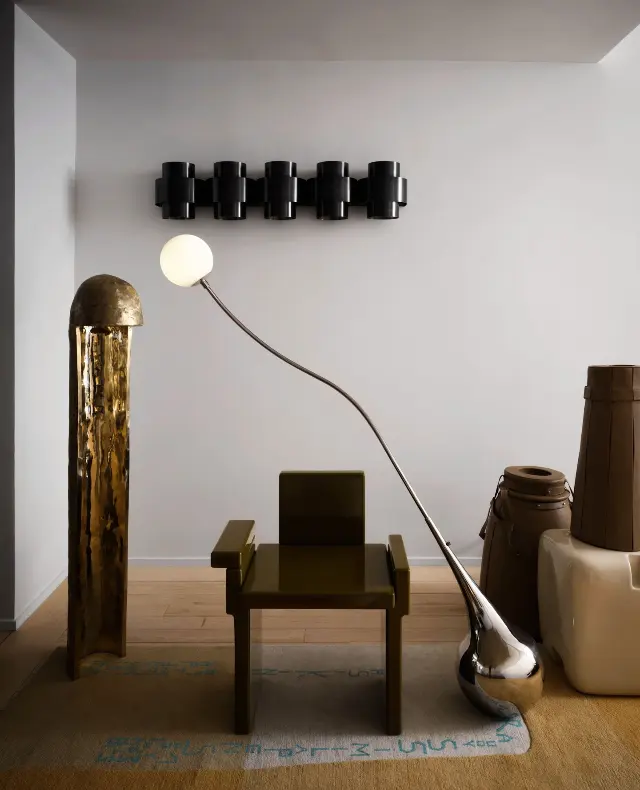
 Layered Materials at a New York Design Showroom
#Bronze And Leather
1 ideas
Layered Materials at a New York Design Showroom
Get new #Bronze And Leather ideas by email
Every Thursday: the week's best ideas, with the newest from #Bronze And Leather.
Related tags
Bronze and Leather: A Guide to Warm, Weathered Materials
Some materials feel warm before you even touch them. Bronze with its dark, mellow glow, and leather with its soft, living grain, are two of them. Put together — on furniture, in interiors, in bags and shoes — they carry a quiet sense of permanence. This guide explains what each material is, where it comes from, and how to work with them.
What bronze actually is
Bronze is an alloy, traditionally made by combining copper with tin. It has been used for thousands of years for tools, vessels, sculpture and ornament, and it is one of the reasons early metal-working civilisations are studied with so much interest. Its colour ranges from a reddish gold to a deep brown depending on the metals and proportions used.
The characteristic darkening of bronze is not damage but patina — a surface layer that develops with air, moisture and handling. Many people find it the most appealing part of the material. Bronze used indoors tends toward a richer brown over time; outdoors, it can shift toward green.
Read more
What leather is
Leather is animal hide that has been preserved through tanning, a process that prevents it from decaying and makes it flexible and durable. Two broad families are worth knowing. Vegetable tanning uses plant-derived tannins and produces firm-bodied leather that ages visibly and is common in belts, straps and saddlery. Chrome tanning is faster and yields softer, more pliable hides, typical of upholstery and lighter goods. Leather can also be dyed, waxed, oiled or left largely natural, and each treatment changes how it ages.
Why the pairing works
Bronze is hard, cool to the touch and metallic; leather is soft, warm and tactile. That contrast is exactly what makes them interesting. A bronze frame on a leather-upholstered stool, a bronze buckle on a leather belt, a bronze handle on a leather bag — the metal gives structure and the leather gives comfort. Both also share a tendency to change over time, which suits interiors and objects meant to be lived with rather than kept pristine.
Practical advice for beginners
- Do not polish bronze aggressively. A soft dry cloth removes dust; let the patina develop.
- Keep bronze away from strong household cleaners, which can strip the surface unevenly.
- For leather, dust regularly and wipe with a barely damp cloth. Avoid soaking.
- Condition leather occasionally with a product suited to its tanning type, and test on a hidden area first.
- Store leather away from direct heat and sunlight, which dry and fade it.
- When combining the two, choose a leather finish that echoes the tone of the bronze — warm browns and honey tones sit naturally beside it; very pale leathers can make the metal look heavy.
A word on expectations
Neither material is maintenance free. Bronze will mark and darken; leather will crease, soften and take on a sheen where it is handled. That is the point. If you want something that stays exactly as it arrived, these are not the materials for you. If you want objects that grow into their surroundings, bronze and leather reward patience and a light hand.
#Bronze And Leather: frequently asked questions
How do I start working with bronze and leather if I've never used either?
Begin with a small object rather than a large piece of furniture — a belt, a strap, a bag handle or a stool — so you can learn how each material behaves before committing to something expensive. Handle both materials often in the first weeks and observe how the bronze darkens and the leather softens. The learning is mostly about patience and restraint.
What do I actually need to care for the pairing?
Very little: a soft dry cloth for the bronze, a barely damp cloth and a suitable conditioner for the leather. Avoid soaking, strong household cleaners and direct heat. Test any product on a hidden area before using it on a visible surface.
Which leather should I choose to sit beside bronze?
Warm browns, honey tones and other mellow mid-browns echo bronze's own colour and look natural next to it. Very pale leathers can make the metal read as heavy by contrast. The tanning type matters too — vegetable-tanned hides are firmer and age more visibly, while chrome-tanned hides stay softer and are common in upholstery.
Should I polish bronze to keep it shiny?
No — the darkening you see is patina, a surface layer that develops naturally with air, moisture and handling, and many people consider it the best part of the material. Polish aggressively and you strip that layer unevenly. A soft dry cloth to lift dust is all it needs indoors.
What are the common mistakes beginners make?
The usual ones are over-cleaning bronze with household products, soaking leather instead of wiping it, and storing leather near radiators or in direct sun where it dries and fades. Another is expecting the materials to stay exactly as they arrived — they will crease, mark and shift in tone. Choosing a leather tone that fights the bronze rather than echoing it is a quieter but frequent mistake.
What kinds of pieces suit this combination?
Anything where metal provides structure and leather provides comfort works well — a bronze frame on a leather-upholstered stool, a bronze buckle on a belt, a bronze handle on a bag. The pairing also suits interiors and objects meant to be lived with and handled daily. Contrast is the point: hard and cool against soft and warm.
Videos come from YouTube and posts from Instagram; titles and summaries are our own. All rights belong to their creators.