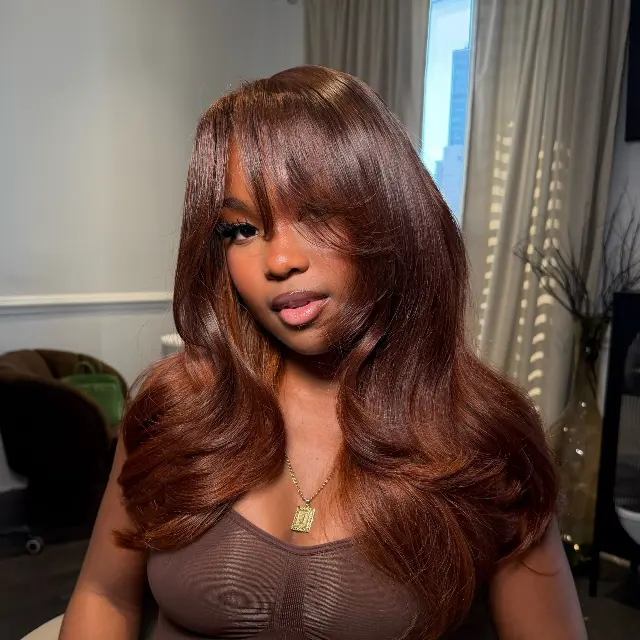
 Layered bob with warm colour and curtain bangs
#Brown Hair Color
1 ideas
Layered bob with warm colour and curtain bangs
Get new #Brown Hair Color ideas by email
Every Thursday: the week's best ideas, with the newest from #Brown Hair Color.
Related tags
Brown Hair Colour: Shades, Undertones and Care
Brown hair is one of the most common natural colours and one of the most versatile to work with. Ranging from near-black espresso to soft sandy tones, it sits between black and blonde and can be nudged in either direction. Because brown is built from a mix of pigments, it catches light differently depending on the shade, which is why the same brown can look rich and deep on one person and flat or brassy on another. That interplay of depth and reflection is what makes brown so varied, and why choosing it well is mostly a question of undertone rather than darkness alone.
Warm, cool and neutral
Every brown carries an undertone. Warm browns hold gold, honey, copper or red; cool browns lean towards ash, smoke or a hint of violet; neutral browns sit between the two. Matching that undertone to your skin is the simplest way to make a colour look as though it grew there. Warm complexions tend to glow with golden and chestnut shades, while cooler complexions often suit ash and mocha. If you are unsure, hold a few swatches or hairpieces beside your face in daylight and notice which one makes your skin look clear rather than tired.
The main shades
Read more
- Light brown: sandy, caramel and honey tones that soften the face and read as sunlit rather than obviously coloured.
- Medium brown: the broad middle ground, from chestnut to maple, easy to wear and forgiving as it grows out.
- Dark brown: chocolate, mocha and espresso, deep and glossy, and generally the least likely to look brassy.
- Auburn and mahogany: browns with a clear red or copper cast, striking but quick to fade.
- Ash brown: cool and muted, and the most prone to turning dull or greenish without care.
Techniques worth knowing
Colour does not have to be all-over. Highlights add lightness around the face; lowlights put depth back into hair that has gone flat or too pale; balayage paints colour softly so regrowth is less obvious. A gloss or toner sits on the surface, deepening shine or cooling a warm tone without shifting the base much. Many people try one of these first before committing to a full colour.
If you are new to it
Going darker is gentler than going lighter, and far easier to live with as it grows out. Lightening brown hair always reveals some warmth underneath, so plan for toning rather than expecting a cool result straight away. Bring a picture of what you want and one of what you don't, and ask how the colour will look in a few weeks, not only on the day.
Everyday care
Coloured brown fades fastest in sun, heat and frequent washing. Wash less often with a gentle shampoo, rinse cool, and use a mask now and then so the surface stays smooth and reflects light evenly. Shield hair from sun and chlorine, and book a toner refresh instead of recolouring the whole head each time.
Brown is forgiving, and small adjustments make a visible difference.
#Brown Hair Color: frequently asked questions
How do I choose the right shade of brown for my skin tone?
Start with undertone rather than how light or dark the brown is. Hold a couple of swatches or hairpieces next to your face in daylight and keep the one that makes your skin look clear instead of tired. Warm complexions usually glow with golden and chestnut browns, while cooler complexions tend to suit ash and mocha.
What is the difference between warm, cool and neutral brown?
Warm browns carry gold, honey, copper or red, cool browns lean towards ash, smoke or a touch of violet, and neutral browns fall somewhere in between. The undertone is what gives a brown its character and decides whether it flatters you, so it matters more than the depth of the shade. Neutrals are generally the easiest to wear if you are unsure.
Is it better to go lighter or darker for a first colour?
Going darker is the gentler option and much easier to live with as it grows out. Lightening brown hair always reveals some warmth underneath, so expect to tone it rather than getting a cool result straight away. Whichever way you go, bring pictures of what you like and what you don't, and ask how the colour will look once it has settled in.
How can I keep brown hair from turning brassy or dull?
Colour fades fastest in sun, heat and frequent washing, so wash less often with a gentle shampoo, rinse cool, and use a mask now and then to keep the surface smooth. Shielding hair from sun and chlorine also helps hold the tone. A gloss or toner refresh maintains the shade without recolouring the whole head, which is especially useful for ash browns that can turn dull or greenish.
Do I have to colour all of my hair to go brown?
No, and many people try a lighter touch before committing to a full colour. Highlights lift the face, lowlights add depth back into hair that has gone flat, and balayage paints colour softly so regrowth is less noticeable. A gloss or toner is another gentle option, deepening shine or cooling a warm tone without shifting the base much.
What are the most common mistakes when going brown?
Choosing by darkness alone rather than undertone is the usual one, which is why the same brown can look rich on one person and flat on another. Expecting a cool, ashy result right after lightening is another, since warmth always shows through first. Skipping a toner refresh or over-washing and over-heating the hair are the everyday habits that make colour fade fastest.
Videos come from YouTube and posts from Instagram; titles and summaries are our own. All rights belong to their creators.