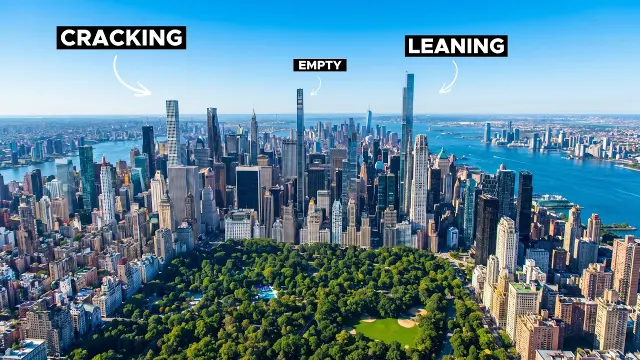
 Five Broken New York Skyscrapers and Their Future
#Building Design
1 ideas
Five Broken New York Skyscrapers and Their Future
Get new #Building Design ideas by email
Every Thursday: the week's best ideas, with the newest from #Building Design.
Related tags
Building Design: A Beginner's Guide to Shaping Structures
Building design is the work of deciding what a structure will be and how it will stand up: its shape, its layout, its materials, how it responds to light and weather, and how people will move through it. It sits between art and engineering, and rarely belongs to one person alone. Architects, structural and services engineers, planners, surveyors and builders all contribute, and the best results usually come from those conversations happening early rather than late.
The practice is old, but the profession is not. For most of history, buildings were designed by the same people who built them — masons, carpenters and master builders working from tradition and hard-won rules of thumb. Formal architectural training and the separation of designer from constructor arrived much later. What has not changed is the underlying discipline: a design has to reconcile what a client wants, what the site allows, what materials can do, and what the budget will bear.
The main strands
Design approaches tend to fall into a few broad habits of thought, often combined in practice.
Read more
- Traditional and classical design works with established proportions, symmetry and ornament, and leans on familiar building types.
- Modernist design favours simplicity, exposed structure, open plans and the honest use of materials.
- Sustainable design treats energy, water, materials and long-term running costs as central questions rather than afterthoughts.
- Adaptive reuse takes an existing structure and gives it a new purpose, which is often more economical and less wasteful than starting again.
- Participatory and human-centred design begins with how occupants actually use a space, rather than with a visual idea.
What beginners should know
Start with the site. Orientation, levels, drainage, access, sunlight and neighbouring buildings shape almost every decision that follows, and they cannot be argued with later. Get the brief right too: a clear written statement of what the building must do, who it serves and what the limits are will save months of redrawing.
Learn to read drawings, even roughly. Plans, sections and elevations are the shared language of the trade, and understanding them makes you a better participant in the process. Respect structure early — spanning distances and carrying loads constrain everything, and a design that ignores them is a sketch, not a building.
Practical habits
Keep a sketchbook. Draw the buildings you like and, more usefully, work out why you like them. Test ideas in section as well as in plan; many of the most common mistakes are vertical. Build simple physical models — card and glue will teach you more about massing in an afternoon than hours of screen time.
Ask about maintenance while the design is still soft. Roofs, gutters, joints and services are where buildings age first, and they are cheapest to solve on paper. Finally, be patient with iteration. Design is a loop of proposing, testing and discarding, and a scheme that survived several rounds of honest criticism is usually stronger for it.
#Building Design: frequently asked questions
How do I start with building design when I have no experience?
Begin with the site rather than with a picture of the finished building: its orientation, levels, drainage, access and surroundings set limits you cannot argue with later. Then write a clear brief covering what the building must do, who it serves and what the constraints are. Learning to read plans, sections and elevations roughly will make you a far better participant in the process.
What is the difference between the main design approaches, and how do I choose one?
Traditional design leans on established proportion, symmetry and ornament, modernist work favours simplicity, exposed structure and open plans, and sustainable design treats energy, water and materials as central questions. Adaptive reuse gives an existing structure a new purpose, while human-centred design starts from how occupants actually use a space. Most real projects blend several of these, so pick the habit of thought that fits the site, the brief and the budget rather than treating them as exclusive styles.
Do I need an architect, or can I design a building myself?
Designing a structure is rarely a solitary act — architects, engineers, planners, surveyors and builders all contribute, and the results are best when those conversations happen early. You can absolutely develop your own ideas, but expect to bring in specialists for structure, services and approvals. Understanding the shared language of drawings yourself makes you a more effective member of that team.
How do I keep a building design from going wrong in the small details?
Ask about maintenance while the design is still soft, because roofs, gutters, joints and services are where buildings age first and they are cheapest to solve on paper. Test ideas in section as well as in plan, since many of the commonest mistakes are vertical ones. Building simple card models also teaches you more about massing quickly than a long time on screen.
How much iteration should a design go through before it is right?
Design is a loop of proposing, testing and discarding, so expect several rounds rather than a single answer. A scheme that has survived honest criticism is usually stronger for it. Keep a sketchbook and note not just which buildings you like but why, which sharpens the judgement you bring to each revision.
What should I do with an old or failing building instead of starting over?
Adaptive reuse — giving an existing structure a new purpose — is often more economical and less wasteful than demolition and rebuilding. It starts with an honest survey of what the structure can still carry and how its layout could serve a new use. Treated as a design problem in its own right, an ageing building can be a constraint worth working with rather than an obstacle.
Videos come from YouTube and posts from Instagram; titles and summaries are our own. All rights belong to their creators.