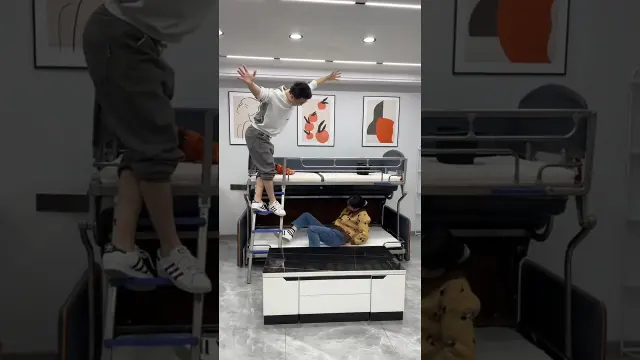
 Clever Bunk Bed Design With a Surprising Secret
#Bunk Bed
1 ideas
Clever Bunk Bed Design With a Surprising Secret
Get new #Bunk Bed ideas by email
Every Thursday: the week's best ideas, with the newest from #Bunk Bed.
Related tags
Bunk Beds: A Practical Guide
Bunk beds are a space-saving sleeping arrangement with one bed stacked above another. They are especially useful in children’s rooms, guest rooms, dorm-style spaces, holiday homes, and any room where floor space is limited. Their simple idea has been around for a long time, but the appeal remains the same: they let two people sleep comfortably without taking up the footprint of two separate beds.
What bunk beds are made for
At their best, bunk beds combine function and flexibility. They can make a shared bedroom feel less crowded, create room for play or study, or give a small spare room more than one sleeping place. Some designs are very straightforward, while others include drawers, shelves, a desk, or a trundle bed underneath. The right choice depends on how the room is used and who will sleep in it.
Common styles and arrangements
Read more
There are several familiar types of bunk beds:
- Standard bunk beds, with two single beds stacked one above the other
- L-shaped bunks, where the top and bottom beds are arranged at a right angle
- Loft beds, with a raised sleeping area and open space below for storage, a desk, or seating
- Triple-sleeper or family-style designs, which use the available height more efficiently
- Bunks with built-in stairs, drawers, or shelving for added storage and easier access
Materials and finishes also vary. Wood often gives a warmer, more traditional look, while metal can feel lighter and more minimal. The best style for you depends on the room, your décor, and how much visual weight you want the furniture to have.
What to think about before choosing one
Safety and comfort should come first. Make sure the bed is stable, with a secure ladder or stairs and guard rails on the upper bunk. The mattress should fit properly and not sit too high above the guard rail. It is also wise to check the recommended age and weight limits for the design you choose.
If the room is for children, think about everyday use as well as bedtime. A lower bunk may be easier for younger sleepers, while built-in steps can be more comfortable than a steep ladder. Good lighting near the top bunk also helps make the bed easier to use.
Tips for making bunk beds work well
A bunk bed feels more pleasant when the room around it is organized. Keep bedding simple and easy to change, especially for the upper bed. Soft wall lighting can make bedtime more comfortable, and nearby storage helps reduce clutter.
- Use fitted sheets that match the mattress size closely
- Keep the upper bunk clear of bulky pillows or heavy bedding
- Choose durable fabrics that are easy to wash
- Add storage baskets, drawers, or hooks to keep essentials tidy
- Leave enough space around the bed for safe movement
A practical, lasting choice
A bunk bed is more than a clever use of space. It can shape the whole feel of a room, making it calmer, more efficient, and easier to share. If you choose one that suits the room and use it thoughtfully, it can be a reliable piece of furniture for many years.
Videos come from YouTube and posts from Instagram; titles and summaries are our own. All rights belong to their creators.