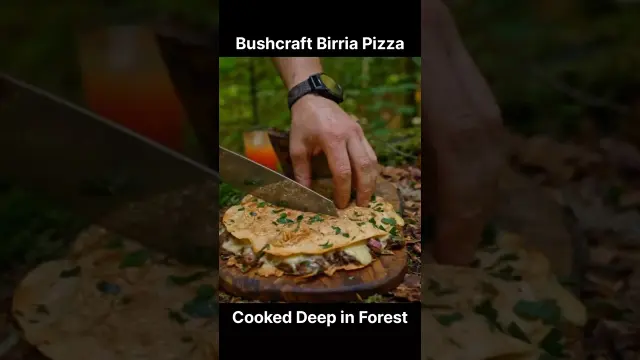
 Bushcraft Birria Pizza Prepared in the Forest
#Bushcraft Cooking
1 ideas
Bushcraft Birria Pizza Prepared in the Forest
Get new #Bushcraft Cooking ideas by email
Every Thursday: the week's best ideas, with the newest from #Bushcraft Cooking.
Related tags
Bushcraft Cooking: A Beginner's Guide to Cooking Over Fire
Bushcraft cooking is the practice of preparing food outdoors with little more than what you can carry, forage or make from the land around you. It sits somewhere between camping cookery and survival skills: the aim is not hardship for its own sake, but a deliberate, unhurried way of eating well in the open, using simple tools, a real fire and a bit of knowledge.
Its roots lie in the everyday cooking of people who lived and travelled outdoors — hunters, shepherds, woodcutters, soldiers and wanderers — for whom a pot over embers was simply how dinner happened. Modern bushcraft borrows those methods and treats them as a craft to be learned: fire lighting, knife work, water sourcing and food preparation all count as part of the meal.
The fire comes first
Everything rests on a fire you can control. Learn to build one in layers — tinder, kindling, fuel — and to keep a bed of embers going rather than a roaring blaze. Embers are what actually cook: they give steady, even heat and far less smoke. A small fire close to your pot beats a large one you have to keep stepping away from. Practise lighting it in different conditions, and always clear the ground around it, keep water nearby and never leave it unattended.
Read more
Ways to cook
The main methods are simple and worth learning one at a time.
- Boiling and stewing: the most forgiving approach, and the safest for meat and wild-gathered ingredients. A metal pot or billy can is the core piece of kit.
- Grilling and ember roasting: food placed on a green stick, a flat stone or a metal grill over glowing coals.
- Baking: flatbreads and simple doughs cooked in a dry pan, under an upturned pot, or wrapped in leaves.
- Smoking and drying: an old preservation technique, useful for fish and meat, and a way to make supplies last.
Kit and food to start with
You do not need much: a pot with a lid, a knife, a means of lighting fire, a spoon, and something to carry water. Add a small cutting board or a flat piece of wood, and a cloth for handling hot metal. For food, start with things that keep well without refrigeration — oats, rice, lentils, flour, dried fruit, hard cheese, onions, root vegetables, cured meat. They are forgiving of heat and timing, which matters when your stove is a pile of coals.
Practical habits
Prepare and portion food before the fire is lit; it is easier on a stable surface than on your knees in the dark. Keep raw and cooked food apart, and treat water from streams and lakes as needing boiling before you drink it or cook with it. Never eat a plant, mushroom or berry you cannot identify with certainty. Cook meat thoroughly, and remember that a fire hot enough to sear is also hot enough to burn — patience with embers is the whole skill.
Finally, leave the ground as you found it: scatter the ash, replace the turf, and take everything else home with you.
#Bushcraft Cooking: frequently asked questions
How do I get started with bushcraft cooking if I've never cooked outdoors before?
Start by learning to build and control a small fire, since almost every method depends on a steady bed of embers rather than a tall blaze. Once you can hold that heat, begin with the most forgiving technique — boiling in a lidded pot — and add grilling, pan baking or smoking only when the first one feels natural. Practise in your garden or a familiar spot before relying on these skills somewhere remote.
What kit do I actually need for cooking over a fire in the wild?
A pot with a lid, a knife, a reliable way to light a fire, a spoon and something to carry water will get you through most meals. A flat piece of wood for cutting, plus a cloth or leather scrap for handling hot metal, makes the work far easier. Anything beyond that is a comfort rather than a requirement, so resist packing a full kitchen.
Which bushcraft cooking method should I choose?
Boiling and stewing is the safest and most forgiving choice, particularly for meat and anything gathered in the wild, because the heat is even and thorough. Grilling over embers or roasting on a green stick suits quicker meals, while baking flatbreads in a dry pan or under an upturned pot is worth learning once you trust your fire. Smoking and drying are better thought of as preservation than as dinner.
How should I look after a fire so my food cooks properly and safely?
Build the fire in layers — tinder, kindling, then larger fuel — and let it settle into embers instead of feeding it into a roaring blaze. A compact fire kept close to your pot gives steadier heat and much less smoke than a big one you keep backing away from. Clear the ground around it, keep water within reach, and never walk off while it is burning.
What should I pack to eat, and what are the common mistakes?
Choose foods that tolerate heat and don't need chilling — oats, rice, lentils, flour, dried fruit, hard cheese, onions, root vegetables and cured meat all keep well and forgive uneven timing. The usual mistakes are preparing food after dark instead of before the fire is lit, letting raw and cooked food share a surface, and drinking untreated water from a stream. Cook meat thoroughly and never eat any plant, berry or mushroom you can't identify with certainty.
Can I make familiar dishes like pizza or stews out in the woods?
Yes — the appeal of bushcraft cooking is eating well rather than eating frugally, so adapting dishes you already love is entirely in the spirit of it. Dough-based things work as flatbreads in a dry pan or under an upturned pot, with toppings added at the end over gentler heat. Keep to techniques you've already practised, and the results stay predictable.
Videos come from YouTube and posts from Instagram; titles and summaries are our own. All rights belong to their creators.