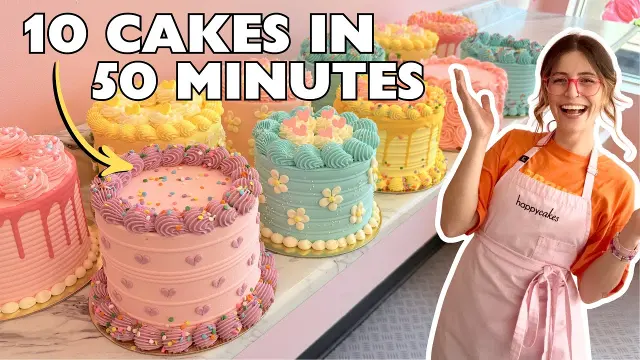
 Ten Buttercream Cakes Decorated in Fifty Minutes, No Talking
#Buttercream Cake
1 ideas
Ten Buttercream Cakes Decorated in Fifty Minutes, No Talking
Get new #Buttercream Cake ideas by email
Every Thursday: the week's best ideas, with the newest from #Buttercream Cake.
Related tags
Buttercream Cake: A Guide to Frosting, Filling and Finishing
Buttercream is a soft, spreadable frosting made by whipping fat with sugar until light. It is the most common way to fill and cover a cake, and it takes piping, colouring and flavouring well. Unlike fondant, which sets firm and smooth, or whipped cream, which stays airy and fragile, buttercream sits somewhere in between: rich enough to hold a shape, soft enough to cut with a spoon.
The main kinds
Buttercream is a family rather than a single recipe, and the versions differ mostly in how the sugar is handled and whether eggs are used.
- American buttercream is butter beaten with icing sugar and a little milk. It is the simplest to make, the sweetest, and it forms a very thin crust that makes smoothing easy.
- Swiss meringue buttercream warms egg whites and sugar together until the sugar dissolves, whips them to a meringue, then beats in butter. The result is silky, less sweet and steady enough for neat piping.
- Italian meringue buttercream pours hot sugar syrup into whipped whites instead, giving a similar texture with a firmer set.
- French buttercream uses yolks rather than whites, which makes it richer and more custard-like.
- German buttercream starts from a cooked pastry cream, so it is softer and lighter.
- Cream cheese and cooked-flour frostings are close cousins, tangier or fluffier, and behave much the same when you spread them.
Read more
What beginners should know
The single most common problem is temperature. Butter should be soft enough to press but still cool, never melted, and the room should not be hot. If the mixture looks curdled or soupy halfway through beating, it usually means the butter was too cold or the bowl too warm; keep beating, or warm the bowl briefly and continue. Sift icing sugar to avoid lumps, and add liquid a spoonful at a time, since a little too much turns the whole bowl slack.
Beat longer than feels necessary. Buttercream gains its volume and smoothness from time, not from extra ingredients.
Colouring and flavouring
Gel or paste colours give deeper shades with less liquid than the dropper bottles, and they deepen slightly as they sit, so add a little at a time. Vanilla, cocoa, coffee, citrus zest and a pinch of salt are reliable flavourings. Fruit purées taste lovely but add water, so use them sparingly or cook them down first.
Frosting the cake
Chill the cake layers before you start, so crumbs stay put. Spread a thin coat all over to seal the surface, chill until firm, then apply the final layer more generously and smooth it with a palette knife or bench scraper, turning the cake as you go. A star nozzle and a steady hand are all you need for borders and rosettes.
Storing
Buttercream keeps well in the refrigerator and freezes, though it needs re-whipping once thawed. Bring a finished cake to room temperature before serving for the best texture, and keep it out of direct heat.
#Buttercream Cake: frequently asked questions
What do I need to make a buttercream cake at home?
At minimum you need soft butter, icing sugar and a splash of milk, plus a mixer or a strong arm and a bowl. For finishing, a palette knife or bench scraper helps smooth the sides, and a piping bag with a star nozzle covers borders and rosettes. Chilling your cake layers first is the one step beginners skip and later regret.
Which kind of buttercream should I choose?
American buttercream is the easiest entry point and the sweetest, and it crusts slightly, which makes smoothing forgiving. Swiss or Italian meringue buttercream is silkier and less sweet, and holds piped shapes more steadily, so it suits a cake you want to decorate precisely. Cream cheese versions are tangier and softer, better for a casual spread than for sharp piping.
How do I store a buttercream cake and keep it tasting right?
It keeps well covered in the refrigerator, and leftover buttercream freezes fine but needs re-whipping once thawed. Bring the finished cake to room temperature before serving, since cold buttercream tastes flat and dense. Keep it away from direct heat, which will make the frosting slump.
Why does my buttercream turn curdled or soupy while beating?
It is almost always temperature: butter that was too cold, or a bowl and kitchen that were too warm. Keep beating, or briefly warm the bowl and carry on — the mixture usually comes back together. Sifting the sugar and adding any liquid a spoonful at a time prevents the slack, runny result that comes from too much fluid.
How do I get a smooth finish without crumbs in the frosting?
Chill the cake layers before you start so the cut surfaces hold together, then spread a thin sealing coat over the whole cake and chill it until firm. Apply the final, more generous layer on top of that and smooth it with a palette knife or bench scraper, turning the cake as you work. The thin coat is what keeps crumbs out of the visible surface.
Can I colour and flavour buttercream, and what works best?
Gel and paste colours give deeper shades with far less liquid than the thin dropper bottles, and they deepen a little as they sit, so build up gradually. Vanilla, cocoa, coffee, citrus zest and a pinch of salt are dependable flavourings. Fruit purées taste good but add water, so use them sparingly or cook them down first.
Videos come from YouTube and posts from Instagram; titles and summaries are our own. All rights belong to their creators.